
Paying users before the money runs out
The first release holds the one job users pay for, plus sign-up and admin, so it reaches the market months sooner.

Put the first version of your web app, mobile app, AI app, SaaS or marketplace in front of paying users, on code your team keeps building on.
4.9 on Clutch from 45 reviews · 500+ projects since 2013
Our MVP development services build the first release of your web or mobile product around the one job users would pay for. The rest waits on a list you sign off, so founders reach users sooner and product teams test new product lines for less.
Product discovery gives most MVPs a week of workshops with our analyst, tech lead, designer and PM. You leave with a signed scope, wireframes and a fixed price for the build, so the budget rests on paper, not guesswork. See product discovery and MVP scoping.
Prototype development gives you a clickable Lovable or Figma version of the product in 1–2 weeks, or a working prototype in 3–6, for investor demos or tests with 3–5 target users. You find the confusing screens before anyone pays for production code. See prototype development.
A proof of concept tests one risky technical question, such as AI accuracy or photo matching, against a pass/fail target in 2–6 weeks. You decide go, no-go or pivot before the full budget is spent. See proof of concept development.
MVP software development for the web covers your core feature plus sign-up, payments and an admin panel for one or two user roles. It runs on the same production stack as a full build, so version two builds on what you launched. See custom web application development.
MVP app development puts your core feature on iOS and Android from one Flutter codebase, with native code only where performance is the product. One codebase means one budget for both stores and quicker updates after launch. See mobile app development.
AI MVP development puts one AI job, such as a voice coach, document assistant or agent, into a product people pay for. You learn whether the AI earns its running cost before you build more around it. See AI SaaS development.
Start with discovery if your scope isn’t written down, and with a prototype if you’re unsure users will get the flow. If one technical unknown could kill the product, a proof of concept comes first. Then build the MVP.
Unsure which size your MVP is?
Tell us the one core feature, and we’ll give you a cost and timeline range on the first call.
Good startup MVP development spends the least money that can prove people will pay, so cash is left to act on what users tell you. In CB Insights’ March 2026 analysis, 70% of startups that shut down since 2023 cited running out of capital.
Version one is built around the flow that earns money or proves the idea, and every screen on that path goes in. Everything else is sorted with you and written down, so nobody argues later about what the price covered.
What usually waits: extra roles, social features, advanced reporting, extra languages and custom billing. Native apps wait too when a responsive web app will do.
Three products that started as MVPs and grew from there, each shown with its team, timeline and budget.

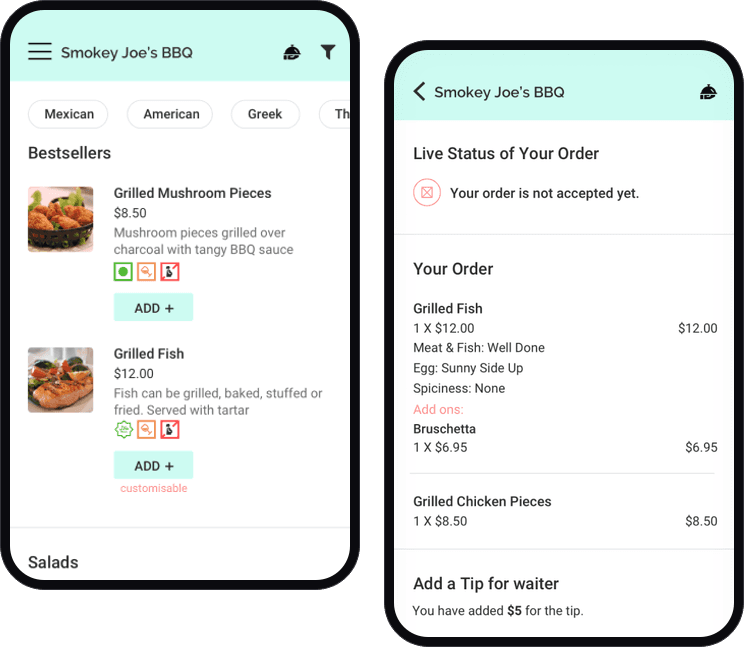
Diners sign up in the app, scan the table’s QR code, then order and pay. Each order’s status is pushed to their phone live over WebSockets. React Native, Angular, Node.js and MySQL on AWS. The restaurant keeps its own record of regular customers, ready for a membership program.
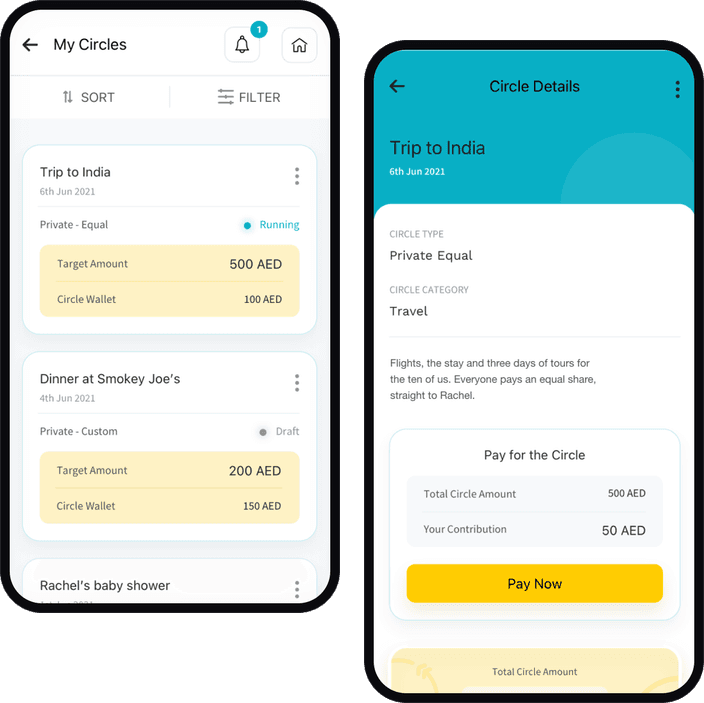

Each shared cost gets its own group, and members pay their share through a bank connection. The money goes straight to the organizer’s account, so phase one avoided holding customer funds. React Native, React, Node.js and MySQL. A working product on web, Android and iOS.
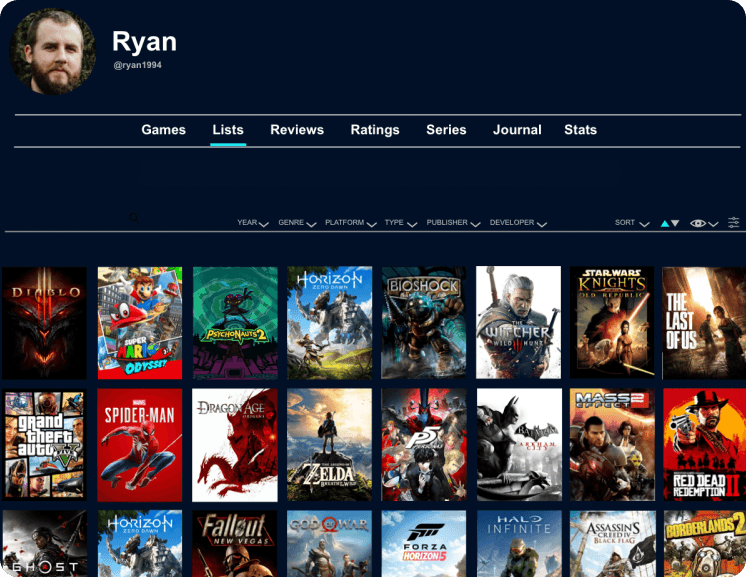

Gamers kept every game they owned, across platforms, in one list with ratings, reviews and a watchlist, on monthly or yearly plans. Search found titles in any language. Angular, Node.js, MySQL and Razorpay. 1,200+ gamers catalogued their collections before the app closed.
Reviews from the clients behind the MVPs above, from Clutch, where we hold a 4.9 average across 45 reviews. Quotes are the reviewers’ own words; the result lines are ours.
They got the job done within the budget and timeline promised, a rarity among app developers.
The result
The apps streamline ordering for both customers and restaurant staff, and keep working incredibly well.
CEO, Software Company
Food-ordering software
They’re businessminded, which reflects on the team well.
The result
Platform delivered on time and on budget, because early stress-testing prevented overruns.
CEO & Co-Founder, Gift-Funding Platform
Gift funding
They were organized, professional and responsive, and they wanted me to succeed.
The result
Great work from a highly responsive, accommodating team, with frequent audits; the engagement was a complete success.
CEO, Gaming Company
Gaming
Here is how to build an MVP in five phases. A typical MVP takes 8–12 weeks from first workshop to launch, clickable prototype included. A focused web MVP takes 6–10, an AI MVP 8–14, and a marketplace with web and mobile apps 20–28.
Focused web MVP
6–10 weeks
One core flow, one role, admin panel
Web or mobile MVP
8–12 weeks
Admin panel, payments, 2–3 roles; prototype included
AI MVP
8–14 weeks
One AI feature plus sign-up, plans and admin
Marketplace
20–28 weeks
Web and mobile apps plus admin, built in phases
Our developers work in Claude Code, and the tech lead reviews every pull request before it merges. In Supabase’s State of Startups 2026 survey, 61% of startups had more than half their codebase written by AI. Across the 8+ projects we built with Claude Code in the last year, delivery took up to 50% less time than comparable builds the year before.
At day 30, we turn analytics, support tickets and your feedback into a priced plan for version 1.1, built from the features you put off in discovery. The same tech lead stays on, so nothing is relearned. Tech Times reported in July 2026 that Series A investors look for revenue and clear defensibility rather than potential and demo quality. So we agree 2–3 launch targets in discovery, such as first payment or week-4 return, and the 30-day review recommends grow, change or stop.
Whichever you pick, we harden what traction stresses: monitoring, performance, Playwright tests and cloud costs. For the long run, see software product development.
MVP development costs $10k–15k for a focused web MVP and $25k–50k for a web or mobile MVP with payments, or an AI MVP. A marketplace with web and mobile apps costs $50k+, built in phases. We fix the price after discovery and bill by milestone.
$10k–15k
Focused web MVP
6–10 weeks
One core flow, one role, admin panel
$25k–50k
Web or mobile MVP
8–12 weeks
Admin panel, payments, 2–3 roles
$25k–50k
AI MVP
8–14 weeks
One AI feature, sign-up, admin
$50k+, built in phases
Marketplace
20–28 weeks
Web and mobile apps plus admin
Focused web MVP
6–10 weeks
One core flow, one role, admin panel
$10k–15k
Web or mobile MVP
8–12 weeks
Admin panel, payments, 2–3 roles
$25k–50k
AI MVP
8–14 weeks
One AI feature, sign-up, admin
$25k–50k
Marketplace
20–28 weeks
Web and mobile apps plus admin
$50k+, built in phases
QA, project management, design and 30 days of free support after launch. Time and material at $20–25 an hour suits a scope that is still moving.
You can pause or stop after any demoed milestone, paying only for milestones delivered and keeping the code and docs.
The MVP gets the same tests, reviews and security checks as any production build. When a date gets tight, we drop features, not QA.
We use one production stack from the first sprint, so the MVP that finds product-market fit is the same code you scale.
Users click a real flow before production code
Flutter for new apps on both stores; native code where speed is the product
SQL where money and roles must stay exact; AWS in your account
The provider your market needs
Models chosen per feature; prompts and test sets versioned
Techuz is the wrong partner if no potential user has seen the idea yet; interviews and a prototype come first. We also decline fixed prices without discovery. Hardware, IoT or a model trained from scratch at the core of the product is not our strength.
MVP development is building the smallest release of a product that proves a business idea with real users, such as whether they will pay. At Techuz it runs in five phases: discovery, prototype and design, sprints, launch and a 30-day review.
At Techuz, a focused web MVP takes 6–10 weeks, discovery included. A typical web or mobile MVP with payments takes 8–12 weeks, clickable prototype included. An AI MVP takes 8–14 and a marketplace with web and mobile apps 20–28. A clickable prototype alone takes 1–2 weeks, a working prototype 3–6, and a proof of concept 2–6.
Yes, Techuz builds fixed-price MVPs and fixes the price after paid discovery, with scope set by the signed requirements doc and a 10% buffer for small clarifications disclosed up front. Larger changes are priced in a written change request, and a scope that is still moving suits a small dedicated team better.
No, you won’t have to rebuild the MVP after you raise money, because Techuz builds MVPs on a production stack with code reviews, CI and tests from the first sprint. New funding goes into features, not a second build. Version 1.1 starts from the features you put off in discovery, with the same tech lead.
Ask for a written scope with exclusions before any fixed price, code and accounts in your name, and a tech lead who stays after launch. Then check their MVPs and verified reviews. Techuz holds 4.9 on Clutch from 45 reviews.
Tell us what you're building. We reply within 24 hours and send a ballpark estimate within 48.


