
AI inside the screens your team already uses
Each AI action appears beside the record a person already has open, within the steps they follow every day. Teams pick it up during normal work, with no training programme or change to how they work.

Add AI to the app your customers already use, or build an AI-first product from the first screen, with running costs estimated before you commit.
4.9 on Clutch from 45 reviews · 500+ projects since 2013 · 4 AI features live inside one IT training marketplace
Our AI software development services add AI to the software you already run, or build an AI-first product. We build the AI feature with the most benefit for your users first, then work down the priority list.
We add AI to the screens your users already use: smarter search, first drafts, summaries and answers from your documents. People finish tasks faster inside your product, so adoption doesn’t depend on learning a new tool. See RAG development services.
AI application development services cover products where the AI does the core job, with sign-up, subscriptions, admin and prompt controls built around the model. You launch something customers can pay for from day one. See AI SaaS development.
Custom AI software development takes one slow internal job, such as turning CVs into profiles, and hands it to a model or a specialist API. Your staff get back hours they lose to the same task every day.
In-app assistants find, summarise and update records when users ask, with a confirmation step before any change is saved. Routine record work takes one request instead of several screens, and your team still signs off what matters. See AI agent development.
Spoken role-play, practice sessions and interviews run in the browser, with real-time replies while your server controls timing and every response. Users practise or get screened by talking, at any hour, without booking a person’s time. See generative AI development.
For AI already in production, we test it on your real cases, route simple jobs to cheaper models and add prompt caching. Your monthly bill and error rate become numbers you can manage. See LLM development services.
All six are part of our AI development services.
AI pays back when it sits where people already work. Harvard Business Review Analytic Services’ April 2026 survey found 71% of organisations embedding AI into processes saw substantial or moderate value.
The AI code runs in Python or Node.js next to your app, and your own API calls it like any other request. Your screens, database and hosting stay as they are.
Our guide covers how to integrate AI into an existing application.
Add AI when you already have users, data and a working product. Build AI-first when the AI is the product.
Starting from an idea?
See MVP development.
Techuz has AI in production inside a regulated SaaS platform, an AI-first training product and its own voice interviewer.

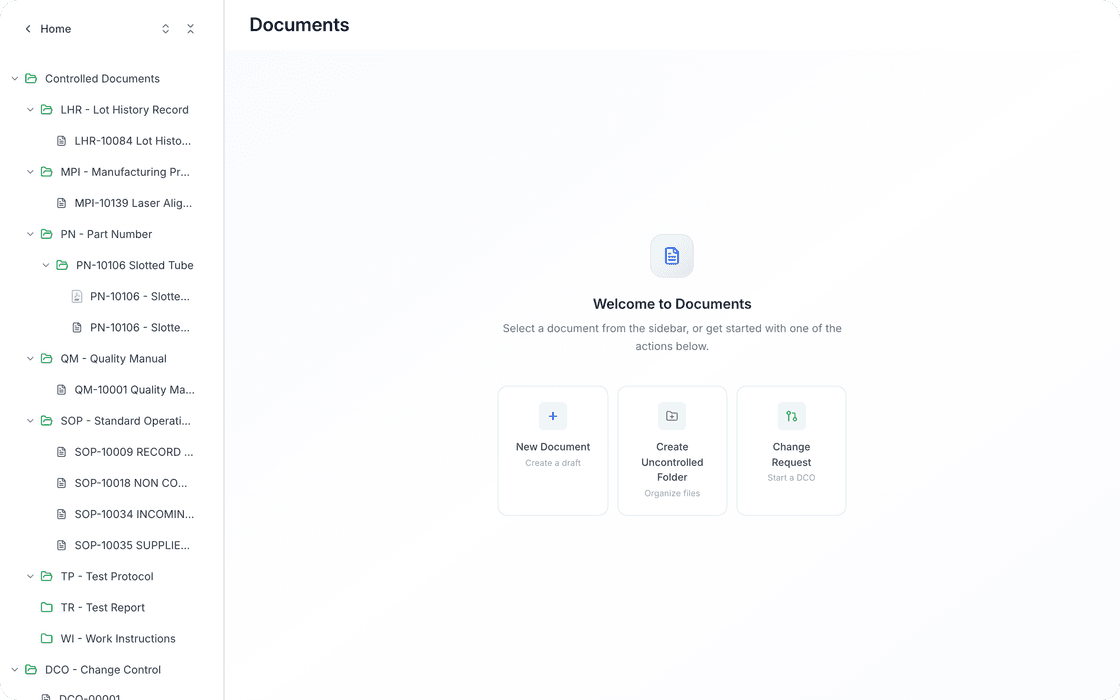
An AI assistant built into a live quality management system, with 55 tools: 32 that read records and 23 that change them. Changes wait for the user’s confirmation, a check written into the code rather than the prompt. The first production release went out about six months in, with 20+ releases since. Prompt caching cut the assistant’s cost per call by 74–90%, depending on the model.
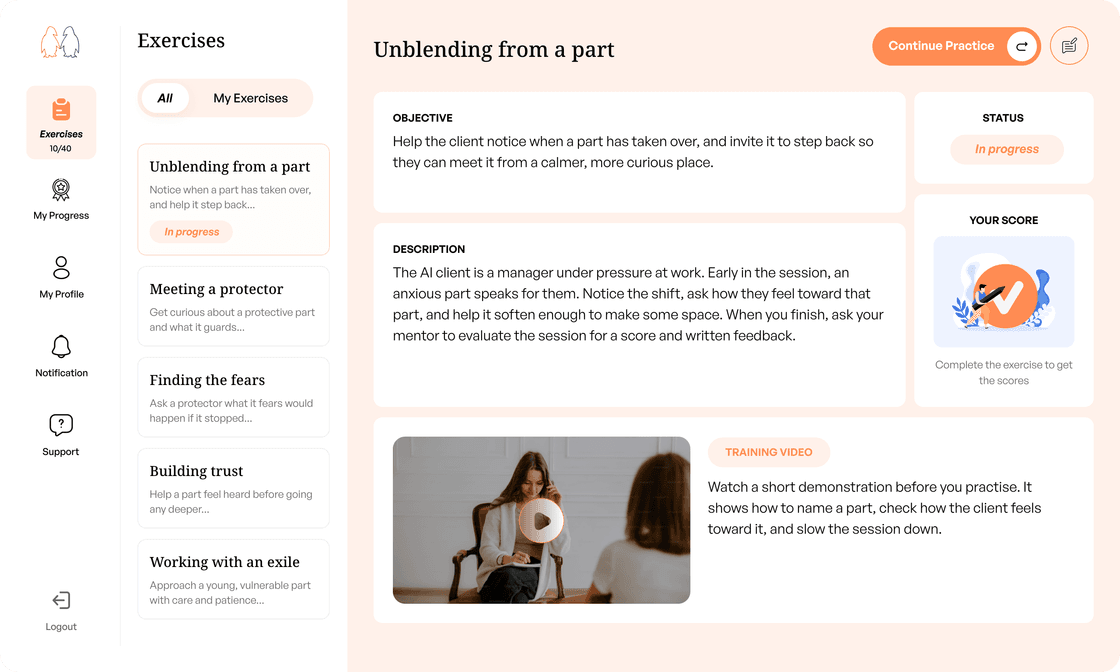

An AI-first product: a stronger model plays the therapy client and supervisor, while a smaller one scores each session to save API cost. The client edits seven prompt types in the admin panel and sells Stripe plans across several branded sites. Practitioners practise a full session any time, and the client tunes every exercise without paying for development time.
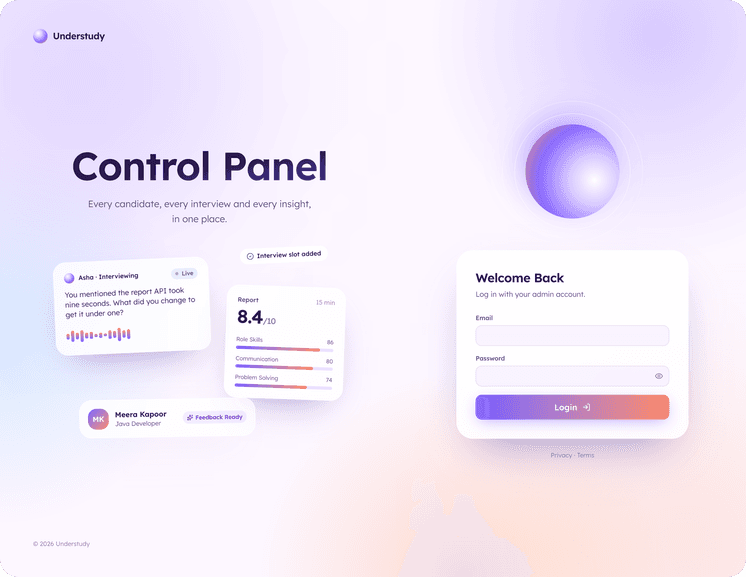

A coach agent steers the follow-up questions for a spoken interviewer that replies in the browser in about 0.3 seconds. If the AI is unavailable, a rule-based report takes over. 500+ real interviews run, with 70%+ of candidates screened out in the first round.
Six phases take one AI feature from your codebase to every user, and each ends with something you can check. A single feature merges the early phases into a short review, one sprint and a shorter test pass.
Our own delivery runs on AI coding tools. In Sonar’s January 2026 developer survey, 96% of developers didn’t fully trust AI-generated code, and only 48% always checked it. So every Claude Code change gets a tech lead’s review before merge. Across the 8+ projects we built with Claude Code in the last year, delivery took up to 50% less time than comparable builds the year before.
AI software development with Techuz costs from $4k–10k for a paid proof of concept to $50k+ for an agentic platform built in phases. Model fees are separate, and you pay the provider directly.
$4k–10k
Paid proof of concept
2–4 weeks
$10k–25k
AI feature in an existing product
3–6 weeks
$25k–50k
AI MVP or AI-first product
8–14 weeks
$50k+
Agentic or multi-tenant platform
Built in phases, 5–9 months to first release
Paid proof of concept
2–4 weeks
$4k–10k
AI feature in an existing product
3–6 weeks
$10k–25k
AI MVP or AI-first product
8–14 weeks
$25k–50k
Agentic or multi-tenant platform
Built in phases, 5–9 months to first release
$50k+
The price includes discovery, build, QA, project management and 30 days of support, eval cases included. Each estimate also shows year-one running cost as one number: hosting, model fees at your expected volume and the support plan.
Hourly rates begin at $20. See engagement models and pricing, or set up a dedicated AI development team.
Every AI feature meets five standards before release, each shown in a test report, a settings screen or the handover pack.
Model leaders change fast, so your eval set decides which model runs each job. In Menlo Ventures’ November 2026 report, Anthropic’s share of enterprise LLM API spend rose from 40% to 55% in a year.
Each job goes to the cheapest model that passes your eval set
Prompts and eval sets versioned like code
When the job follows clear rules or only needs better search, AI adds cost and unpredictability. We’re also the wrong team if no person will check high-stakes output, or you have no sample data or success metric. Training a foundation model from scratch belongs with a specialist ML lab.
AI software development is building software in which an AI model does a real job, such as answering from your documents or updating records. It also covers AI-assisted coding, and Techuz does both. One example of the first is AI search in a live IT training marketplace.
Yes, Techuz can add AI to your existing product without a rewrite. If you’re asking how to integrate AI into an app you already run, we add it beside your app, using the APIs it already has. We’ve done this inside a live Angular and Node.js platform. Most teams start with a proof of concept, then one feature.
Techuz adds one AI feature to an existing product in 3–6 weeks, after a 2–4 week proof of concept on your data. An AI MVP takes 8–14 weeks. Larger platforms reach first release in 5–9 months once the scope is clear, and missing sample data adds 1–2 weeks.
Yes, when every AI-written change gets the same gates as human code. At Techuz a tech lead reviews each pull request, with automated tests and normal QA on top. The code sits in your Git repository, so you see every change and who approved it.
Techuz gives you a cost per 1,000 calls from the proof of concept, measured on your own samples. After launch, alerts fire before spend passes your limit. Sending simple jobs to smaller models and caching repeated prompts keeps the bill down.
You own the code, prompts and AI accounts from day one. Techuz keeps the code in your Git account and opens model provider accounts in your name. At launch you get the prompt library, the eval set and its runner, and the model routing settings. Another team could run it without us.
Ask AI software development companies four questions before hiring one. How will you measure accuracy on our real cases? How does the AI respect each user’s permissions? What will it cost to run at our volume? Whose name are the model accounts and code in? Techuz answers all four in writing before the build.
Tell us what you're building. We reply within 24 hours and send a ballpark estimate within 48.


