Hospitality software development for restaurants, venues and travel

We build the ordering, booking and ticketing apps your restaurant, venue or travel business sells through, with the admin tools your staff need to run them.

4.9 on Clutch from 45 reviews · 500+ projects since 2013 · Dining, ticketing and booking apps for clients in the US and Japan

Our hospitality software development services

Our hospitality software development services build the apps guests use to order, book and pay, plus the admin panel your staff run. We launch the guest flow that earns money first, then add loyalty, reports and integrations in phases.

  • Restaurant software development

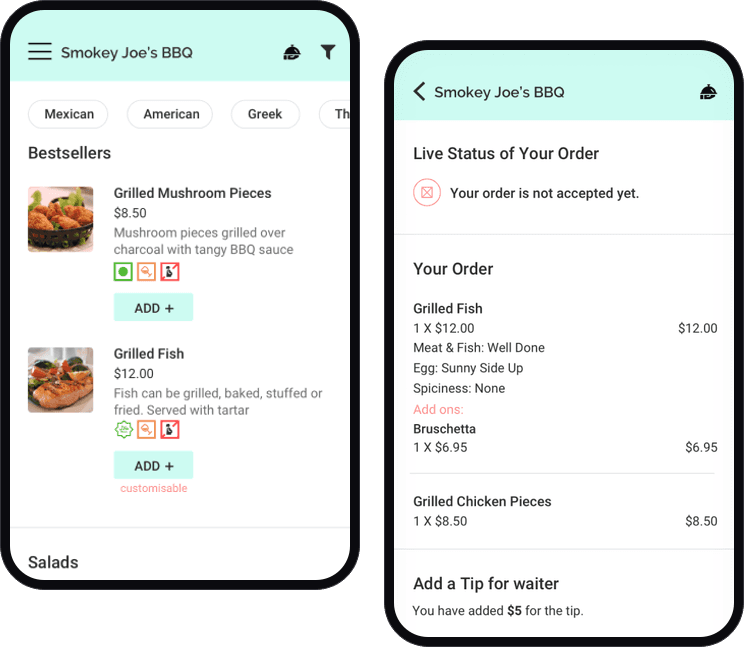
    Restaurant app development covers QR table ordering, menus in several languages, bill payment at the table and live order status for diners. Guests wait less for staff, and the guest list stays in your database instead of a delivery platform’s. See React Native app development.

  • Booking app development

    Booking app development covers tables, lessons, courts and, for hotel booking app development, rooms, with the server confirming each slot so it sells only once. Guests book with confidence, and staff stop sorting out clashes by phone. See mobile app development.

  • Ticketing and seat maps for venues

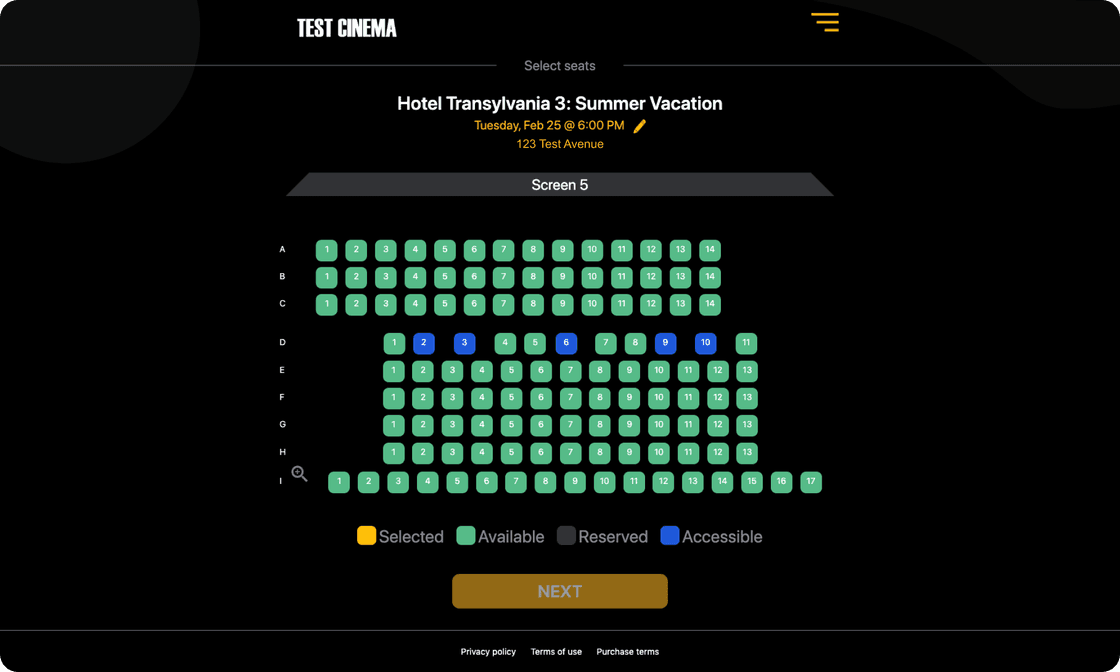
    Venue ticketing lets guests pick the exact seat they’ll sit in, from the venue’s own layout, on web or phone. Each venue keeps its own layout, and your team runs shows and promotions without a developer. See SaaS development.

  • Hotel app development

    Guest apps let hotel guests order to the room, request service and message staff, with a staff view that routes each request. For hotel management software development, we build the module your PMS lacks and scope its connection in discovery, so staff keep the system they know. See web application development.

  • Travel software development

    Travel app development covers tour and activity booking, itineraries, multilingual content and payments, using the booking and payment patterns from our venue apps. You sell direct and keep the margin and guest relationship that commissions take. See marketplace development.

  • Staff tools and admin panels

    Manager dashboards and admin panels run menus, shows, slots, prices and staff roles for each location from one screen. Owners see sales by venue in one place, and a price change goes live the same day. See web development services.

What guests and staff get from custom hospitality software

Guests judge you by how fast they can order, book and pay. In the National Restaurant Association’s State of the Restaurant Industry 2026 report (Restaurant Dive, February 2026), six in 10 operators plan more customer-experience tech spending.

Orders that reach the kitchen sooner

Diners order from their phone, and each status change reaches them the moment it happens. Staff spend less time answering “where’s my food?”

A guest list you own

Every diner or booker signs in with an account, so visits and spend sit in your own database. That record becomes the base for a membership or loyalty program later.

One seat, one slot, one sale

The server, not the phone, decides who gets a seat or slot when two people tap at once. The second person is told straight away, so nobody arrives to a double booking.

Busy nights that don’t break checkout

Extra servers start as orders and bookings climb and stop when the rush ends. Pages stay quick at the peak, and you don’t pay for idle capacity.

What your hospitality software connects to

A guest app is only as good as the systems behind it. In Wyndham’s Owner Trends Report (Hotel Technology News, January 2026), 40% of hotel owners and developers named integrating AI with legacy systems as a barrier. So we map every system before we build.

Venue and theater systems

The RTS theater system feeds seat layouts and show times into our ticketing work.

Payments

Hosted payment pages from Stripe or PayPal keep card numbers off your servers.

Guest messages

Confirmations and reminders by email, SMS and WhatsApp, sent the moment a booking changes.

POS, PMS and delivery platforms

Point-of-sale, property management and delivery connections are scoped in discovery against each vendor’s API, then priced.

Before the build, we can write an integration map with you. It lists every system the app touches, its owner and the fallback when it’s down. You sign it with the requirements, so surprises show up in week one, not week ten.

Where AI helps in hospitality, and where it doesn’t

AI earns its place in hospitality when it answers from your own menus, policies and service steps. In Canary Technologies’ report (Hotel Dive, March 2026), 58% of hoteliers said guest communications will see the highest AI impact this year.

Answers from your own documents

An assistant answers menu, allergen, opening-hours and policy questions from your documents, not the open web. Guests and staff get the venue’s answer, and the assistant says so when it doesn’t know.

Coaching staff on the shift

We’re building an AI coaching app for restaurant waiters that listens, with the table’s consent, and coaches against the venue’s own service steps. It keeps short summaries instead of audio, and adds an allergy confirm step before an order goes through.

Where we’d hold back

AI shouldn’t take payments, change bookings or confirm allergies on its own. We keep a person or a fixed rule in those steps, because a wrong answer there costs a guest, or worse.

See RAG development, AI chatbot development and enterprise AI integration.

Off‑the‑shelf hospitality platform or custom software: which fits?

Rent a platform when your service is standard and you run one or two sites. Build when per‑order fees, guest data or a service flow no platform supports start to cost more than the build.

Off‑the‑shelf hospitality platform or custom software: which fits?
Off-the-shelf platformCustom hospitality software
Cost to startA monthly subscription, live in daysFrom $10k–15k for a first app
Fees as you growPer order, per booking or per locationHosting, support and payment-provider fees
Guest dataHeld in the vendor’s systemIn your database and your cloud account
Fit with your serviceYour process bends to the productThe app follows your service steps
IntegrationsThe vendor’s listAny system with an API, scoped in discovery
Time to launchDays to weeks4–8 weeks for a small app, 10–12 for mid-size

Not sure yet?

A one-week Discovery Sprint ($1,500–2,000) answers it with a written scope. See software consulting.

Hospitality projects we’ve delivered

A restaurant dining SaaS and a theater ticketing platform in the US, and a golf booking app in Japan.

Client logo

Restaurant QR ordering and payment SaaS

Restaurants, USA

A restaurant SaaS where diners sign in once, scan the table’s code and order from the menu, with every status change pushed over WebSockets. Built as React Native apps, an Angular web app with the restaurant admin panel, and Node.js on AWS. Regular diners now have an account the restaurant can build a membership on.

Team
5 people
Timeline
About 6 months
Budget
$10k–25k
Restaurant QR ordering and payment SaaS — Restaurants
Movie ticketing platform for US theaters — Entertainment

Movie ticketing platform for US theaters

Entertainment, USA

Theaters set up seating and show times in one system, and moviegoers pick exact seats on the web, iPhone or Android. Seat maps come from each theater’s own RTS layout data, and the platform holds when a premiere’s tickets open. About 800–1,500 people were on the platform at once during a blockbuster release, figures shared by the client.

Team
7 people
Timeline
About 12 months
Budget
$25k–50k
EnGolfer · Golf slot booking and social app — Sports
EnGolfer logo

EnGolfer · Golf slot booking and social app

Sports, Japan

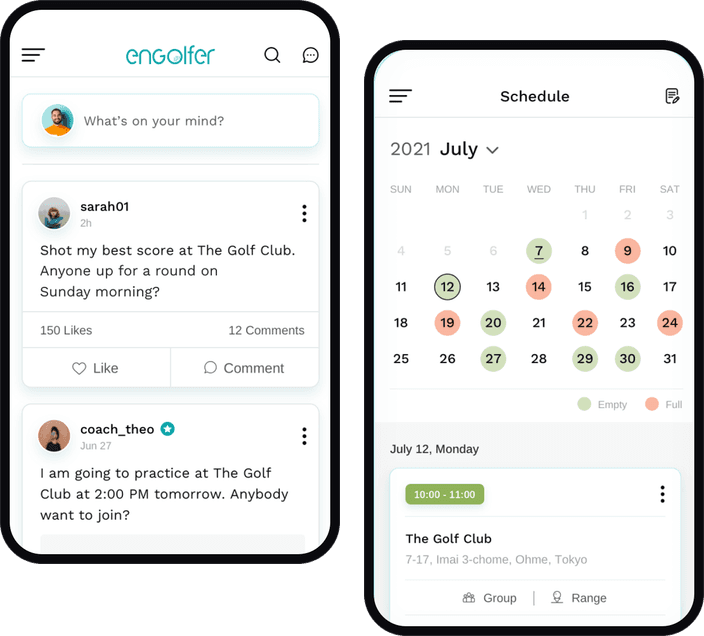
Golfers find a coach or a tee slot near them, coaches fill their diaries, and each facility manages its schedule from a browser. When two players reach for the same slot, only one booking goes through, and everyone else sees it taken at once. While the app ran, more than 200 facilities joined and players made more than 5,000 bookings.

Team
6 people
Timeline
About 10 months
Budget
$25k–50k

What our clients say

Clients on Clutch, where we hold a 4.9 average across 45 reviews. Quotes are the reviewers’ own words; the result lines are ours.

5.0 out of 5on Clutch, Apr 2017
They’ve been very good. I’m very happy.

The result

2K+ players, 15K matches and 700 clubs on the app.

Client logo

Brian Cushnie, Director, Wallace Park Indoor Tennis Center

Tennis club

5.0 out of 5on Clutch, Feb 2018
They got the job done within the budget and timeline promised, a rarity among app developers.

The result

The apps streamline ordering for both customers and restaurant staff, and keep working incredibly well.

Client logo

CEO, Software Company

Food-ordering software

5.0 out of 5on Clutch, Mar 2020
We never once had a major issue with the team.

The result

Platform launched with very positive sign-up rates and is being built out into a complete platform.

Client logo

Benedict Lee, Director, Antgage Pte Ltd

Arts & entertainment

How a hospitality software project runs

A mid-size hospitality app takes 10–12 weeks from discovery to launch, plus an optional one-week pilot, with a working demo every two weeks. Small apps fold discovery and design into 1–2 weeks and launch in 4–8. Across the 8+ projects we built with Claude Code in the last year, delivery took up to 50% less time than comparable builds the year before.

The five phases

How much does hospitality software development cost?

Hospitality software development with Techuz costs $10k–⁠15k for a small app, $25k–⁠50k for mid-size and $50k+ for large, built in phases. Rates are $20–25 an hour, by role and seniority.

Typical cost by project type (steps not to scale).
  1. Small

    4–8 weeks

    A QR ordering or booking web app for one location, with an admin panel

    $10k–15k

  2. Mid-size

    10–12 weeks

    iOS, Android and web apps with payments, live status and two or three staff roles

    $25k–50k

  3. Large

    Built in phases · 4–6 months

    A multi-venue SaaS, seat maps or several integrations

    $50k+

What’s included

Every price includes design, QA, project management and 30 days of free support; hosting and third-party fees are listed in the proposal.

How do we keep guest payments and data safe?

With practices you can check, not badges. Techuz holds no certification of its own; we build to the requirements your payment provider and auditors set.

Card data stays with the payment provider

Hosted payment pages and tokens mean card numbers never touch your servers. That keeps your PCI DSS scope small and your compliance work lighter.

Roles per location and staff level

Owners, managers, waiters and front-desk staff each see only their own venue and tasks. Every admin action is logged with who did it and when.

Guest data in your own account

The database, backups and app store listings sit in your cloud and developer accounts from day one. You can change vendors without asking anyone for your guest list.

See our application security work.

Technology we use for hospitality apps

We pick the stack your team can run after us, and the reason goes into the architecture note you sign.

  1. Mobile

    Flutter for new apps (one codebase); native when the phone’s hardware is the product

  2. Web and admin

    Long-lived, admin-heavy apps for staff and owners

    • Angular
    • React
  3. Back end

    One API for the guest, staff and admin apps

    • Node.js
    • Express
  4. Real time

    Order and slot status without polling

    • WebSockets
  5. Data

    Bookings, orders and guest records

    • MySQL
    • MongoDB
  6. Cloud

    Auto-scaling for rush hours, in your own account

  7. AI

    Answers from your own documents; speech to text for staff apps

    • LLMs with retrieval (RAG)
    • Speech-to-text
    • Claude
    • OpenAI

Hospitality software development FAQ

  • Hospitality software development is building the apps and systems restaurants, hotels, venues and travel businesses run on: ordering, booking, ticketing, guest messages and staff tools. Techuz does it as custom web and mobile work, also called hospitality app development.

  • If a standard reservation or POS subscription already fits your service, renting it costs less and launches faster. Techuz doesn’t build full property management systems, channel managers or OTA connections from scratch.

  • A hotel management module or guest app from Techuz costs $10k–15k for a small build, $25k–50k for mid-size and $50k+ for large, built in phases. Hotel management software runs rooms, bookings, check-in and billing; most hotels keep their PMS and add custom apps around it.

  • A web page is quicker for a first visit, because guests install nothing. An app fits better when you want accounts, a membership and a record of regular guests. Techuz built a restaurant client’s QR ordering as iOS and Android apps for exactly that reason.

  • Yes, where the vendor offers an API. We have connected the RTS theater system, Stripe, PayPal and messaging services. POS and PMS work is quoted per vendor, as we haven’t shipped one yet.

  • A booking app from Techuz takes 4–8 weeks for a small build and 10–12 weeks for mid-size, with iOS, Android and an admin panel. Large multi-venue platforms take 4–6 months once the scope is clear.

  • Yes: Techuz builds assistants that answer menu, allergen and policy questions from a venue’s own documents, and is building an AI coaching app for restaurant waiters. People or fixed rules stay in charge of payments, booking changes and allergy checks.

Get a Ballpark Estimate for Your Project

Tell us what you're building. We reply within 24 hours and send a ballpark estimate within 48.

Tell us about your project

A few lines are enough. We reply within 24 hours.

By sending this form I confirm that I have read and accept the Privacy Policy