
Learners who keep watching on weak networks
Every lesson ships in several qualities, and the player switches as the connection changes. A student on a crowded train drops to 360p for a minute instead of quitting the lesson.

Launch your own video learning platform, where recorded lessons play smoothly on any connection, live classes run in the same login and every learner record stays yours.
4.9 on Clutch from 45 reviews · 500+ projects since 2013 · Building EdTech platforms since 2017
Our video-based learning platform development services build the platform your courses live on: recorded lessons, live classes, practice and payments in one login. We set up the video path first, from upload to playback on a slow phone, so learners keep watching from launch.
A video course hosting platform built into your product converts every upload into adaptive streams at 360p, 540p, 720p and 1080p, served from a CDN close to each learner. Students on patchy mobile data keep watching instead of waiting for a spinner. See AWS services.
Live classes run inside your platform on BigBlueButton: the platform creates each class, checks it is running and closes it when the trainer finishes. Attendance is marked as each student joins, so trainers spend the hour teaching, not taking a register.
Course video protection is matched to the risk: signed links on every video chunk for most libraries, and stronger encryption when the videos are the product itself. Paid lessons stay behind the paywall at a cost that fits your margins.
Revenue-share payouts turn the seconds each lesson is watched into each trainer’s monthly earnings, with the platform’s share split out automatically. Trainers are paid for real viewing rather than uploads, which keeps your best teachers on the platform.
An interactive video learning platform keeps learners moving, with AI practice quizzes, progress tracking and a reminder when someone stalls at 50% or 75% of a video. A learner who drifts away gets a nudge back, not silence. See generative AI development.
Need courses and certificates around the video too?
Because the video is your product, and a course platform decides how it plays and who owns the data. In Bitmovin’s Video Developer Report, published in September 2026, buffering was the playback measure most video teams tracked (57%).
Every lesson takes the same six steps, from a trainer’s upload to the payout that follows. We build each step on a managed video cloud (Brightcove) or your own AWS pipeline (MediaConvert and CloudFront). The architecture document records which route and why.
Gets you live fastest, with encoding and delivery handled for a license fee.
Takes more build work, but the cost per viewing minute falls as your library grows.
More on our cloud services.
Start on a course platform such as Teachable, Thinkific or Kajabi while you test whether people will pay. Build your own once live batches, trainer payouts, test prep or several user roles stop fitting its settings.
Still testing a course idea?
Start with MVP development and grow the platform from there.
An exam-prep academy, a live IT-training marketplace and a trading-course platform, each with video at its core.

Entrance-exam students learn from recorded lessons on the web and native iOS and Android apps, and schools and institutes subscribe too. We built a custom Video.js player with quality, speed and seek controls, so each student chooses how a lesson plays on their connection. Students practice straight after each lesson, with a fresh AI quiz for their board, grade and subject every time.
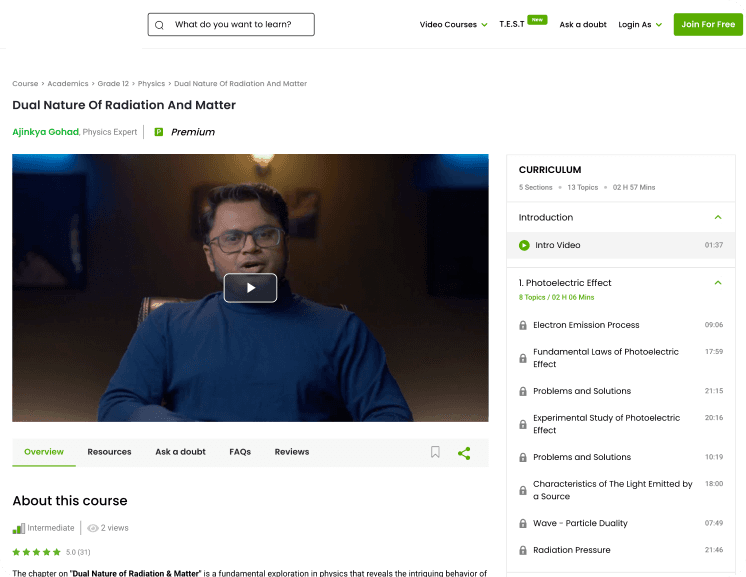
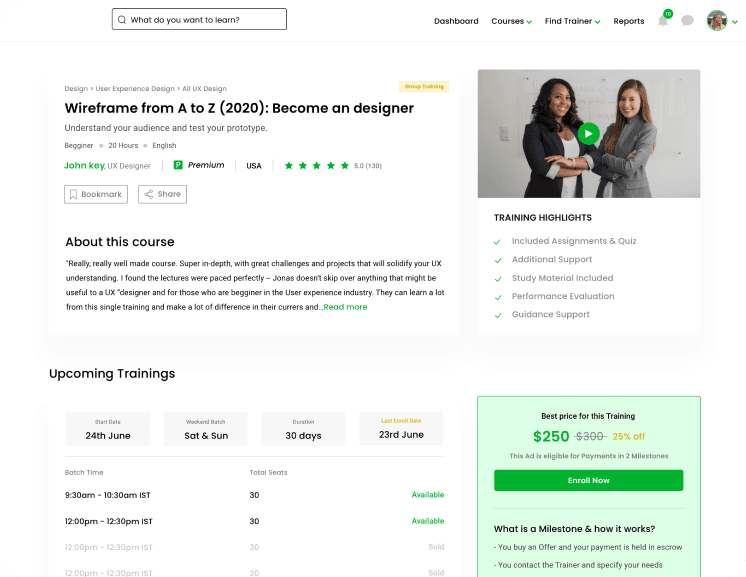
Freelance IT trainers sell recorded courses and live batches to learners in India and abroad. Course videos sit on Brightcove, and its viewing data sets each trainer’s monthly share, paid out through Stripe Connect and direct bank payouts, with GST collected at source.
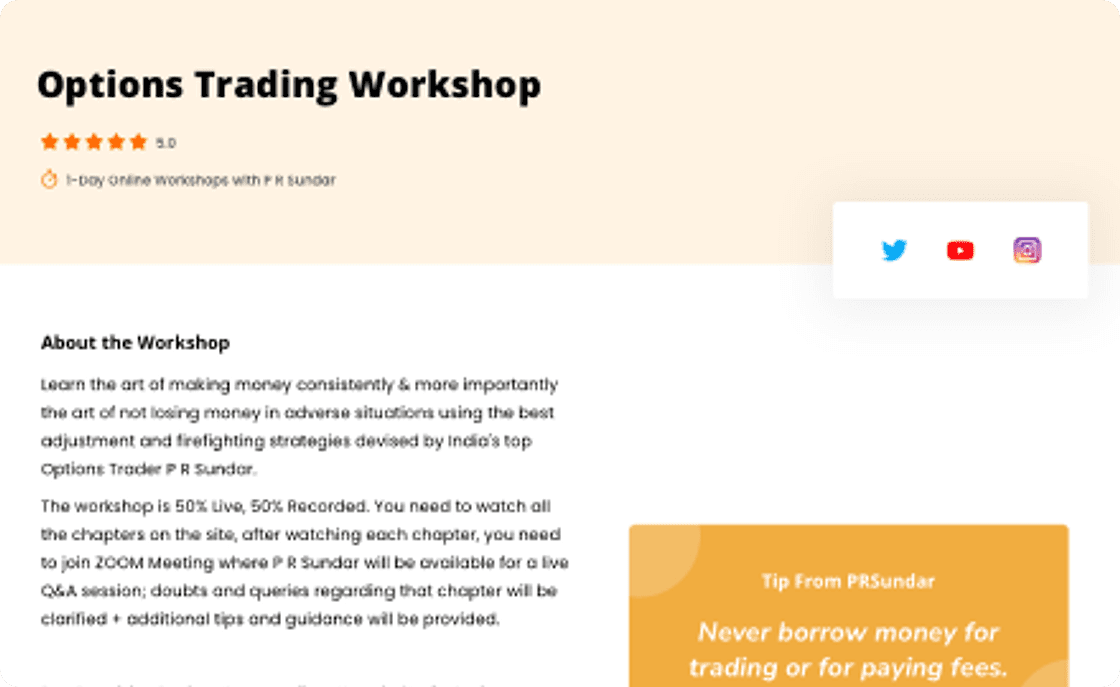
Online trading courses and one- or two-day workshops, recorded or live, with Razorpay checkout and course reviews. VdoCipher protects every course video, and a slab manager raises workshop prices as seats fill. Learners buy courses and workshop seats through one checkout, and each paid lesson plays only inside the protected player.
A small platform takes 8–12 weeks, a mid-size one 12–24 weeks and a large one 6–12 months once the scope is clear. The phases below add up to the small range; larger builds add more build sprints.
Small platform
8–12 weeks
Recorded courses, subscriptions, an adaptive player
Mid-size
12–24 weeks
Adds live classes, several roles, trainer payouts
Large
6–12 months
A marketplace or academy with apps and AI practice
A video learning platform with Techuz costs $10k–15k for a small build, $25k–50k for mid-size and $50k+ for large, built in phases. Rates are $20–25 an hour, depending on role and seniority.
$10k–15k
Small
8–12 weeks
Recorded courses with subscriptions, an adaptive player and an admin panel
$25k–50k
Mid-size
12–24 weeks
Adds live classes with attendance, several roles and trainer payouts
$50k+
Large
Built in phases · 6–12 months
A marketplace or academy with mobile apps, AI practice and several payment providers
Small
8–12 weeks
Recorded courses with subscriptions, an adaptive player and an admin panel
$10k–15k
Mid-size
12–24 weeks
Adds live classes with attendance, several roles and trainer payouts
$25k–50k
Large
Built in phases · 6–12 months
A marketplace or academy with mobile apps, AI practice and several payment providers
$50k+
Every price includes QA, project management and 30 days of free support.
Hosting and third-party tools are listed with monthly costs in the proposal.
With layers chosen by risk, not one expensive default. In a decodeTV industry survey reported in March 2026, 65.6% of the senior video executives surveyed said they use DRM. We add it where your content justifies the fee.
We choose the stack per product and record the reason in the architecture document you sign.
Server-rendered pages that search engines read, fast dashboards for trainers and admins
One API for web, mobile and admin
Encoding, delivery, protection, playback and live classes
Managed services, so you don’t pay engineers to run servers
Learner apps for phones and tablets. See mobile app development.
Course sales, subscriptions and trainer payouts
Practice quizzes, smarter search and faster onboarding, with prompts versioned
When you are still testing whether people will pay, a course platform such as Teachable or Thinkific costs less and starts faster. Techuz also doesn’t film or edit lessons, and we haven’t built large live broadcasts for thousands of viewers at once. We build the platform around content you already create.
A video-based learning platform is software where people learn mainly through recorded lessons and live classes, with practice, progress tracking and payments around the video. Techuz builds them as the client’s own product, so the client controls the player, the pricing, the learner data and how trainers are paid.
Choose a video learning platform when video is what you sell: recorded courses, live batches and creators paid by watch time. Choose an LMS when you mainly assign and track training, with SCORM content and completion reports. Techuz builds both, and many education products combine them in one platform.
With Techuz, a small platform takes 8–12 weeks, a mid-size one 12–24 weeks and a large one 6–12 months once the scope is clear. The video pipeline is set up before the first build sprint, so every later sprint is tested on real lessons.
Techuz serves each video chunk through a short-lived signed link, so a copied link soon stops working. For premium courses we add DRM encryption and watermarking, as on a trading-course platform we built. No method stops someone filming their screen, but a watermark shows where a leaked copy came from.
The monthly cost of running video depends on the hours you upload, the hours learners watch and the route you choose. Before the build starts, Techuz estimates encoding, storage, delivery and any Brightcove or video-protection license per 1,000 learner-hours. You approve that running cost alongside the build cost.
Tell us what you're building. We reply within 24 hours and send a ballpark estimate within 48.


