
New customers set themselves up
Sign-up, trial and plan choice create a new company account without anyone on your side. Onboarding a customer needs no developer, so sales can grow faster than your team.

Bring us your SaaS idea, whether it rides a trend like AI or solves one costly problem in your industry, and we build it into a product customers pay for.
4.9 on Clutch from 45 reviews · 500+ projects since 2013 · SaaS clients in the US, UAE and India
Our SaaS development services turn a founder’s niche idea into a product customers subscribe to, from AI-first tools to software that fixes one industry problem. We launch the workflow customers pay for first, on a base that scales as accounts grow.
SaaS MVP development is for founders who need paying accounts fast: the one workflow customers buy, plus the basics to sell it. You start selling to real accounts within weeks, then build what they ask for next. See SaaS MVP development.
Custom SaaS development is for markets with their own rules, built as a full product with company accounts, custom roles, plans, integrations and a super admin. Tax, approvals and schedules work the way your industry runs them, so customers stop patching gaps with spreadsheets. See SaaS technical architecture.
SaaS product development keeps your product moving after v1, with a stable team that ships roadmap sprints and reviews usage and support tickets with you. The people who learned your domain stay on it, so each release builds on what customers already rely on. See software product development.
For a live SaaS product that has outgrown its first team, we audit the code, list the gaps and fix the blockers before adding anything new. Your next customers then get the roles, tenants or billing they ask for, while current accounts keep working. See software consulting and code audits.
Design for the screens a SaaS product lives on: sign-up and trial, plan and billing pages, each role’s views and the super admin. Trial users reach the core workflow without a support call, and your team spends less time walking customers through setup. See SaaS UI/UX design.
We build AI features such as an in-app assistant or document search that run for every customer account, with usage and cost tracked per company. You can price the feature into your plans knowing what each customer costs to serve. See AI SaaS development.
We build SaaS for markets with their own rules, from regulated documents to money, schedules and learning standards. Each type below is one we have shipped.
Each item below removes work you would otherwise repeat by hand for every new customer.
Techuz builds multi-tenant SaaS on one shared database by default, with every customer’s rows tagged and checked on every request. Each request passes four checks in order: sign-in, role, customer boundary, then input validation. Adding tenancy later means rewriting every query and permission, so it goes in with the first migration.
Request from Acme Clinics · Priya S. passes Sign-in, Role, Customer boundary, Input validation, in order, into one shared database where every row carries a customer tag.
A customer tag on every customer-owned table, set by the server from the signed-in user, never from the browser.
Custom roles and a permission matrix for each customer company, signed off before any code is written.
Files kept under customer-specific paths behind short-lived signed links, with search and AI indexes split per customer.
A separate admin app with its own audit log, for customer lookup, plan overrides and usage stats.
Dev, UAT and production kept apart from the first sprint, so testing never touches live customer data.
When a contract or regulator requires it, a customer can get its own schema or database instead; we decide this in architecture week.
Start with a flat plan or tiers, with features switched on per plan, and add usage pricing once you know what customers consume. In Growth Unhinged’s May 2026 survey of 230+ B2B software and AI companies, three in four had changed pricing or packaging within a year. So we keep plans in settings, where a price change needs no release.
Plan state follows payment-gateway events, never the browser.
Not sure which model fits?
In product discovery, we price your plans against your cloud and third-party costs.
Three platforms where many user types or locations share one product, with the team, time and budget behind each.

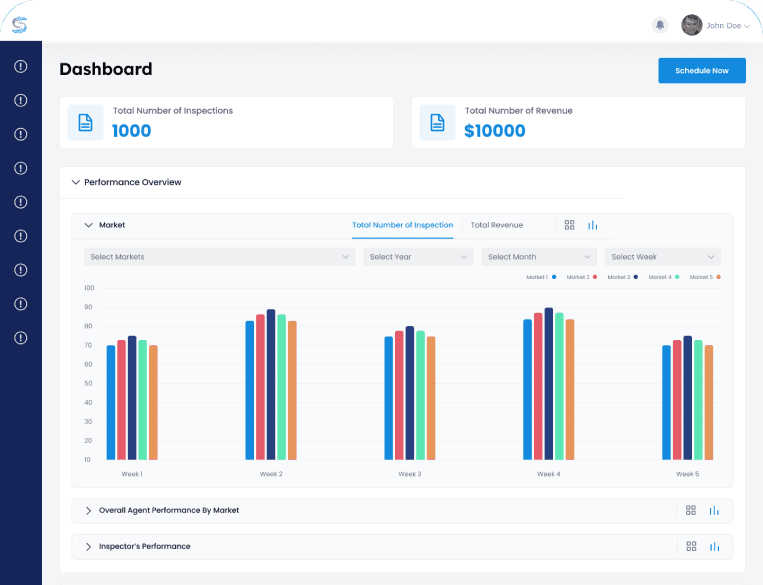
The inspection firm’s staff, realtors, vendors and customers each get their own view of one platform. It runs scheduling, report generation, staff training and OKR tasks, billed through Stripe recurring plans, on Angular, Node.js and MySQL on AWS.
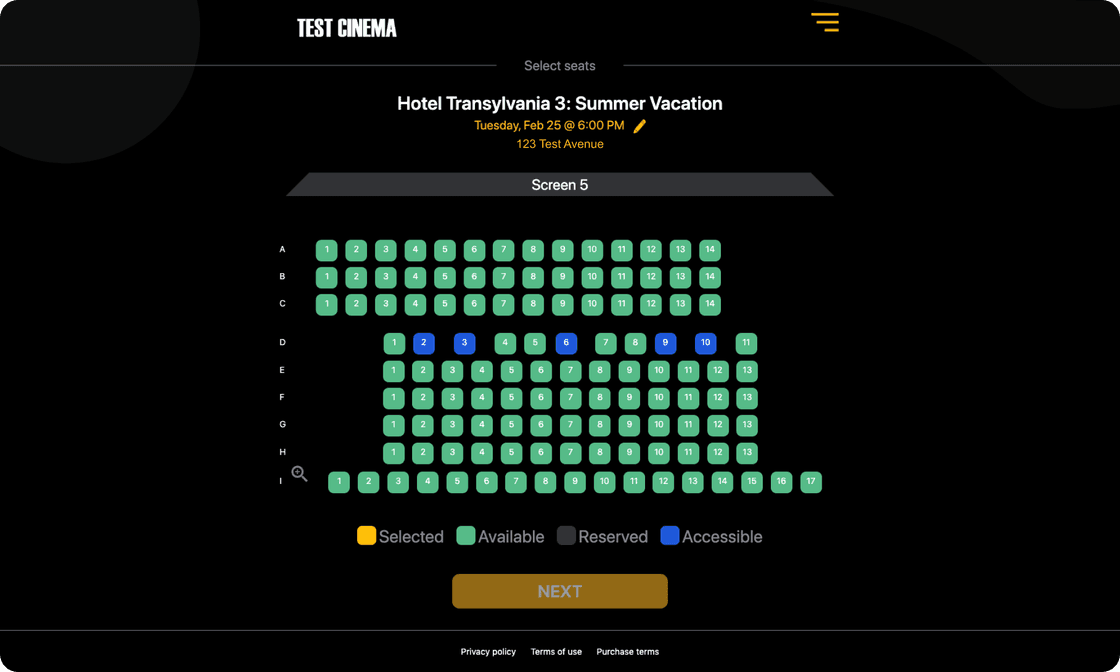

Many US theaters sell tickets through one platform, each with its own seat layouts and showtimes pulled from the RTS box-office system. Gift cards, promo codes, a web app and native apps, with AWS auto-scaling for weekend rushes. One platform and one back end serve every theater’s web and app sales.
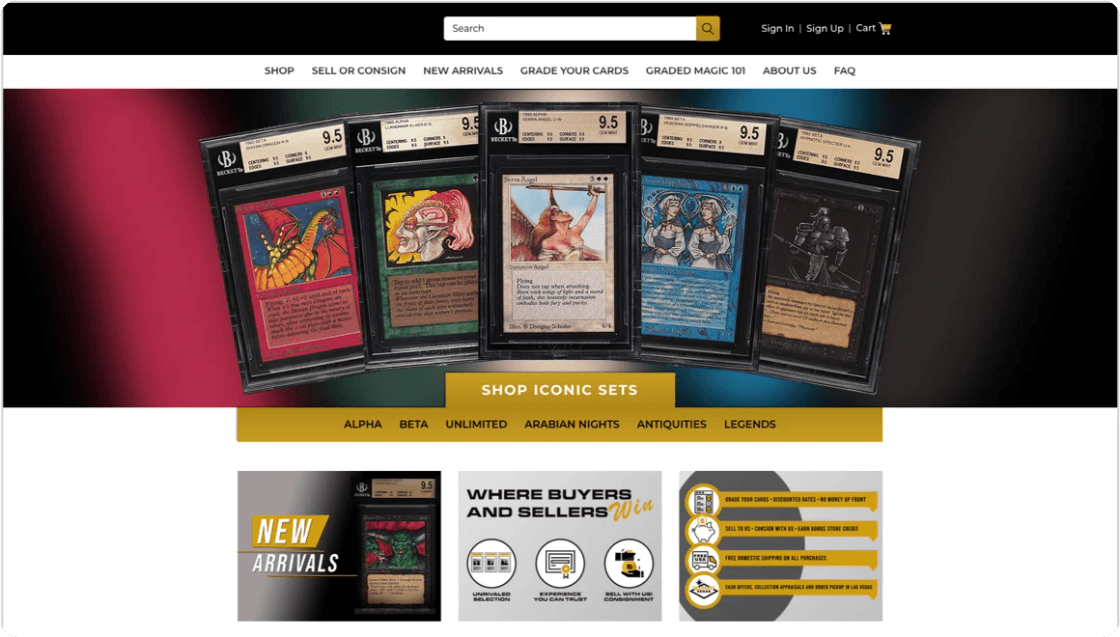

Collectors browse and buy graded collectible cards and pay through PayPal, on Angular, Node.js and MySQL on AWS. Inventory and catalogue stay in step with eBay in both directions, so each card is listed once.
Clients of the three platforms above, on Clutch, where we hold a 4.9 average across 45 reviews. Quotes are the reviewers’ own words; the result lines are ours.
Most impressive was their ability to take my requirements, build a scope document and follow it.
The result
Weekly Zoom updates and a revised scope of work kept the project flexible as needs changed.
Kevin Lewis, CEO, Schedash
Real estate SaaS
The platform is live, fully functioning and earning money.
The result
Positive initial feedback on the launched ticketing platform, with more features in progress and fast support.
CEO, Consulting Firm
Online ticketing
I’m very happy with the final product.
The result
A satisfactory final product, with bugs fixed and minor changes made after launch based on the client’s feedback.
Founder, Collectible Trading Cards Company
Collectible trading cards
How to build a SaaS: decide who your customers are, what they pay for and what each role sees before any code. A very small SaaS MVP takes 6–10 weeks, a mid-size MVP 8–12 weeks and a full product 12–20 weeks. The phases below show a full product.
Very small SaaS MVP
6–10 weeks
1–2 combined weeks of discovery and design, two 2–3 week sprints, 1–2 weeks of testing
Mid-size SaaS MVP
8–12 weeks
A one-week Discovery Sprint, 2–3 weeks of design and architecture, two or three 2-week sprints, 1–2 weeks of UAT
Full SaaS product
12–20 weeks
The six phases below
SaaS development with Techuz costs $10k–12k for a very small MVP, $25k–50k for a mid-size MVP and $50k+ for a full product, built in phases. Each price is set after discovery, and you pay in milestones.
$10k–12k
Very small MVP
6–10 weeks
One core workflow, 1–2 roles, one plan, basic admin
$25k–50k
Mid-size MVP
8–12 weeks
Company accounts with custom roles, Stripe plans, an admin panel
$50k+
Full SaaS product
Built in phases · 12–20 weeks
Multi-tenant, plan-level features, super admin, integrations
Very small MVP
6–10 weeks
One core workflow, 1–2 roles, one plan, basic admin
$10k–12k
Mid-size MVP
8–12 weeks
Company accounts with custom roles, Stripe plans, an admin panel
$25k–50k
Full SaaS product
Built in phases · 12–20 weeks
Multi-tenant, plan-level features, super admin, integrations
$50k+
Discovery to launch, project management, QA, three environments, a handover pack and 30 days of free support. Rates are $20–25 an hour, depending on role and seniority. A one-week Discovery Sprint costs $1,500–2,000 and is credited to the build if you sign within 60 days.
Compliance is built into the product itself. Enterprise buyers ask where their data lives in the first meeting, so we settle the region during architecture, in your own AWS account.
Proven tools any future team can maintain, running in your own cloud accounts.
Customer-scoped tables, caching and job queues
Gateways and sign-in methods already shipped; SSO on request
AWS in your account, with alerts
When an off-the-shelf tool already covers 90% of your need, or nobody has agreed to pay yet; then a clickable prototype or paid pilot comes first. Techuz is also the wrong pick for Kubernetes-scale or multi-region active-active setups from day one. The same goes if you need a vendor holding SOC 2 Type II or ISO 27001, or a fixed price for an open-ended roadmap.
SaaS development is building software that many customer companies subscribe to, run from one codebase in the cloud, with accounts, roles, plans and billing. Techuz builds the whole product, from the customer app and super admin to the marketing site.
It is one platform serving many customers, where each customer sees only its own data. Techuz uses one shared database by default, with a customer tag on every row checked on every request. A customer gets its own schema or database only when a contract or regulator requires it.
With Techuz, a very small SaaS MVP takes 6–10 weeks, a mid-size MVP 8–12 weeks and a full product 12–20 weeks. Regulated or AI-heavy platforms take longer, and we quote them once the scope is clear. Release and 30 days of free support follow these totals.
You own the code, the cloud account and Stripe from day one. Techuz works in your Git organization and sets up the cloud, Stripe and vendor accounts under your ownership, with credentials shared through a vault. If you change teams later, there is nothing to hand back.
With Techuz, a very small SaaS MVP costs $10k–12k, a mid-size MVP $25k–50k and a full multi-tenant product $50k+, built in phases. Discovery fixes the scope, so the quote doesn’t move mid-build.
Tell us what you're building. We reply within 24 hours and send a ballpark estimate within 48.

