






Cloud consulting services on AWS, Azure and Google Cloud

We plan, build and run the cloud behind your SaaS product, web app or AI feature, sized for today’s traffic and next year’s growth.

4.9 on Clutch from 45 reviews · 500+ projects since 2013

  • Tutorac Academy
  • Tickets For The Show
  • GetLitt

Our cloud consulting services

Our cloud consulting services set up new product infrastructure, move apps off a vendor’s account and run platforms on AWS, Azure or Google Cloud. You approve a monthly bill estimate before the build, so hosting costs match your plan from launch.

  • AWS services

    AWS consulting, builds and migrations for most products we ship, on EC2, RDS, S3 and CloudFront, with Lambda for event-driven jobs. Your product runs on the setup our engineers know best, so launches and scaling hold fewer surprises.

  • Azure consulting and services

    Azure consulting and services for companies that already run on Microsoft, including Azure OpenAI deployed inside your own tenant and Key Vault for credentials. AI features and data stay inside the Microsoft estate your IT team already governs.

  • Google Cloud services

    Google Cloud work for regulated data and AI: Cloud Run backends with Cloud SQL Postgres, Cloud KMS keys and Cloud Armor, plus open-source model fine-tuning. You get managed services that suit healthcare data and model training, with no servers for your team to manage.

  • Cloud application development

    Cloud development services that build hosting alongside your product: dev, UAT and production, a managed database, queues and serverless jobs in your required region. Your infrastructure fits how the app works from the first release. See software development services.

  • Cloud migration and hosting takeovers

    Cloud migration services that move your app from a vendor’s account or another provider into one you own, with a planned cut-over and rollback. You hold every key afterwards, and the switch happens in a low-traffic window you agree. See migration timelines.

  • DevOps and CI/CD

    Pipelines and monitoring for routine releases: GitHub Actions tests, builds and deploys every merge to staging, and alerts reach whoever fixes things. Shipping becomes a weekly habit instead of a risky event.

Running AI models on GPUs?

See AI infrastructure. For system design or security reviews, see technical architecture and application security.

Techuz at a glance

Since 2013, Techuz has built and run software for companies in the US, the UK, Australia and the UAE. More about Techuz.

  • 12+ yearsbuilding software (since 2013)

  • 500+projects delivered

  • 250+clients

  • 25+products we built, hosted on AWS

How AI fits into our cloud work

AI shows up twice in our cloud work. Our engineers use AI coding tools to write pipelines and infrastructure faster, with a person checking every change. And when your product adds AI, we plan where models run and what each customer’s usage costs.

AI in how we build

Our engineers use Claude Code to draft pipeline files, deployment scripts and infrastructure docs. Each change then goes through a pull request, and the project’s tech lead approves it before it reaches any environment.

  • Why it matters:: in cloud work one wrong permission or open port costs more than a slow week.
  • Your data:: no client data goes to an outside AI model unless you approve it in writing, and we turn off training on it.

AI features we build

When your product adds AI, we set up where the models run and how their cost is tracked. That can mean Azure OpenAI inside your own tenant, or open-source models fine-tuned on our Google Cloud or yours. Each customer’s AI usage is tracked, with a spending limit on every call.

    See AI development services, or how we fine-tune open-source models.

    How long does a cloud project take?

    A pipeline setup, cloud audit or hosting for one existing app takes 1–3 weeks. Infrastructure for a new product takes 4–8 weeks, running alongside the build, and a migration between providers or a compliance-heavy platform takes 8–16 weeks.

    Pick your path
    • New product

      4–8 weeks

      Inside the build: three environments, a managed database, backups and monitoring ready before launch

    • Existing app

      1–3 weeks

      Fixed scope: a cloud audit that includes your costs, a CI/CD pipeline, or monitoring and alerts for a live app

    • Moving clouds or vendors

      8–16 weeks

      A written runbook, a staging rehearsal on a copy of production data, cut-over in an agreed quiet window and 2 weeks of parallel monitoring

    How the work runs

    Cloud work runs inside our normal delivery cycle, so hosting is designed with the product rather than added at launch. Audits, pipelines and migrations run phases 1–3 and 5–6 as a smaller fixed-scope project; on a 1–3 week job, phases 1–3 fit into the first week and hardening takes a few days. Across the 8+ projects we built with Claude Code in the last year, delivery took up to 50% less time than comparable builds the year before. See how we work.

    Our take: Kubernetes only when it pays for itself

    Most products we build run better and cheaper on managed services, containers and serverless functions. A two-container app on a Kubernetes cluster brings a bigger bill and a system nobody in-house can run. We tell you in writing when traffic, team size or the number of services means you’ve outgrown that.

    How much do cloud services cost?

    A cloud audit or pipeline setup costs $3k–8k, full infrastructure for a new product $10k–25k, and a migration or compliance-heavy platform $25k–50k+. Hourly work starts at $20. You pay the cloud provider directly, and we add no markup to hosting.

    Typical cost by project type (steps not to scale).
    1. Audit or pipeline

      1–3 weeks

      A cloud audit with costs and a fix list, or CI/CD, staging, production and monitoring for an existing app

      $3k–8k

    2. New product infrastructure

      4–8 weeks

      Three environments, a residency region and backups

      $10k–25k

    3. Migration or compliance

      8–16 weeks

      A move between providers or accounts, or a compliance-heavy platform

      $25k–50k+

    What moves the price

    • The number of environments and services: APIs, workers, queues and AI services
    • Compliance and residency rules, such as HIPAA, PDPL or in-country hosting
    • The volume of live data to move, and the downtime you can accept
    • The state of inherited code and hosting: missing docs, no pipeline, secrets in the repo
    • The support hours you expect after launch

    Before you budget

    The estimate covers architecture, setup, hardening, the runbook, handover and the free fix period after go-live. Hosting and third-party services aren’t in this price: you pay each provider directly.

    Which engagement model fits your cloud project?

    Pick fixed price for an audit, pipeline or migration with a clear scope. Choose time and materials when infrastructure changes with a live product, and a support plan or dedicated engineer to run it month to month.

    Scope is clear

    Fixed price

    Best for

    An audit, a pipeline setup or a migration

    How it works
    Scope is fixed after discovery and paid by milestone, so you know the total before work starts

    Watch out for

    Migrations: the real scope shows only once the inventory is done, so we fix the price after phase 1

    Infrastructure will change

    Time and materials

    Best for

    Infrastructure that grows with a live product, such as new environments, regions or AI services

    How it works
    You’re billed monthly for the hours worked and can reprioritise each sprint

    Watch out for

    Open-ended work: agree a monthly budget and review it with us

    Run it month to month

    Support plan or dedicated engineer

    Best for

    Running the cloud after launch

    How it works
    Support plans give 40, 80 or 160 hours a month for patching, cost reviews and monitoring; a dedicated engineer starts from 160 hours a month, with 4 hours of daily overlap with your US workday

    Watch out for

    Underused hours: start with the smaller plan and scale up

    Compare all our engagement models.

    What our clients say

    Clients on Clutch, where we hold a 4.9 average across 45 reviews. Quotes are the reviewers’ own words; the result lines are ours.

    4.5 out of 5on Clutch, May 2019
    The platform is live, fully functioning and earning money.

    The result

    Platform launched and earning revenue, with fast support on issues.

    Client logo

    CEO, Consulting Firm

    Online ticketing

    5.0 out of 5on Clutch, Dec 2018
    They never look for shortcuts, and I know they won’t cheat me.

    The result

    A team as invested in the product’s success as the founder.

    Client logo

    CEO, E-Learning Company

    E-learning

    5.0 out of 5on Clutch, Feb 2024
    Most impressive was their ability to take my requirements, build a scope document and follow it.

    The result

    Weekly Zoom updates and a revised scope of work kept the project flexible as needs changed.

    Client logo

    Kevin Lewis, CEO, Schedash

    Real estate SaaS

    Why choose Techuz for cloud consulting

    The same engineers who build your product set up and run its cloud. In Kiteworks’ February 2026 Data Sovereignty Report, 93% of Middle East respondents said PDPL and SDAIA rules directly affect operations, so where your data lives is settled early.

    Your account, your keys

    We create the infrastructure and every vendor account, from payments to SMS and email, in your name from the first sprint. We hand every credential over through a vault and remove our own access within 7 days of the project’s end.

    The bill before the build

    Before any build starts, you sign off a monthly forecast for the database, storage, video encoding, AI tokens and messaging. That way, month two brings no surprise invoice.

    Data stays where your customers are

    Residency is settled in the first architecture review. A UAE marketplace runs in AWS me‑central‑1 for PDPL, and an Australian care platform is designed for AWS Sydney.

    The team that built it runs it

    Your product’s tech lead and senior engineers handle hosting too, backed by our 3 DevOps engineers. Incidents go to people who know the code, not to a separate ops vendor reading it for the first time.

    Every infrastructure change reviewed like code

    Pipeline and infrastructure changes go through pull requests, with least-privilege access and no secrets in the code. Nothing merges while a test is failing, so a bad setting is caught before it reaches production.

    Cloud technologies we use

    Managed services first, chosen per product and explained in writing.

    1. Compute and hosting

      Pay for steady load, scale for peaks, run spiky jobs without idle servers

      • AWSEC2, Lambda, Elastic Load Balancing with auto-scaling
      • Google CloudCloud Run and Cloud Run functions
    2. Data and storage

      Managed databases and storage tiers, so nobody on your payroll runs a database server

      • MySQLon Amazon RDS
      • MongoDB
      • Amazon S3 with CloudFront
      • Cloud SQL Postgresrow-level security
      • Cloud Storage with Cloud CDN
      • Azure Blob Storage
    3. Media, queues and events

      Heavy and slow work runs in the background, away from your users

      • AWS MediaConvertHLS
      • Redisjob queues
      • Google Pub/Sub
    4. CI/CD and infrastructure

      Every change is tested and deployed the same way

      • GitHub Actions
      • Terraform or AWS CDKon request and for regulated builds
    5. Monitoring and security

      Problems show up on a dashboard before customers notice them

      • Amazon CloudWatch
      • Sentry
      • UptimeRobot
      • AWS Secrets Manager
      • Azure Key Vault
      • Google Secret Manager
      • Cloud KMS
      • Cloud Armor
    6. AI

      Models run where your data rules allow, at a cost you can track

      • Azure OpenAIin your tenant
      • Open-source model fine-tuning on Google CloudPyTorch and PEFT

    Cloud work by industry

    Industries where our cloud setups already run, and the rules each one had to meet.

    • A HIPAA-minded messaging app for healthcare agencies, built on Google Cloud with customer-managed keys and row-level security on every record.

    • Adaptive lesson video, encrypted e-books on S3 and CloudFront, and SCORM course packages checked on AWS Lambda the moment they’re uploaded.

      Exam-prep learning platform lesson page
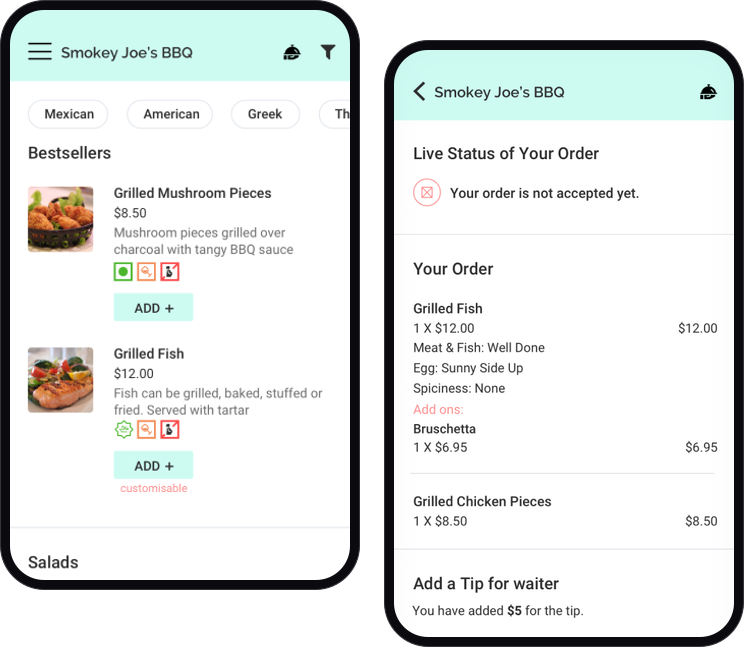
    • Load balancing and caching that keep real-time restaurant orders and marketplace listings quick at the busiest hours.

      Restaurant ordering app screens
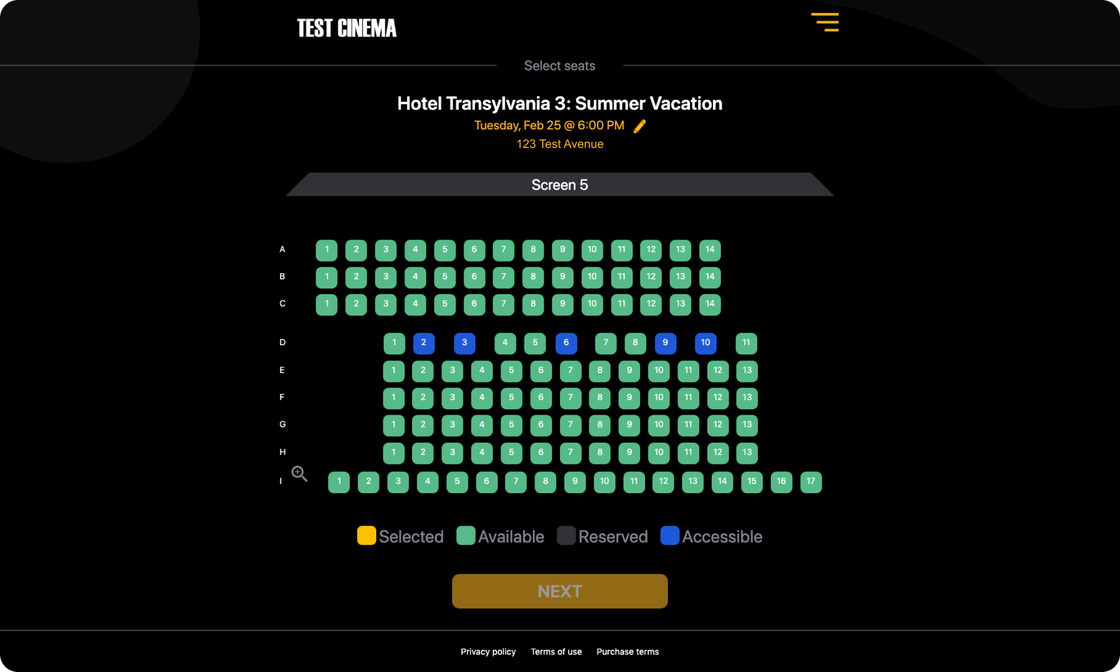
    • Auto-scaling that adds servers for weekend and holiday rushes across many theatres, then removes them on quiet days.

      Theatre seat map
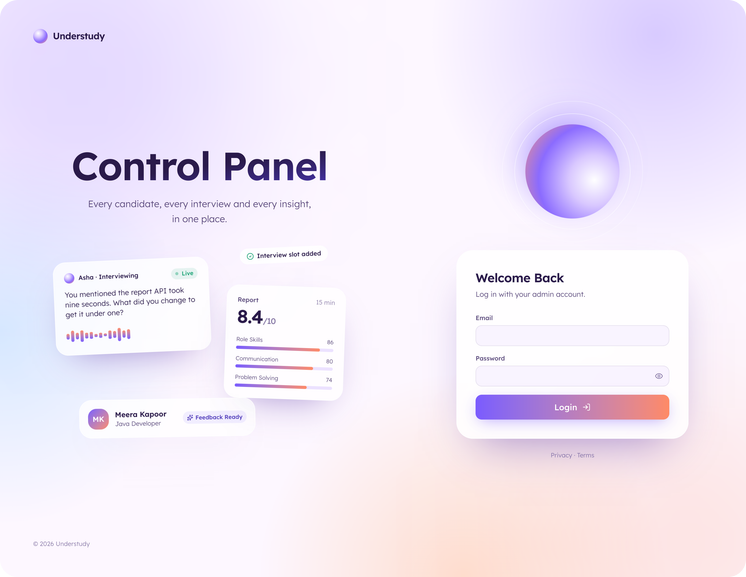
    • Interview recordings stored on S3 and deleted after 90 days by a scheduled job, keeping only the transcript and the final write-up.

      AI interviewer sign-in

    Cloud consulting services FAQ

    • Techuz isn’t the right fit for moving hundreds of servers, VMware estates or mainframes, or for Kubernetes platform engineering at scale. We also don’t run a 24/7 operations centre with 15-minute response around the clock. For a simple brochure site, managed hosting costs less than custom cloud work.

    • Cloud consulting services help a business plan, set up, move and run the hosting its software depends on, on AWS, Azure or Google Cloud. At Techuz, that covers architecture, setup, CI/CD pipelines, migrations, monitoring and ongoing support for the products we build and run.

    • The three main types are IaaS (servers and storage you manage), PaaS (managed databases and app hosting) and SaaS (software you subscribe to). Techuz usually pairs Amazon EC2 servers (IaaS) with managed PaaS such as Amazon RDS, and uses serverless options like AWS Lambda and Google Cloud Run for spiky jobs.

    • A standalone cloud audit or pipeline setup with Techuz costs $3k–8k, new product infrastructure $10k–25k, and a migration or compliance-heavy setup $25k–50k+. Hourly work starts from $20. Your monthly cloud bill is separate: the provider charges you directly, and we estimate it before the build.

    • Techuz uses AWS by default, because most products we build run there and its managed services cover most needs. Azure suits companies already on Microsoft or wanting Azure OpenAI in their own tenant. Google Cloud fits serverless backends for regulated data and AI model training, and we put our recommendation in writing during architecture.

    • The 7 Rs are rehost, replatform, refactor, repurchase, relocate, retain and retire: the options for each application in a cloud migration. Techuz handles application-level moves: rehosting, replatforming or refactoring an app, usually out of a vendor’s account into yours. We don’t take on data-centre exits, VMware estates or mainframe moves.

    • Your product runs in your cloud account from the first sprint. Techuz creates the infrastructure in your own AWS, Azure or Google Cloud account, through access you can revoke. If you later move hosting in-house, you get every credential, the architecture diagram and the runbook. Payment, SMS and email accounts are opened in your name too.

    • By default, Techuz covers Indian business hours: a production outage gets a response within 1 hour and an 8-hour fix target. Extended cover can be agreed in your contract. Monthly support plans add monitoring, patching and cost reviews.

    Get a Ballpark Estimate for Your Project

    Tell us what you're building. We reply within 24 hours and send a ballpark estimate within 48.

    Tell us about your project

    A few lines are enough. We reply within 24 hours.

    By sending this form I confirm that I have read and accept the Privacy Policy