Interview candidates without a senior engineer in the room
Spoken AI interviewer, 10–30 minutes, in the browser

Candidates have a spoken interview in the browser, the AI follows up like a person would, and our hiring team gets an answer-by-answer report.
 Techuz's own product
Understudy is Techuz's own AI interviewer, built to take first-round interviews off our engineers' plates. Candidates join from the browser for a 10–30 minute spoken interview, and the AI plans questions from their CV and the role. It replies in about 0.3 seconds, scores what people say, never their English, and has run 500+ real interviews.
Every first-round interview at Techuz used to take a senior engineer's time.
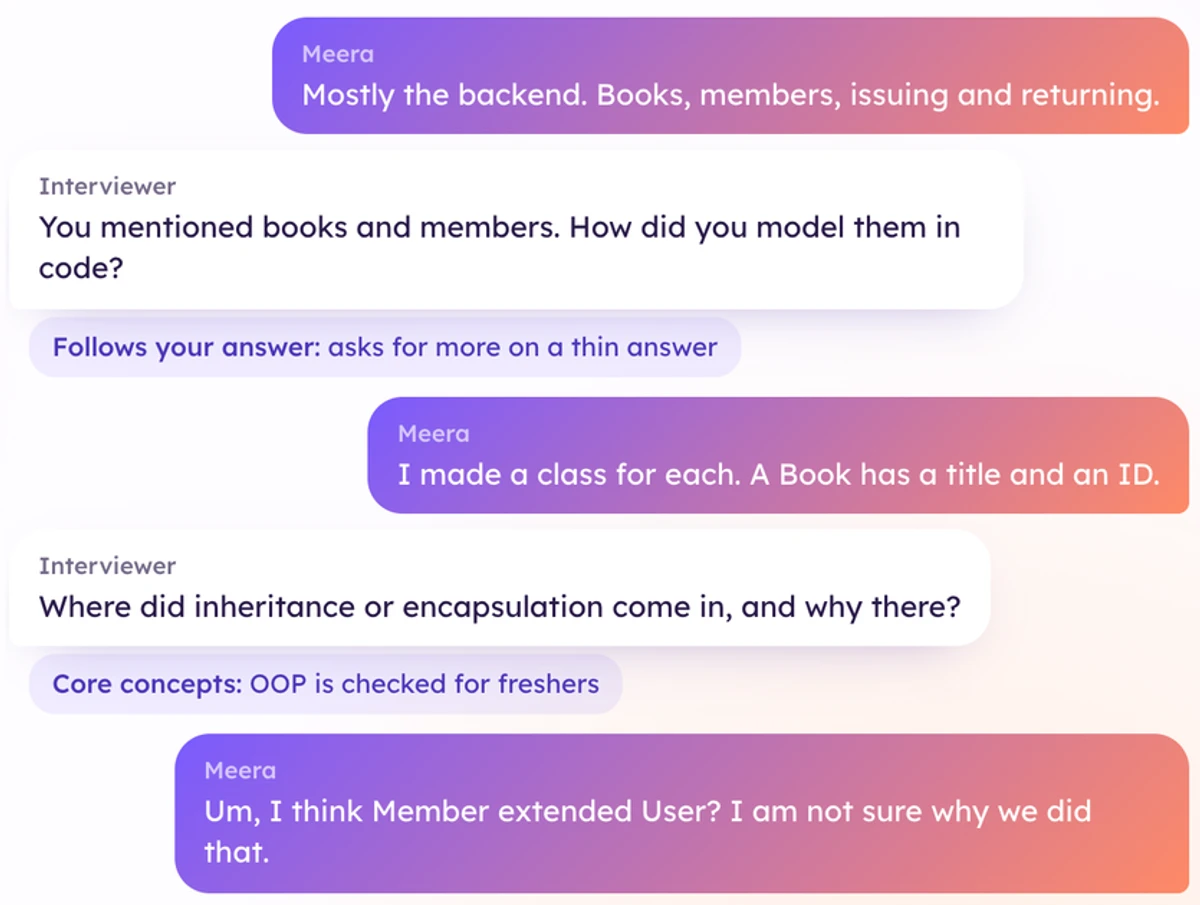
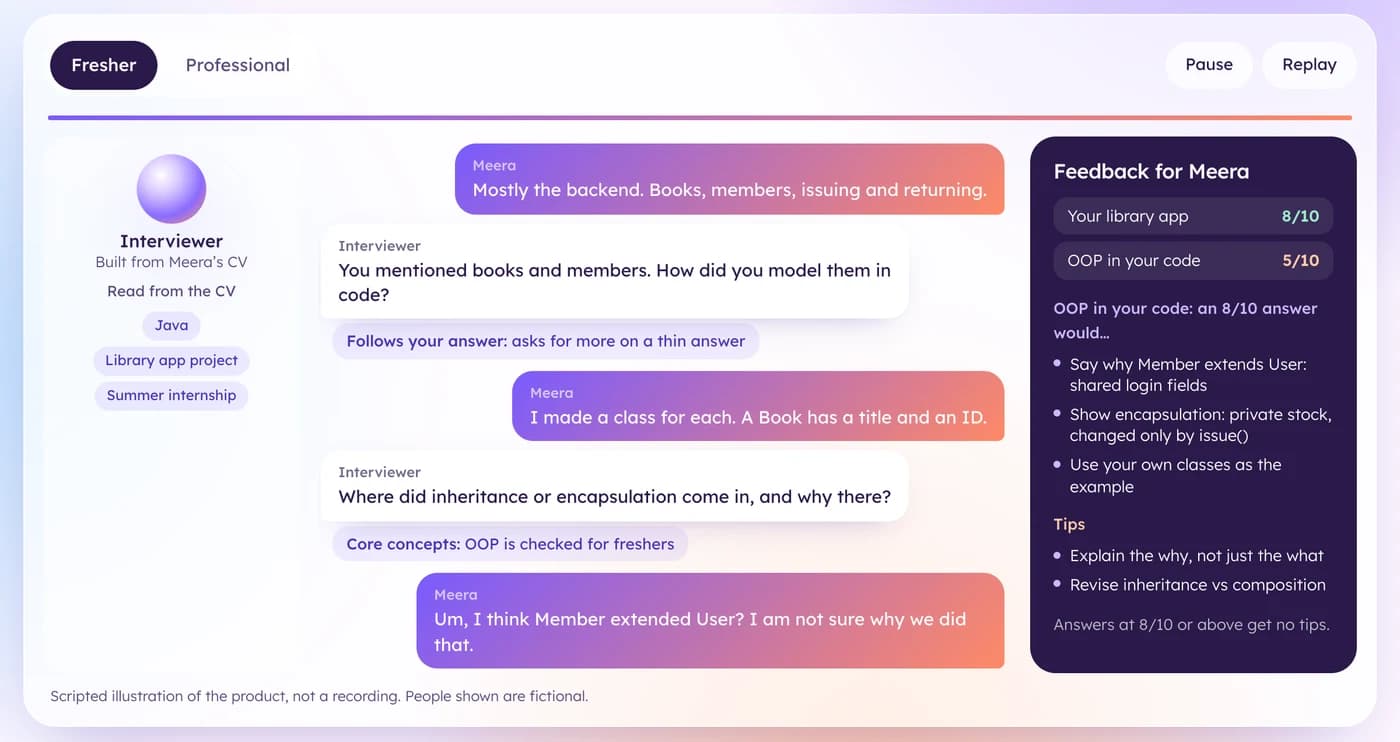
The idea was simple. An AI interviews the candidate, with questions drawn from the job and their profile. It adapts “each next question to the previous answer”, then hands the hiring team a structured report to review.
The tricky part wasn't getting an AI to ask questions. It was making the interview feel like a conversation and scoring it fairly.
We wrote one guardrail into the idea from the start: “AI produces transcript and evidence, a human decides; no face or emotion analysis.”
Three choices shaped Understudy. We moved to a live conversation with a coach, we never judge the English, and the AI gives evidence while a person decides.
Our first version was a chain of AI agents. They evaluated each answer, scored it, wrote the next question and checked it, and then the voice read it out word for word. Every question was checked before the candidate heard it, but there were 5–12 seconds of silence between turns.
So we let the voice model lead the conversation. It now replies about 0.3 seconds after the candidate stops talking. Meanwhile, a separate coach agent reads every answer and leaves notes for the next question: follow up, clarify, move on or wrap up.
The server still stays in charge. It creates every response, says the greeting and closing line word for word, keeps time and handles silences. If a response appears that the server didn't start, the interview ends.
Answers are scored on content only. Is it correct? How much real detail is there, what did the candidate do themselves, and how did they reason?
The “what a stronger answer would sound like” feedback starts from the candidate's own words, in plain English.
We tested this. Rewriting 46 real answers in fluent native English changed scores by just +0.13 out of 10, which is within normal run-to-run noise.
If the interview never tested a topic, it shows as “Not Assessed”, never zero. Some answers don't get scored at all: non-answers, requests to repeat, and questions that turned out unfair, like ones too code-level or already answered.
And if a question never asked why, we don't mark the candidate down on reasoning. That criterion drops out and its weight is shared. Before this, reasoning dragged almost every score down.
Candidates consent to the recording and the AI evaluation before they start, and the consent text says it plainly: “A person makes the final decision.”
The browser never holds a real key. The voice runs over WebRTC, steered from our server on a separate connection, and the browser only gets a key that expires in 120 seconds.
Every AI call has a budget. Each call is checked against a spending limit, and if the AI is unavailable, a rule-based report is produced instead.
Our hiring team adds a candidate from their CV and schedules the interview. The candidate joins from a browser, and the team reviews the report afterwards in the admin panel.
Spoken AI interviewer, 10–30 minutes, in the browser
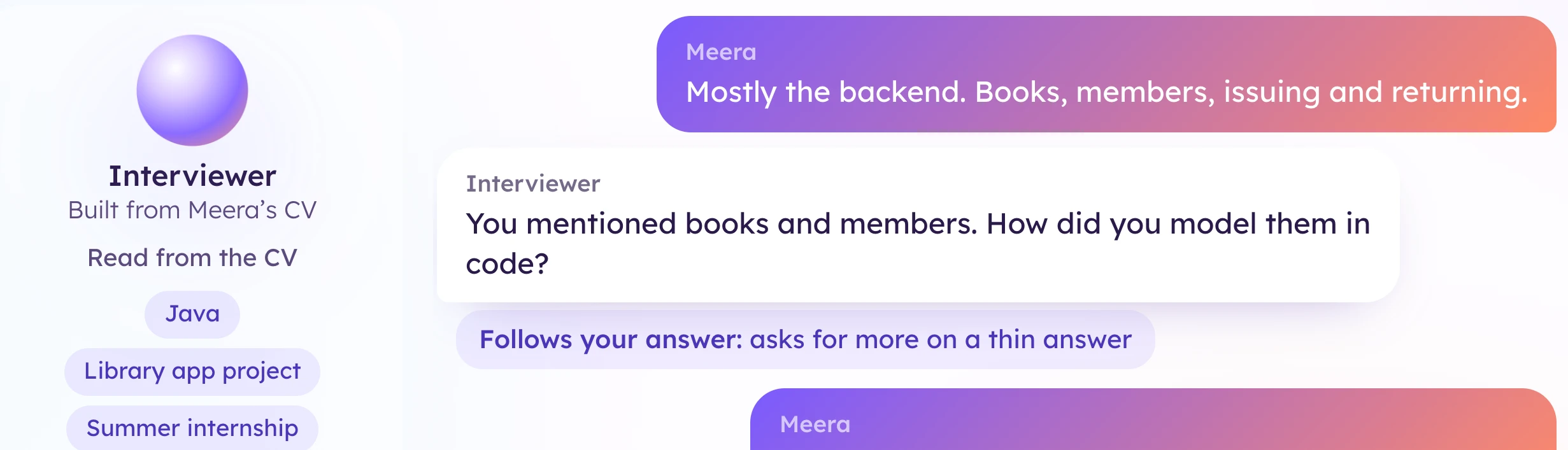
An AI plan of 8–14 topics, each with 3–5 key points
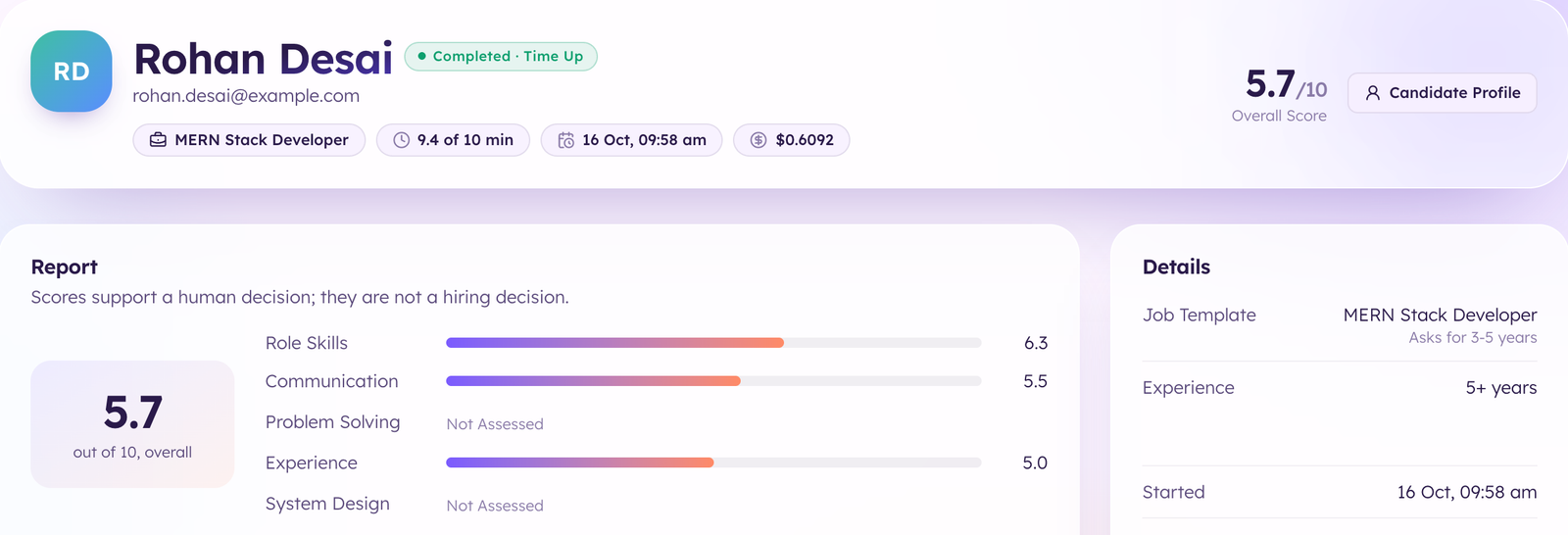
Score, what was covered and missed, one concern, and a question for the next round
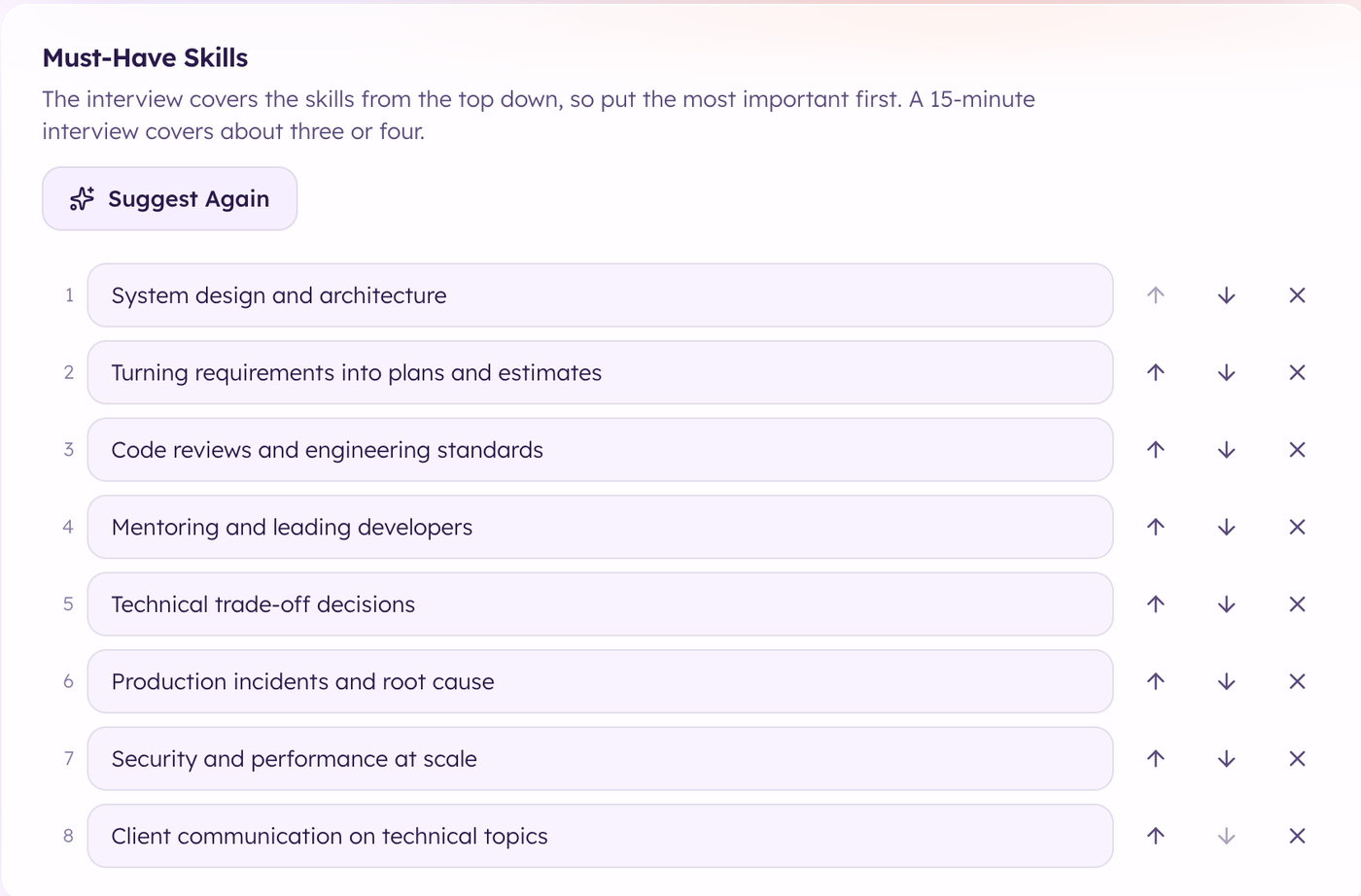
Each must-have skill marked Shown, Shown Weakly or Not Covered
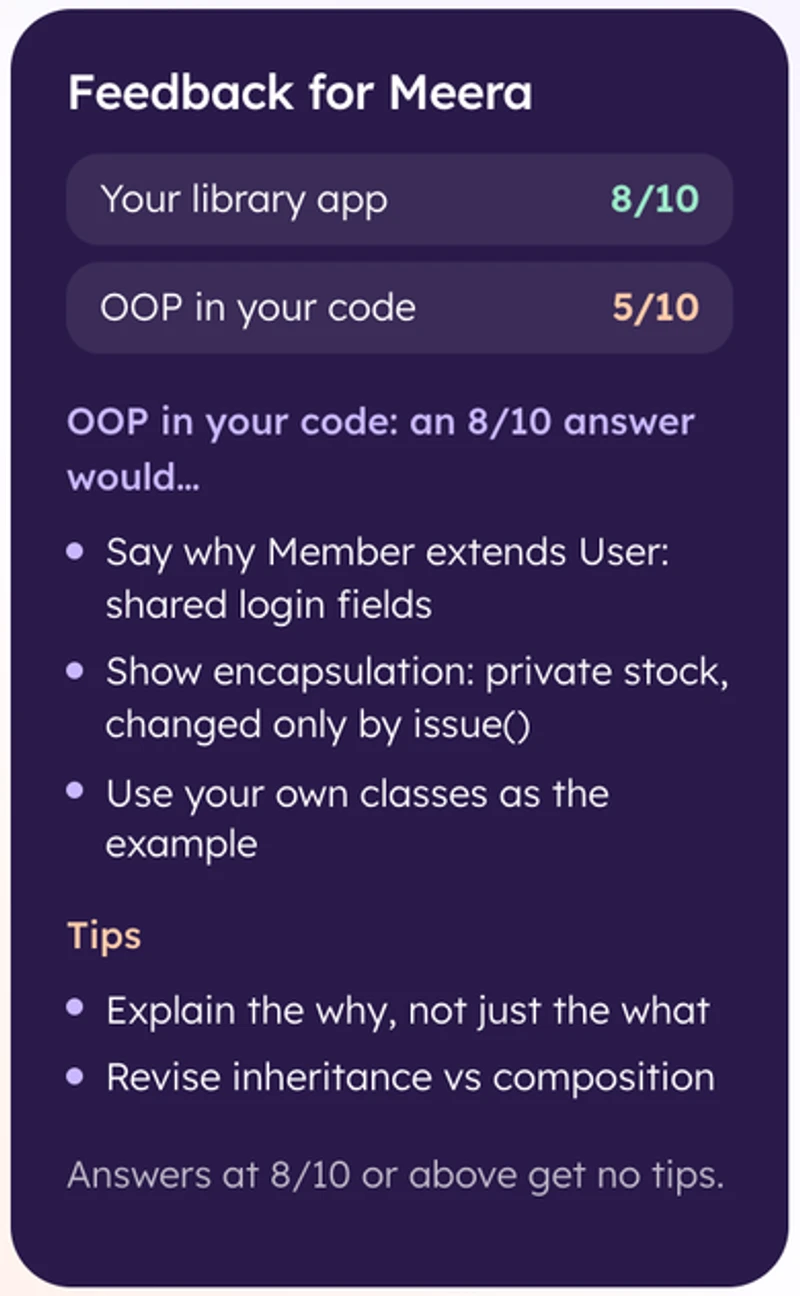
Score, what worked, and what a stronger answer would sound like; the admin decides whether to share it
We went from a written plan to a documented scoring method in about three weeks.
Accuracy was measured, not assumed. We kept a benchmark suite alongside the code, and our founder hand-scored real interviews so we could check the AI's scores against a person's.
2people
Understudy now runs first-round interviews for Techuz, and we checked its scores against our founder's own hand scoring. Senior engineers spend their time on the candidates who pass, not on every first call. Candidates get a fair interview in their own time, and the hiring team gets a report it can review in minutes.
Figures from Understudy's own interview records on our hiring.
Low-latency voice, steered from our server
Coach, planning, evaluation, scoring and reports
Plus an accuracy benchmark suite
Yes, an AI interview can be fair to non-native English speakers if it scores what they say, not how fluently they say it, and you test that. We rewrote 46 real answers in fluent native English and the scores moved by only +0.13 out of 10.
No, the AI doesn't decide who gets hired: a person makes the final decision. Understudy gives that person evidence: a transcript, scores and a skills match. Candidates are told this up front.
Understudy replies to a candidate in about 0.3 seconds. Our first scripted version left 5–12 seconds between turns.
On four real interviews hand-scored by our founder, Understudy's scores sit on average within 0.4 points out of 10 of the agreed score, down from 1.75 before we tuned the scoring.
Candidates consent to recording and AI evaluation before they start. Recordings are deleted after 90 days by default, and an admin can delete a candidate and all their data in one step.
Tell us what you're building. We reply within 24 hours and send a ballpark estimate within 48.