
Answers your team can check
Every answer links to the document and revision it came from, as on the medical device quality platform we build. Reviewers open the cited passage instead of re-reading the whole file.

Assistants and search that answer from your contracts, documents and records. An enterprise RAG architecture keeps each answer fast, accurate and traceable to its source.
4.9 on Clutch from 45 reviews · 500+ projects since 2013
Our RAG development services build AI products on top of your own knowledge: compliance assistants, in-app copilots, report generators and agents that act on records. Every answer and draft cites its source, so users trust it and act on it.
A RAG chatbot or assistant answers staff and customer questions from your manuals, contracts and records, inside your app. People get an answer they can check in seconds, instead of digging through folders or asking a colleague. See our AI chatbot development company work.
RAG application development for SaaS products adds document search to every customer account, with AI usage and cost tracked per account. You can offer document search on every plan and price it on real running costs. See SaaS development.
Ingestion pipelines split your uploads, embed them and keep each passage’s document ID, revision, owner and effective date, with only released versions searchable. Answers cite the right revision, and a superseded SOP never comes back as current guidance.
Assistants for regulated teams search controlled documents, change orders and training records, with every action the assistant takes kept in an audit trail. QA leads and auditors can trace any answer back to the approved record. See our healthcare software work.
An eval set of your real questions, each tagged with its expected document, scores retrieval, answer and citation one by one. When quality dips, the scores show whether search or the answer is at fault, so the fix goes to the right layer.
Agentic RAG makes document search one tool among many, so an assistant can find a record and prepare a change for the user to confirm. Staff finish a task in one request instead of switching between search and the system of record. See AI agent development services.
RAG is the layer that lets a product work from your knowledge, not only search it.
Compliance assistantsthat answer on your SOPs and regulations and link each answer to the clause.
In-app copilotsthat draft replies, proposals or reports from a customer’s own documents.
Report and document generatorsthat start from the right template and your past examples.
Research briefsthat pull from many sources overnight and cite each one.
Visual searchthat finds products from a photo, using image embeddings.
Need the wider picture?
In VentureBeat’s June 2026 survey of 101 enterprises, 57% said their AI agents gave confident but wrong answers traced to missing business context. RAG alone doesn’t stop wrong answers; how it’s built and tested does.
Every answer passes through five steps. We get the first two, document prep and access rules, right before we tune search on your real questions.
Steps 1, 2 and 4 run in our production builds today, on Pinecone as the vector store. Keyword search, re-ranking and other stores are tested on your data before we recommend them. For store choice, see our vector database solutions.
Choose RAG when answers depend on documents that change, on who is asking, or need citations. Fine-tune an open-source model for a set style, format or domain language, or when data must stay in your cloud. Techuz does both, and tests on your questions decide which.
We fine-tune open-source models such as Qwen or Llama on Google Cloud GPUs. Claude and GPT stay pre-trained and get your knowledge through RAG and prompts. See LLM development.
Two RAG systems running in production, plus the scoring method we use to prove an AI’s answers before launch.

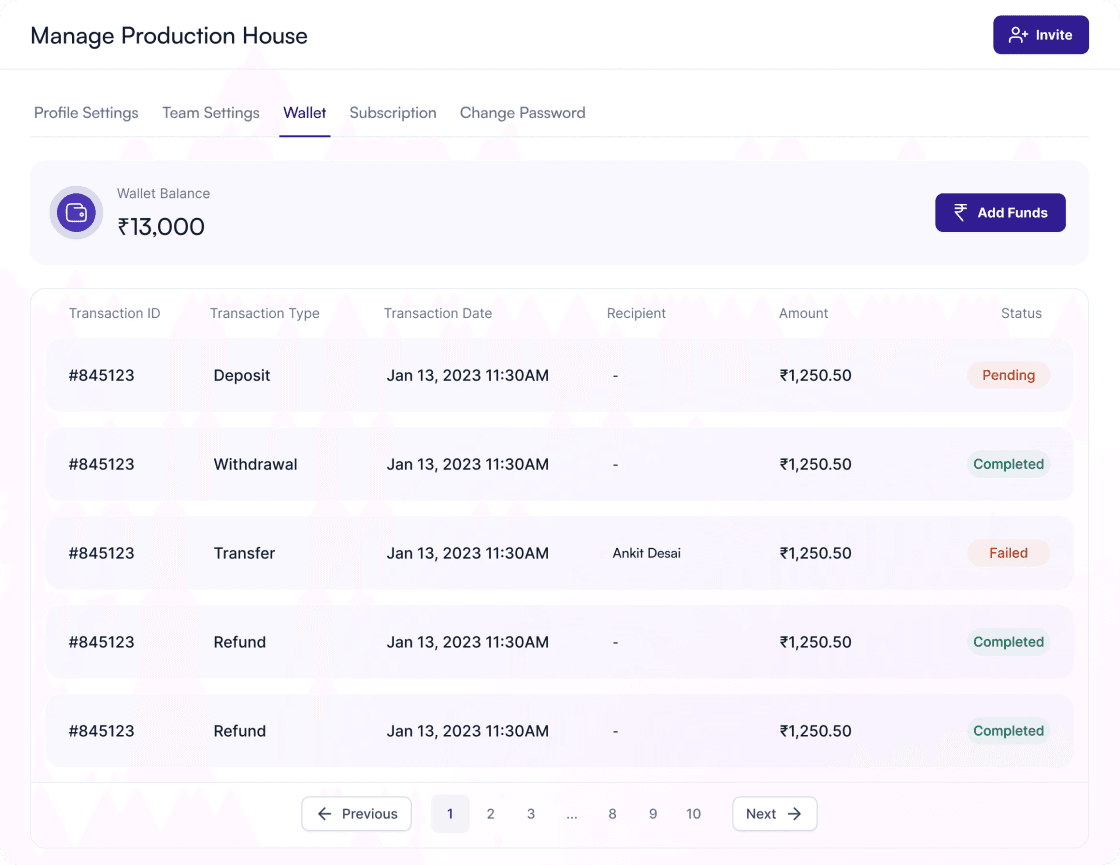
Each production’s uploaded files sit in their own searchable store, so crew questions are answered from that shoot’s documents alone. GPT-4o-mini and Pinecone run inside a platform that also handles contracts, attendance and payouts. Live in production, with no production’s files reachable from another’s chat.
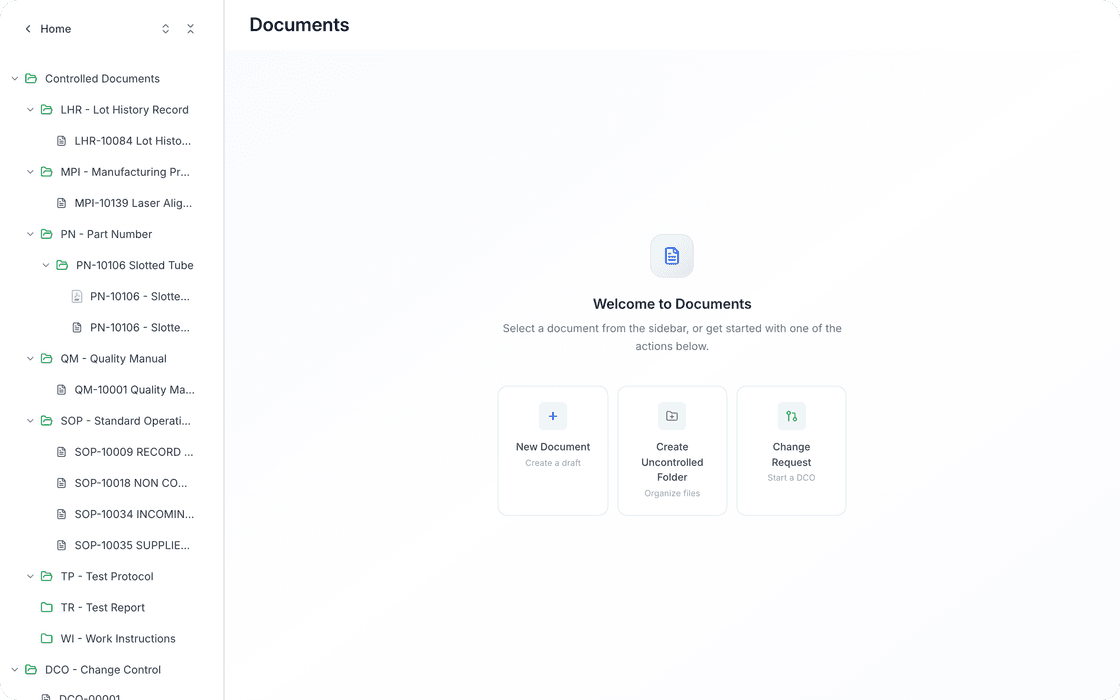

The assistant searches each company’s released quality documents, embedded with OpenAI embeddings in that company’s own Pinecone space. Changes wait for the user’s confirmation. 20+ releases shipped to production since go-live.
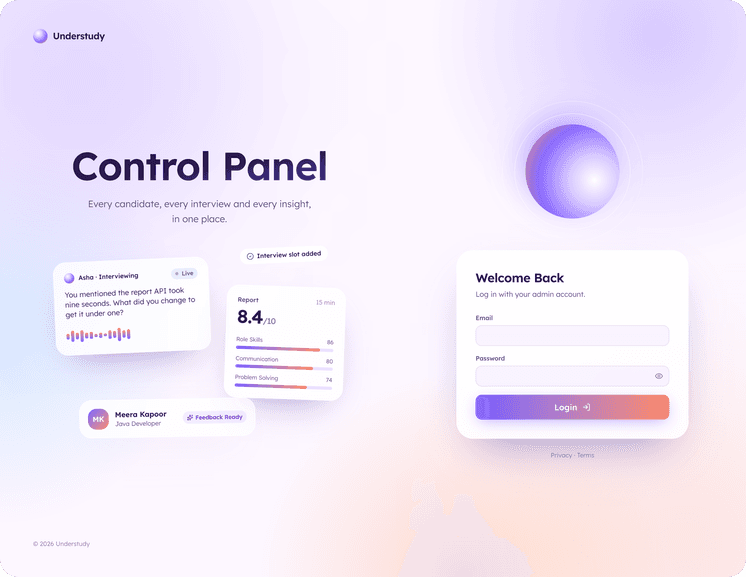

Not a RAG product, but proof of how we test AI before launch. Its scoring was tuned against our founder’s hand-scores on real interviews. The gap between AI and human scores fell from 1.75 to 0.4 out of 10.
Our RAG implementation services take 3–6 weeks for document Q&A on one source, and 8–14 weeks for a RAG assistant. The phases below are for the assistant. Document Q&A on one source folds phases 1–3 into 1–2 weeks, then runs one shortened build sprint of 1–3 weeks and a week of testing.
Paid proof of concept
2–4 weeks
Your top questions on a sample of your documents, ending in a go/no-go
Document Q&A
3–6 weeks
One source, inside your product
RAG assistant
8–14 weeks
Several sources, admin panel, citations, usage and cost tracking
Enterprise RAG platform
5–9 months
To first release: many customers or sources, compliance needs, actions on records
Across the 8+ projects we built with Claude Code in the last year, delivery took up to 50% less time than comparable builds the year before.
A paid proof of concept with Techuz costs $4k–10k, and document Q&A inside an existing product costs $10k–25k. A RAG assistant costs $25k–50k, and a platform across many customers or sources starts at $50k, built in phases. Model fees and vector store hosting are paid monthly, and we estimate them per 1,000 calls.
$4k–10k
Paid proof of concept
2–4 weeks
$10k–25k
Document Q&A in an existing product
3–6 weeks
$25k–50k
RAG assistant
8–14 weeks
$50k+, built in phases
Enterprise RAG platform
5–9 months to first release
Paid proof of concept
2–4 weeks
$4k–10k
Document Q&A in an existing product
3–6 weeks
$10k–25k
RAG assistant
8–14 weeks
$25k–50k
Enterprise RAG platform
5–9 months to first release
$50k+, built in phases
The estimate includes the source audit, build, retrieval testing, project management and 30 days of fixes against the eval set. Model fees and hosting are listed monthly in the proposal.
Access checks before search are only the first layer. Each safeguard below closes another way data could escape.
We keep orchestration custom and small, and add a framework only when it earns its place. Every choice goes into the architecture note we hand you.
Current models we test on your eval set, picked per job on accuracy, speed and cost
Managed vector search we’ve run in production
Options we test on your eval set:
Prompts and eval sets versioned like code; cost tracked per customer
If your documents rarely change or a keyword search already finds the answer, RAG isn’t worth the cost. It’s also early if you have no sample documents or real questions yet, or if nobody will review answers on high-stakes calls. And we haven’t yet shipped RAG over SharePoint, Google Drive or a CRM, though we’ve integrated Google Drive and help-desk APIs in other projects.
RAG development builds software that first finds the relevant passages in your records, then has a language model answer from them. RAG stands for retrieval-augmented generation. Techuz offers retrieval augmented generation services from the source audit and indexing to launch and monitoring.
Yes, for most business use, where documents change and access differs by person. Long prompts cost more per call and can’t point to a source passage. They also can’t hide what a user isn’t allowed to see; Techuz sends only the passages each person may open.
The assistant says it couldn’t find the answer instead of guessing, and the question is logged. On support plans, we review those questions with your team each month, and the missing answers become new or updated documents. Before launch, Techuz tests what happens when nothing relevant is retrieved, alongside the rest of the eval set.
The one that fits your stack and passes your eval set. For large or multi-tenant indexes, Techuz uses Pinecone today. If your app already runs PostgreSQL, we’d test pgvector first, since it keeps search beside your data.
New and edited documents are re-indexed, and deletions and permission changes sync within a time agreed in discovery. Monitoring alerts us if the index falls behind, so answers don’t quote a policy you’ve withdrawn. At launch, Techuz hands over a written guide for re-indexing so your team can rebuild the index without us.
Tell us what you're building. We reply within 24 hours and send a ballpark estimate within 48.


