MLOps services and LLMOps that keep your AI accurate

Keep the LLM features, AI products and trained models you’ve launched accurate as usage grows, and know what each AI call costs before the bill arrives.

4.9 on Clutch from 45 reviews · 500+ projects since 2013 · Eval suites run before AI releases

Our MLOps services

Our MLOps services keep the AI in your product accurate after launch, from customer-facing LLM features to the vision models behind your operations. With our LLMOps services, you change models, prompts or data without losing quality or margin. It is part of our machine learning and data engineering services.

  • MLOps consulting

    MLOps consulting starts with a review of how your models, prompts and data reach production today, then a gap list ranked by risk and cost. Your team fixes the gaps that hurt most first, with or without us.

  • LLM evaluation

    LLM evaluation measures your AI against a golden set built from your own data, using a metric agreed with you before any tool is chosen. Every prompt, model or retrieval change is scored the same way, so quality calls rest on numbers, not opinions.

  • LLM observability and monitoring

    For AI features already live, LLM observability shows answer quality, latency, empty results, low-confidence answers and token cost per customer organization. Your team spots a problem before customers do.

  • Release pipelines for models and prompts

    GitHub Actions deploys prompts, model versions, datasets and trained weights like code. A weak release rolls back to the last registered version, so a mistake never turns into a rebuild.

  • Cost control and model routing

    Model routing sends each job to the model that fits its price and quality, caches repeated prompts and switches provider when one fails. You stop paying top-model prices for simple tasks, and an outage doesn’t stop your product. See AI infrastructure.

  • Re-evaluation and re-indexing

    Trained vision and scoring models are re-measured before any model or embedding change, and search indexes update when your documents change. The accuracy you signed off at launch stays the accuracy your users get. See vector database solutions.

What MLOps changes for an AI product in production

A live AI feature depends on a model, a prompt, your data and a provider’s price list. Any of them can change without a code release, so the feature needs the same discipline as your code.

Switching models without a rebuild

Your backend reaches every model through one gateway, so moving a job to a better or cheaper model is a config change plus an eval run. You aren’t locked in to one AI provider. See AI development services.

An AI bill you can predict

We estimate running cost per 1,000 calls before you approve the build, then track it per customer organization after launch. Finance sees cost per feature, not one opaque invoice.

How a model or prompt change reaches production

No model, embedding or prompt change goes live unless it scores equal or better on your eval set. Most teams watch outputs, not changes. In a Grafana Labs survey published in October 2026, 63% of organizations building LLM apps monitored output quality, but only 39% tracked prompt versions.

What we version

Prompts, model IDs, datasets, golden sets, trained weights, configs and random seeds, all in your repository. Any result can be reproduced months later.

What the gate checks

For retrieval: recall@k, citation correctness, groundedness and a refusal when no source exists. For vision models: mAP plus precision and recall per class. For both: p95 latency and cost per 1,000 queries under expected load. See RAG development.

Tenant isolation, both ways

A query from one customer must never return another customer’s documents. We test that in both directions on every release.

Rollback

Every model version is registered, and a runbook covers re-indexing, retraining and rolling back.

After release

LLM monitoring checks quality on sampled production queries, so drift shows on a dashboard, not in a complaint.

Providers retire models on their own schedule, so we track each model’s end date and test its replacement on your eval set before the switch. On request, a retirement calendar starts that test at least 60 days ahead.

Lightweight MLOps or a full platform: which fits?

Lightweight MLOps fits a product team running a handful of models or LLM features. A full platform fits a company where many data science teams train many models, and there we bring in a specialist.

Lightweight MLOps or a full platform: which fits?
Lightweight MLOps on your cloud (Techuz)Full platform
Who it suitsOne product team with a few models or AI featuresSeveral data science teams training many models
Typical toolsGitHub Actions, scripted training, managed model APIs, versioned eval setsKubeflow, Vertex AI or SageMaker pipelines, feature stores
Running costPay-per-use APIs and serverless jobsClusters and platform fees every month
Who runs itYour team, with our runbook and an optional support planA dedicated platform team, often set up by a specialist

This page sits within our machine learning development services, which also cover model builds and data science.

MLOps and LLMOps work from Techuz

One LLM product in production, our own AI interviewer, and a vision PoC that knows when it’s unsure.

Client logo

Nirvan AI

AI quality management system for medical devices, USA

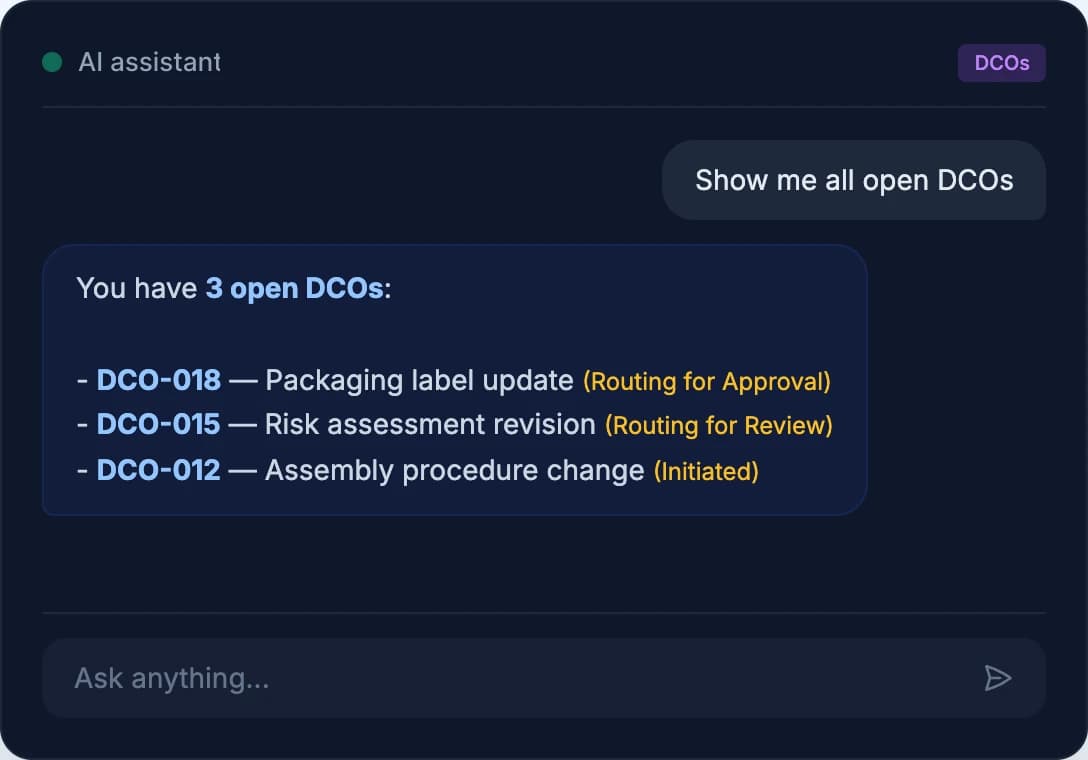
We build the AI assistant inside Nirvan AI’s quality management platform. Prompts and model choices are versioned like code, and every model reaches the backend through OpenRouter, so a switch is a config change. Model and prompt changes ship through the same development, UAT and production path as code, with the eval suite run before each model change.

Team
5 people
Timeline
13+ months, ongoing
Budget
$100k–250k
Nirvan AI — AI quality management system for medical devices
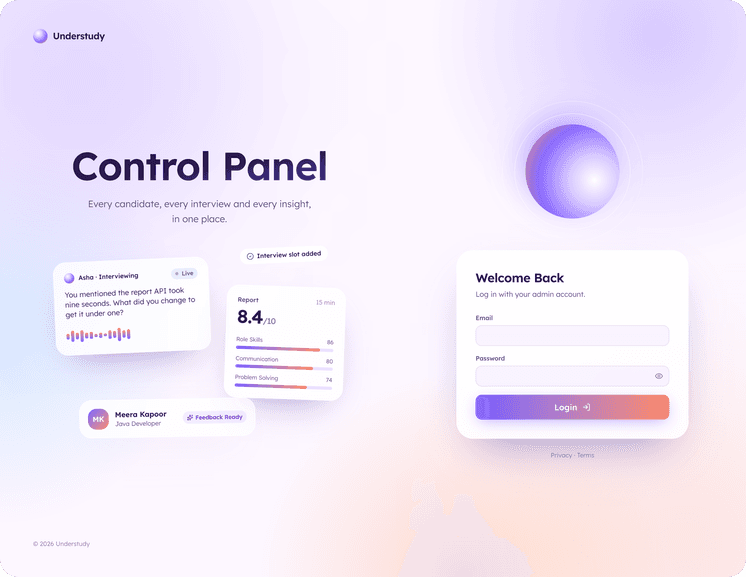
Understudy — AI interviewer for first-round hiring · Techuz product
Client logo

Understudy

AI interviewer for first-round hiring · Techuz product

It scores answers on four weighted criteria. Each change to the scoring prompt was re-run against four interviews our founder had scored by hand, until the two agreed. Tuning rounds narrowed the gap to human scoring from 1.75 to 0.4 out of 10.

Team
2 people
Timeline
About 3 weeks
Budget
Under $30k
License-plate reading at truck gates — Truck parking facilities · PoC
Gate read project mark

License-plate reading at truck gates

Truck parking facilities · PoC, USA

A computer vision pipeline turns gate camera video into one record per truck, with OCR reads voted across many frames. A read opens the gate only if it passes a format check at 0.55 confidence or higher; anything else goes to a review queue with the plate crop.

Team
2 people
Budget
$30k–50k

How we take ML models and LLM features to production

ML model deployment comes near the end, after the eval set and a measured baseline. Across the 8+ projects we built with Claude Code in the last year, delivery took up to 50% less time than comparable builds the year before.

How long it takes
  • Small project

    3–6 weeks

    One AI feature in an existing product

  • Mid-size project

    8–14 weeks

    Several sources or tenants

  • Large multi-model work

    4–8 months

    Built in phases

The seven phases

How much do MLOps services cost?

MLOps services at Techuz cost from $4k–10k for an eval and monitoring check to $50k+ for multi-model operations, built in phases. You pay inference to the model provider, and we estimate it per 1,000 calls before you approve. That estimate matters because requests keep growing: in Datadog’s April 2026 State of AI Engineering report, average tokens per request more than doubled for median-use teams.

Typical cost by project type (steps not to scale).
  1. Eval and monitoring check

    2–4 weeks

    Golden set, baseline metrics and monitoring for one live AI feature

    $4k–10k

  2. One AI feature

    3–6 weeks

    Release gate, versioning and cost tracking in your existing product

    $10k–25k

  3. Production pipeline

    8–14 weeks

    Evals, ingestion, monitoring and re-evaluation across sources or tenants

    $25k–50k

  4. Multi-model operations

    Built in phases · 4–8 months

    Model routing, private hosting in your cloud, large ingestion pipelines

    $50k+

MLOps as a service after launch

After the 30 free days, MLOps as a service runs on a support plan of 40, 80 or 160 hours a month. It covers the monthly eval re-run, a drift check on sampled queries, model retirement tracking and a health and cost summary. Rates are $20–25 an hour, depending on role and seniority.

Eval reports, the runbook, QA, project management and 30 days of free support come with every project. Running costs for tokens, embeddings, vector storage and GPUs are listed monthly in the proposal.

How do we keep models, data and AI spend under control?

With practices you can check in your own accounts, not badges. Techuz holds no ISO 27001 or SOC 2 certification; we build to SOC 2 and HIPAA requirements when your buyers need them.

Your data stays in your cloud

Storage, vectors and model endpoints sit in your AWS or Azure account and region. One client’s Azure OpenAI runs inside its own Azure tenant, set up by us, so no prompt leaves its cloud. See cloud services and Azure consulting.

A data policy for every AI feature

The data audit records which data goes to which model provider. Discovery also checks each AI feature against the EU AI Act. You approve the policy before the build starts.

Spend limits on every AI call

No AI call runs until it clears a spending limit. On request, every feature and every customer also gets a monthly token budget, with an alert to the product owner at 80%.

Prompt injection, agent permissions and data-leak testing are covered on our AI security page.

Technology we use for MLOps and LLMOps

Managed tools first, because they cost less to run at product scale. Heavier platforms come in only when your volume justifies them.

  1. Models

    One gateway, the right model per job, no lock-in

    • Claude
    • GPT
    • Gemini
    • OpenRouter
    • Azure OpenAI
  2. Training and vision

    Baseline on pretrained weights; train only where the metric shows a gap

    • Python
    • PyTorch
    • Ultralytics YOLO
    • CLIP
    • ONNX Runtime
    • Google Colab
    • Modal
    • Google Cloud
  3. Pipelines and deployment

    Event-driven jobs that deploy like code

    • GitHub Actions
    • AWS Lambda
    • Amazon S3
    • FastAPI
  4. Retrieval

    A store matched to scale and isolation needs

    • Pinecone
    • FAISS
  5. Monitoring

    Errors, latency, uptime and cost in one place

    • Sentry
    • Amazon CloudWatch
    • Azure Monitor
    • UptimeRobot

MLOps and LLMOps FAQ

  • Techuz is not the right fit for a data warehouse on Snowflake, BigQuery or dbt, or an enterprise ML platform for many data science teams. We also don’t run self-hosted GPU clusters with strict throughput targets, or 24/7 ML operations. With no data to evaluate yet, start by collecting and labeling it.

  • MLOps (machine learning operations) is the practice of shipping, monitoring and updating machine learning models the way software teams ship code: versioned, tested and reversible. At Techuz, MLOps means a versioned eval set, a release gate, monitoring and a rollback plan for every model we put into production.

  • DevOps ships code that behaves the same each time. MLOps also versions data, models and prompts, and re-tests quality, because a model’s answers can drift with no code change.

  • LLMOps (large language model operations) is MLOps for products built on large language models. MLOps covers models trained on your own data, where labels, drift and retraining matter most. LLMOps adds prompts, provider changes, scoring of free-text answers and token cost. Techuz runs both with one golden-set approach, because many products now mix the two.

  • Techuz doesn't build Kubeflow- or SageMaker-scale MLOps platforms and has not delivered Kubeflow, Vertex AI or large SageMaker platform projects, and we don’t claim them. Our pipelines are lighter: scripted training on cloud GPUs, versioned datasets and models, serverless jobs and GitHub Actions deploys. If you need a platform for many teams, we’ll say so and bring in a specialist.

  • Techuz re-runs your golden evaluation set on every model, prompt or embedding change, and the change ships only if the result is equal or better. The set is built from your own data and agreed with you in week two. Sampled production queries are then checked against it after release.

  • Yes, your models and data can stay in your own cloud: Techuz puts storage, vectors and model endpoints in your AWS or Azure account and region. Where a hosted model API fits better, we route only to providers that don’t train on your prompts.

  • Most products don't need their own trained model at first: Techuz starts with hosted models and your own data, then trains or fine-tunes only where golden-set results show a gap. Vision work fine-tunes open models; LLM fine-tuning is covered on our LLM development page.

Get a Ballpark Estimate for Your Project

Tell us what you're building. We reply within 24 hours and send a ballpark estimate within 48.

Tell us about your project

A few lines are enough. We reply within 24 hours.

By sending this form I confirm that I have read and accept the Privacy Policy