LLM development services: integration, routing and fine‑tuning

We integrate Claude and GPT into your product, route each job between them, and fine-tune open-source models on your own data.

4.9 on Clutch from 45 reviews · 500+ projects since 2013 · Claude and GPT routed per job in production

Our LLM development services

Our LLM development services build your product around your own data, with open-source models we fine-tune (Qwen, Llama, MedGemma) alongside Claude or GPT. Every model connects to your database and backend, so AI-first features answer from your own records.

  • Products built around an LLM

    LLM app development covers new products and features where the model does the core job: drafting, classifying, extracting, scoring or speaking aloud. You get a product built around what the model does well, with checks where it doesn’t. See generative AI development.

  • LLM integration into your existing product

    Claude or GPT joins your existing product as a backend service, grounded in your records through prompts and retrieval. Users get LLM features inside the screens they already use, without you rewriting the app. See AI software development services.

  • Model selection before you build

    LLM consulting at Techuz is a short, paid comparison: two or three models run on your inputs, scored for accuracy, latency and running cost. You decide go or no-go on numbers, before any build budget is spent.

  • Model routing and cost control

    Each job goes to a fitting model through an OpenRouter gateway: small for summaries, strong for multi-step reasoning and tool calls. Your bill follows the work, and no single provider can lock you in. See AI agent development.

  • Private deployment in your cloud

    A private LLM runs as Azure OpenAI in your Microsoft tenant, or as a fine-tuned open-source model on your own cloud servers. Either option suits data rules that a public API can’t meet, so security reviews have less to clear. See Azure consulting and services.

  • Fine-tuning open-source models on your data

    We fine-tune open-source models from Hugging Face for jobs that need a model of their own. You own a model trained on your examples, an edge competitors on the same public model can’t copy. See Prompts or fine-tuning.

See the full range of AI development services.

What you gain from models you can swap or own

You keep the eval set, the routing config and any fine-tuned weights, so no vendor’s roadmap or retirement date sets yours.

Accuracy you’ve measured before launch

Every prompt, model and tuned version is scored against the same real inputs, checked by your domain expert. On our AI interviewer, a bias check rewrote 46 real answers in fluent native English; scores moved just 0.13 out of 10.

A running cost you can predict

Cost per 1,000 calls is estimated in the proof of concept, then tracked per customer, so your plan prices rest on real numbers. A budget check before each call stops a runaway loop from reaching your invoice.

Data that stays where your contract says

Provider accounts and API keys sit in your name by launch, so access stays with you if you change partners. Data sharing is switched off, and nothing reaches a third-party model without your written approval.

LLM integration services: how the model fits your stack

A gateway in your API holds the keys, picks the model, logs each call and checks the output first. Your fine-tuned model sits behind the same gateway, so the app calls it like any other. In a16z’s CIO survey, reported in February 2026, 81% of 100 Global 2000 companies used three or more model families in testing or production.

Your app calls your API. A model gateway inside it holds the keys, picks the model, logs each call and checks the output, then sends each job to a stronger model, a smaller model or your fine-tuned open-source model in your cloud. Your eval set scores every release.

Routing by job

On the medical-device quality platform, a stronger model runs the 55-tool assistant and a smaller one writes summaries, so each job costs only what it needs.

LLM evaluation on your own eval set

Each release, fine-tuned or not, is scored on retrieval hits, correctness, citations, refusals and tool use. Automated checks and a human-reviewed sample do the scoring; the medical-device assistant’s suite runs 55 test cases across 14 areas. For monitoring at scale, see MLOps and LLMOps.

Prompts or fine-tuning: what does your use case need?

Claude and GPT are used as their providers trained them, steered by prompts and retrieval. Fine-tuning changes a model’s weights, so our LLM fine tuning services work on open-source models, whose weights are open to training.

Prompts or fine-tuning: what does your use case need?
Prompt engineeringRetrieval (RAG)Fine-tuning (open-source)
What it changesThe instructions and examples the model getsWhat the model can see when it answersThe weights of an open-source model
Pick it whenThe model knows enough and needs directionSee RAG developmentA narrow, repeated job where a tuned smaller model can match a large one
Data you needA handful of good examplesYour documents, kept up to date in a vector databaseA cleaned, labelled set of your inputs and good outputs
After a model upgradeRe-test and keepRe-test and keepRe-train on the newer base model, then re-test

Work from our LLM development company

The first three each run more than one LLM; the fourth uses a vision model.

Client logo

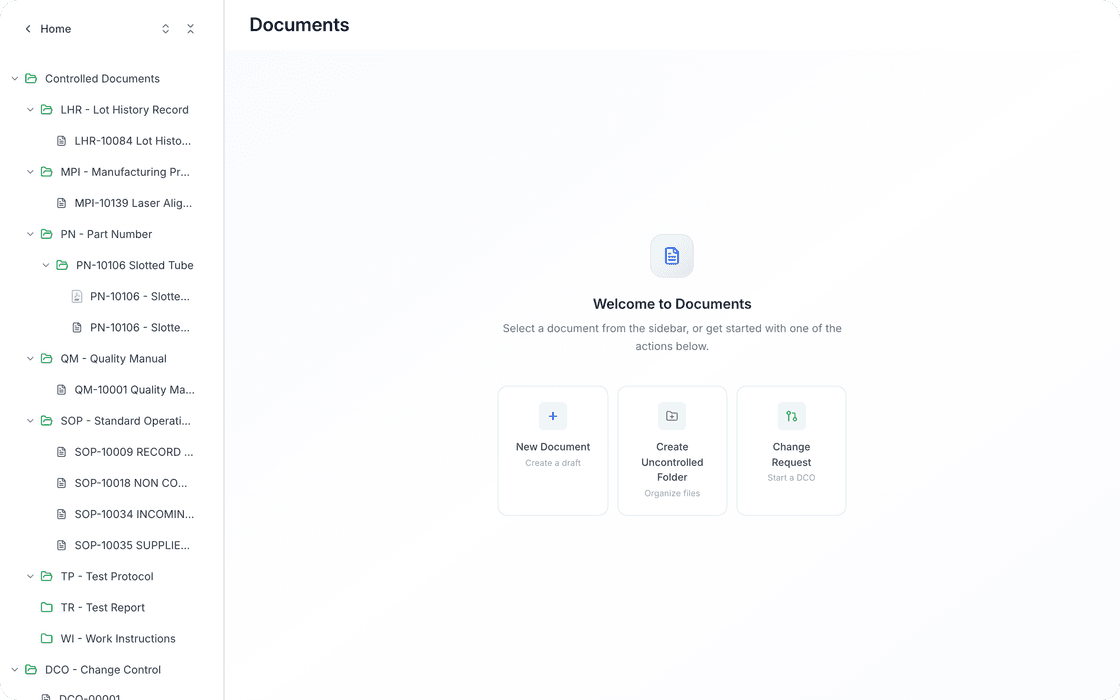
AI quality management for medical device teams

Medical device SaaS, USA

A quality platform built for FDA 21 CFR Part 11 requirements, where an assistant with 55 tools reads and updates records. Claude and GPT models split the work, and AI cost is tracked per customer. Prompt caching cut AI cost per call by 74–90%, depending on the model.

Team
5 people
Timeline
13+ months, ongoing
Budget
$100k–250k
AI quality management for medical device teams — Medical device SaaS
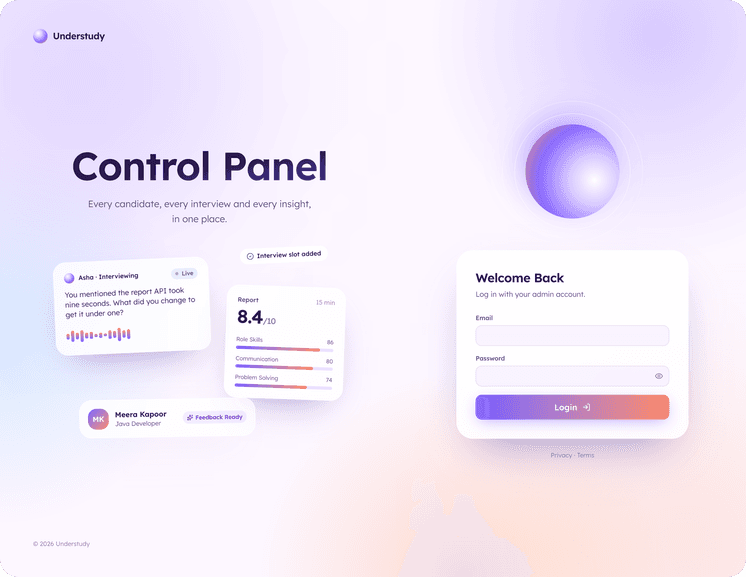
Understudy, our AI interviewer — HR tech
Understudy

Understudy, our AI interviewer

HR tech, Our own product

A spoken first-round interviewer on OpenAI Realtime over WebRTC, steered from our server. Separate AI calls plan topics from the CV, coach follow-ups, score answers and write the report. Replies come in about 0.3 seconds, down from 5–12 seconds in our first scripted version.

Team
2 people
Timeline
About 3 weeks
Budget
Under $30k (internal build)
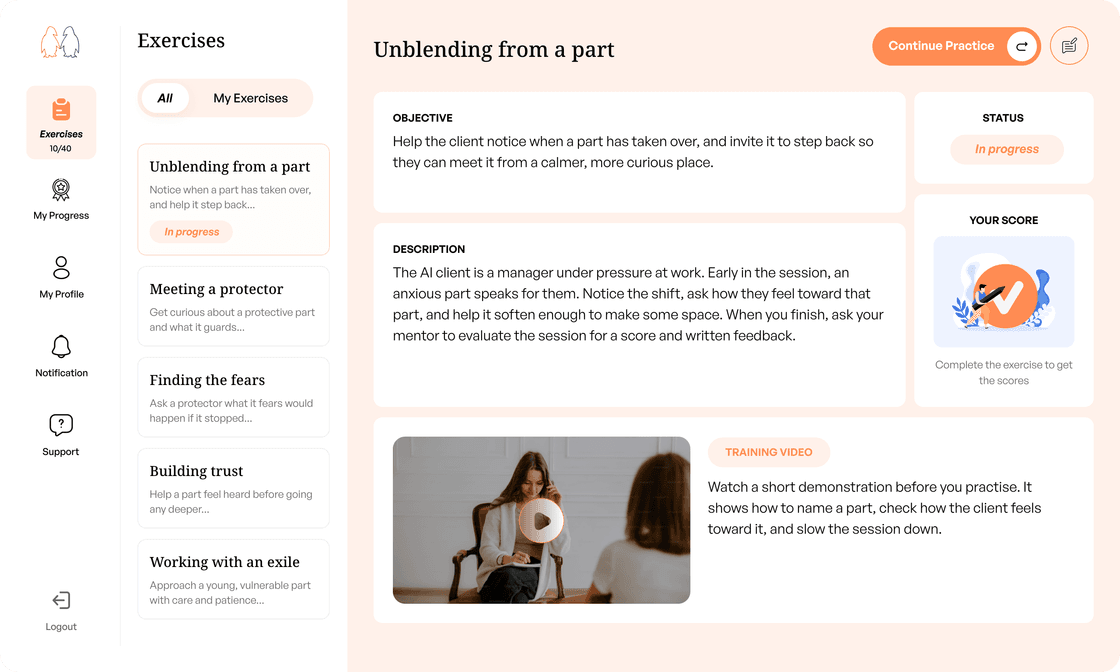
AI role-play practice for therapists — Therapist training
Client logo

AI role-play practice for therapists

Therapist training, UK

Voice role-play where GPT-4o plays the therapy client and a second GPT-4o agent supervises, with Whisper and OpenAI voices handling speech. Final scoring runs on a separate, smaller model. The app is live, and its About page credits Techuz as its developer.

Team
3 people
Timeline
About 11 months
Budget
$30k–50k
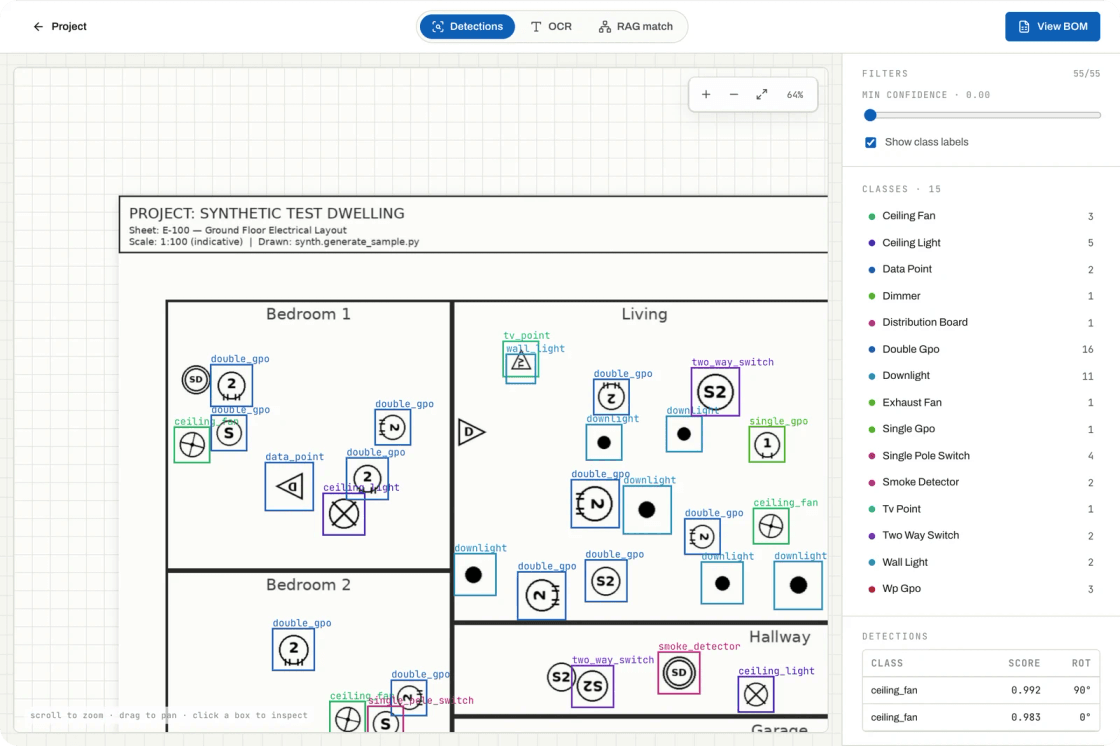
Electrical takeoff from building drawings — Construction tech
Takeoff project mark

Electrical takeoff from building drawings

Construction tech, USA, for builders in Australia

A system that turns PDF house drawings into a priced electrical Bill of Materials, with every count done in code. We trained an open-source YOLOv8 detector on 150 generated plans with 5,454 labelled symbols. On held-out test plans we generated, the trained detector found 97% of the symbols.

Team
2 people
Timeline
3 months
Budget
$30k–50k

How we take an LLM feature from sample data to production

Phases 1 and 2 make up the 2–4-week paid comparison. For a single feature, architecture takes days, one sprint builds it and evals take a week, so phases 3, 4 and 6 fit 3–6 weeks. Phase 5 runs only when fine-tuning is chosen.

Typical timelines
  • Paid model comparison

    2–4 weeks

    2–3 models on your eval set, ending in a go/no-go

  • LLM feature

    3–6 weeks

    One job, one model route, prompts your admins can edit

  • LLM product or AI MVP

    8–14 weeks

    Several jobs on different models, with billing and cost tracking

  • Multi-model platform

    5–9 months

    To first release: many tools, customer accounts and compliance needs

The seven phases

Across the 8+ projects we built with Claude Code in the last year, delivery took up to 50% less time than comparable builds the year before.

How much does LLM integration cost?

LLM integration with Techuz costs $4k–10k for a paid model comparison on your data and $10k–25k for one LLM feature in an existing product. An LLM product or AI MVP costs $25k–50k, and a multi-model or multi-tenant platform $50k+, built in phases. You pay model fees straight to the provider; your proposal shows them per 1,000 calls.

Typical cost by project type (steps not to scale).
  1. Paid model comparison (PoC)

    2–4 weeks

    $4k–10k

  2. LLM feature in an existing product

    3–6 weeks

    $10k–25k

  3. LLM product or AI MVP

    8–14 weeks

    $25k–50k

  4. Multi-model or multi-tenant platform

    5–9 months to first release

    $50k+, built in phases

What moves the price

  • Number of jobs and models
  • The accuracy bar
  • Private hosting
  • Voice
  • Messy data
  • Size of any fine-tuning set

What’s included

Discovery to launch, QA, a project manager and 30 days of free support, with hosting costs listed monthly.

Fine-tuning an open-source model is priced within these tiers; training compute on Google Cloud GPUs is estimated up front and billed at cost.

See engagement models and pricing. Need people rather than a project? Hire LLM developers as a dedicated team, from $20 an hour.

How do we keep LLM features safe and accurate?

We map each LLM feature against OWASP’s 2026 Top 10 for LLM Applications and test its controls before launch.

Inputs treated as data, never instructions

Documents, uploads and web pages can carry planted instructions. On new builds, the model treats them as data, each role gets its own tool list, and the server validates every tool argument.

Keys and other customers’ data out of reach

Keys stay server-side; on our AI interviewer, the browser only gets a voice key that expires in 120 seconds. Logs redact tokens and transcripts, and each customer’s documents sit in a separate search space.

Output checked before anyone relies on it

Answers link to their source record, so users can check a claim in one click. Before any model or prompt change, the eval set re-runs, so accuracy can’t slip unnoticed.

Actions only under the user’s permissions

Every tool call goes through the app’s own access checks and stops if one fails. On new builds, record changes wait for the user’s confirmation, enforced in code.

Spending and training-data limits

Plan quotas and rate limits cap model use per customer, so scripted abuse can’t run up your bill. Training sets are cleaned and versioned before each run, so a poisoned example can be traced and removed.

For the wider threat model, see AI security.

Models and tools we use for LLM development

Closed models are picked on your eval results; open-source models are tuned on your examples.

  1. Closed models

    Current models we test on your eval set

    • Claude Opus 5.5
    • Claude Sonnet 5.5
    • Claude Haiku 5.5
    • GPT-6.1
    • GPT-6 Luna
    • Azure OpenAI in your tenant
  2. Open-source models and fine-tuning

    Models trained on your examples, served in your cloud

    • PyTorch
    • PEFT (LoRA)
    • Hugging Face modelsQwen, Llama, MedGemma
  3. Gateway and routing

    Keys, model choice, logging and fallbacks in one place

    • Node.js or Python backend
    • OpenRouter
    • Tool calling
    • MCP
  4. Retrieval

    Per-customer document search; cited web search

    • Pinecone
    • OpenAI embeddings
    • Perplexity API
  5. Application and cloud

    The product around the model, in your cloud

  6. Quality and monitoring

    Proof the model still passes, and cost per call

    • Eval suites
    • Git
    • Sentry
    • CloudWatch

LLM development FAQ

  • When clear rules or a plain search can do the job, a model only adds cost. Skip Techuz, too, if nobody will check outputs where wrong answers are unacceptable, or you have no sample data yet. To train a foundation model from scratch, a specialist ML lab fits better.

  • LLM development is building software that uses a large language model, such as Claude or GPT, to draft, answer, extract or act. At Techuz, custom LLM development covers wiring models into your product, fine-tuning open-source models when needed, and testing and running them in production.

  • No, Techuz doesn’t fine-tune Claude or GPT: they are closed models, used as their providers trained them and steered by prompts and retrieval. Where a job needs a tuned model, we fine-tune an open-source one from Hugging Face that you host and keep. Provider-run tuning, where offered, leaves the weights with the provider.

  • Techuz needs a cleaned, labelled set of your real inputs paired with good outputs. A held-out test set, kept out of training, scores the tuned model against its base on your own inputs. Without sample data, start with prompts and retrieval.

  • Techuz has deployed Azure OpenAI inside a client’s own Microsoft tenant, with prompts processed in the geography the client picks. Open-source models we fine-tune for you can also run in your own Google Cloud account, so prompts and outputs stay under your control. See AI infrastructure.

  • One LLM feature in an existing product takes 3–6 weeks with Techuz, and an LLM product or MVP 8–14 weeks. Both usually follow a 2–4-week model comparison on your own data. Fine-tuning runs alongside the build sprints and fits within these timelines.

Get a Ballpark Estimate for Your Project

Tell us what you're building. We reply within 24 hours and send a ballpark estimate within 48.

Tell us about your project

A few lines are enough. We reply within 24 hours.

By sending this form I confirm that I have read and accept the Privacy Policy