



AI automation services for AI transformation that pays back

We build intelligent automation into the software you run or sell. AI reads your documents and follows your rules, so approvals, payouts and system updates stop waiting on retyping.

4.9 on Clutch from 45 reviews · 500+ projects since 2013

Our AI automation services and intelligent automation solutions

Our AI automation services build approvals, invoices and payouts into the tools your team runs or the product you sell. We start with the process that pays back first, then add intelligent automation one workflow at a time. We offer four AI solutions for business under this practice, and each one has its own page.

  • AI consulting

    AI consulting starts with a short, paid assessment that maps your processes, measures the baseline and ranks two or three use cases by payback. You fund the automation with the clearest return first, with build and running costs in hand.

  • AI business process automation

    Approval flows, scheduled jobs, generated documents and payouts built into your product or internal tools, with AI steps only where a rule can’t decide. Work that used to wait on chasing and retyping moves on its own, while people approve what matters.

  • Enterprise AI integration

    Connections between AI models and the systems you already run, from CRM and ERP to payroll, payments and e-signature tools, through their APIs. Each system keeps its job, and data stops being copied from one screen to another by hand.

  • Intelligent document processing

    Invoices, CVs, contracts and forms read by AI and turned into structured records, with low-confidence fields sent to a review queue. Your team checks the exceptions instead of typing every document, and accuracy is measured on your own samples before launch.

Need AI that takes actions or answers from your files?

See AI agent development, RAG development and data and AI engineering.

Which processes should you automate first?

Automate first the process that runs often, follows clear rules and hurts today: retyping data, chasing approvals, matching records between systems. Leave low-volume processes, or ones that change every week, until they settle.

Which processes should you automate first?
Automate it firstFix or wait
VolumeHundreds of items a month, minutes eachA few hours of work a month
RulesClear rules, with exceptions you can listRules that live in one person’s head
DataInputs already arrive as files, emails or API eventsPaper only, or no sample documents yet
Cost of an errorLate payments, audit findings, lost customersSmall rework that nobody notices
OwnerA named person who can sign off the rulesNobody owns the process end to end

Fix the process before you automate it

Automating a broken process just makes the mess run faster. We map each step with the people who do it, remove dead steps, and log unclear rules as questions instead of coding guesses. In McKinsey’s August 2026 State of AI survey, nearly three-quarters of AI high performers said they had fundamentally redesigned workflows because of their AI use.

How we work out payback

Each candidate gets a simple model: annual hours saved times loaded cost, plus avoided error cost, minus the build and a year of running costs. The baseline is measured in discovery, not estimated after launch. For a disability support provider, 15–30 roster changes a week put timesheet matching first, with an estimated 10–15 hours a week to save.

Techuz at a glance

Our 70-person team in Ahmedabad has shipped AI features in client products since 2023. More about Techuz.

  • 12+ yearsbuilding software (since 2013)

  • 500+projects delivered

  • 250+clients

  • 45engineers, including 4 in AI and ML

Projects from an AI automation company that ships

Three products where our automation and AI run every day, from film crew payouts to regulated quality records.

Client logo

Crew payments automation for film and TV

Media production SaaS, India

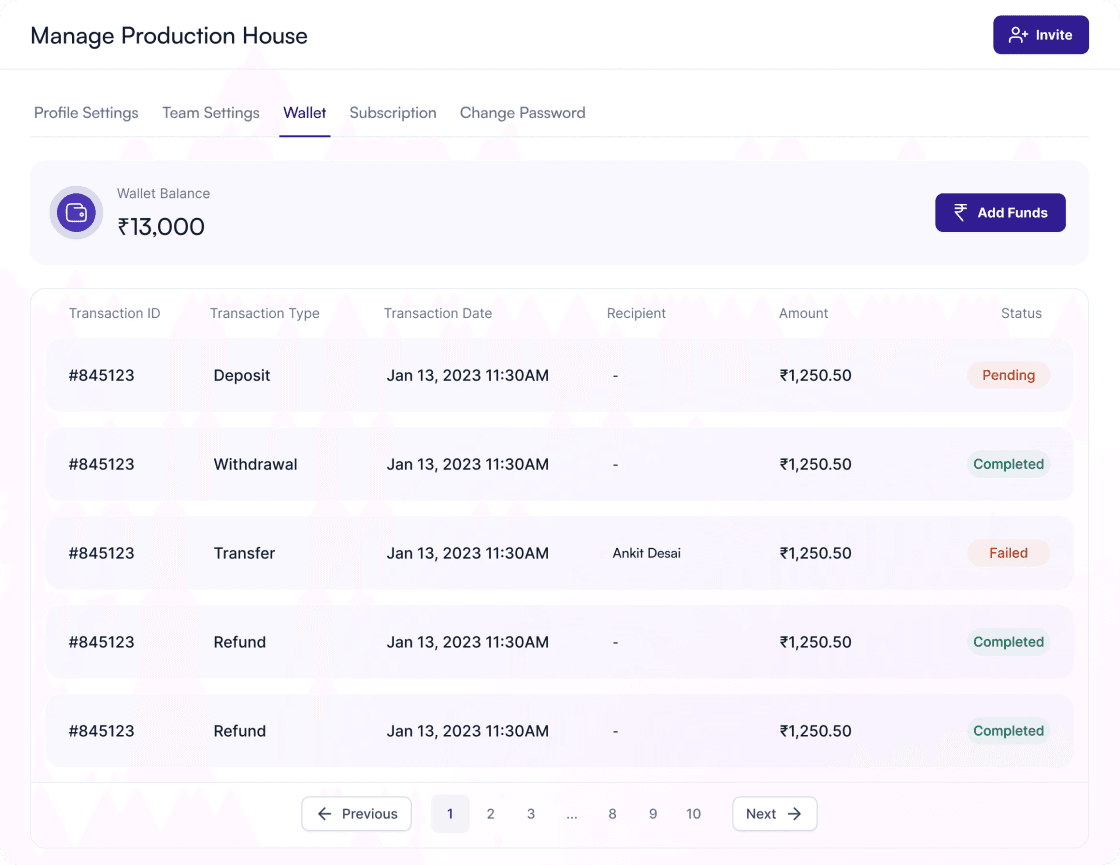
Crew invoices pass multi-approver sign-off with GST and TDS worked out automatically. One production wallet then pays a whole crew in single, bulk or partial payouts, and each payout updates only after a signed webhook passes its checks. Approvers sign off from anywhere, so payments no longer wait for paperwork to reach the office, and we still support it.

Team
5 people
Timeline
About 22 months
Budget
$50k–100k
Crew payments automation for film and TV — Media production SaaS
AI onboarding and payouts for a live training marketplace — EdTech marketplace
Client logo

AI onboarding and payouts for a live training marketplace

EdTech marketplace, India

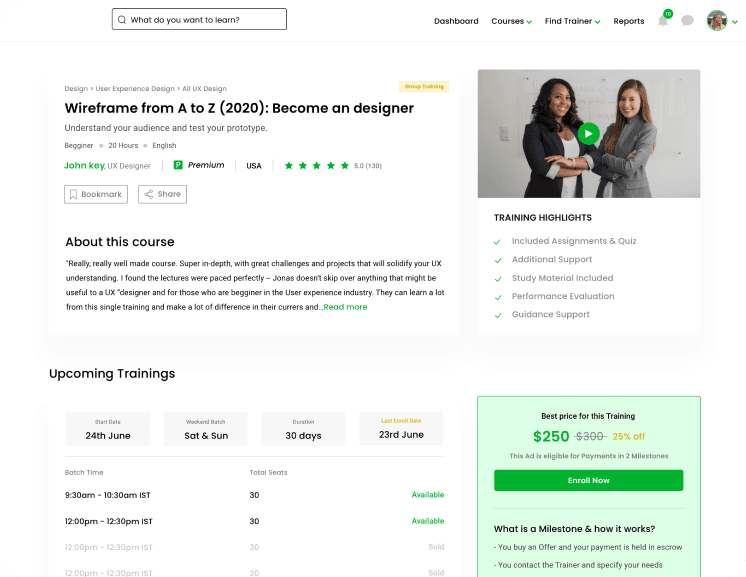
Affinda reads each trainer’s CV to fill the profile, and OpenAI drafts bios and proposals. AI search turns a vague query like “.net trainer” into the right skills. Trainers and agencies are paid automatically through Stripe Connect and direct bank payouts, with GST collected at source, so the client’s team no longer handles payouts by hand.

Team
12 people
Timeline
20 months
Budget
Over $100k
Document control and change automation for medical device teams — Medical device SaaS
Client logo

Document control and change automation for medical device teams

Medical device SaaS, USA

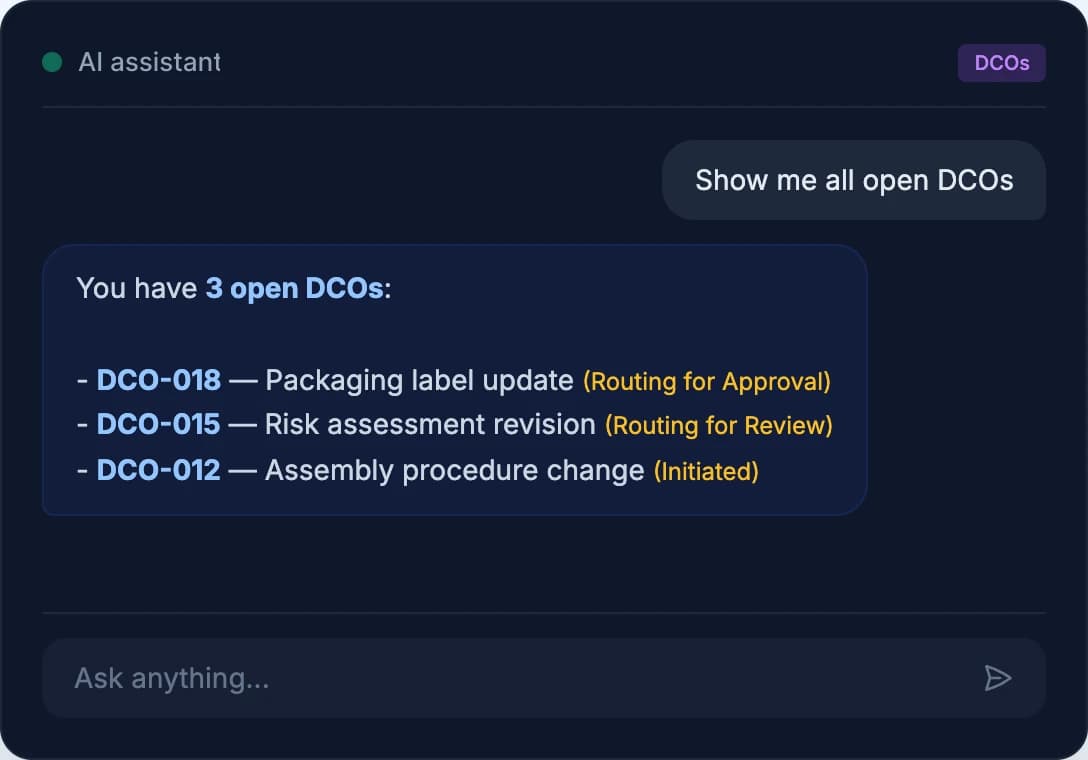
Documents move from draft to approved through change orders, with Part 11 e-signatures built in. Each new revision assigns training to the right roles automatically. An AI assistant with 55 tools, 23 of which can change records, acts only after the user confirms.

Team
5 people
Timeline
13+ months
Budget
$100k–250k

How long does AI automation take?

One automated workflow or integration takes 4–6 weeks, and 2–4 workflows with document extraction and several integrations take 8–14 weeks. Platform-level automation across departments takes 4–9 months, released in phases. An assessment on its own takes 2–3 weeks. Vendor sandboxes for banking, payouts or ERP can take 1–3 weeks to arrive, so we ask for API access and sample data in week 1.

Typical timelines
  • Assessment

    2–3 weeks

    Processes mapped, baseline measured, use cases ranked

  • One workflow or integration

    4–6 weeks

    Discovery and design in about a week, then build and a parallel run

  • Several workflows

    8–14 weeks

    Document extraction, review screens and several integrations

  • Platform-level

    4–9 months

    Across departments, released in phases

Six phases, from the first walkthrough to switch-over

Automation earns trust once people see it match their own output. In Connext Global’s February 2026 AI Oversight Report, only 17% of 1,000 US workers who use AI said it was reliable without human oversight. That’s why every build ends in a parallel run, and approvals stay with people.

After launch

A single workflow folds discovery and design into about a week, builds in 2–4 weeks and runs in parallel for a week. Defects against scope are fixed free for 30 days after go-live. Support plans of 40, 80 or 160 hours a month cover vendor API changes, credential rotation and a monthly cost review, and a 90-day check against the discovery baseline measures payback.

How much do AI automation services cost?

AI automation with Techuz costs $4k–10k for a paid proof of value and $10k–25k for one automated workflow or integration. Several workflows with document processing cost $25k–50k, and platform-level or agentic automation $50k+, built in phases. In Futurum Research’s September 2026 survey of 1,636 technology buyers, about 46.9% of organizations said actual AI spend had exceeded their planned budget. So you see a monthly running-cost estimate before you approve the build, and AI cost is tracked per organization after launch.

Typical cost by project size (steps not to scale).
  1. Paid proof of value

    2–4 weeks

    One process piloted on your data, ending in a go/no-go

    $4k–10k

  2. One workflow or integration

    4–6 weeks

    An approval flow, a document extractor or one system connection

    $10k–25k

  3. Several workflows

    8–14 weeks

    2–4 workflows, document extraction with review screens, 3–6 integrations and an admin dashboard

    $25k–50k

  4. Platform-level or agentic

    Built in phases · 4–9 months

    An assistant with many tools and permissions across several systems, phased by department

    $50k+

Before you budget

Your estimate covers discovery to launch, QA, project management and 30 days of support. Running costs are separate and listed monthly: model tokens, OCR per page and vendor API fees, paid straight to each provider. Rates are $20–25 an hour, depending on role and seniority.

Which engagement model fits your automation project?

Pick fixed price for one scoped workflow and time and materials when a pilot will reshape the plan. Choose a dedicated team for automation across departments.

One scoped workflow

Fixed price

Best for

One workflow, integration or proof of value

How it works
Discovery fixes the scope, and you pay by milestone after each demo

Pilot sets the next steps

Time and materials

Best for

Programs where pilot results set the next steps

How it works
Hours billed monthly against a cap you set, reprioritized every sprint

Department by department

Dedicated team

Best for

Automation rolled out department by department

How it works
Engineers work only on your roadmap, from 160 hours a month each, with 4 hours of daily overlap with your US workday

Compare engagement models.

Why Techuz for AI transformation and automation

Where a typical AI automation agency strings no-code tools together, we’re an engineering team that builds automation into your software and stays to run it.

We start from your real documents

Consented call recordings and your real forms go through our AI-assisted spec process, and a business analyst reviews every line. Every unclear rule goes into an open-questions log for your sign-off, so nothing in the build is a guess. AI consulting covers the full spec process.

AI steps inside the workflow, not another tool

Core flows run in code with retries, logs and alerts, so nothing fails silently and there are no per-task fees. AI inside the workflow, with a review queue, keeps the checking small.

People approve what moves money

Payments, record changes and regulated decisions always pass a person’s approval. Automation can never see or do more than the user who triggered it, and we test that role by role. Overrides are logged, so audits find a reason next to every change.

You own every part of it

Code, prompts, workflow rules, cloud accounts and API keys sit in your name from day one. Where data must stay in your cloud, the model runs in your own Azure tenant too.

Senior engineers who build with AI

Every project has a tech lead who also codes and reviews every pull request. Across the 8+ projects we built with Claude Code in the last year, delivery took up to 50% less time than comparable builds the year before. See how we work.

Technologies we use for AI automation

Packaged enterprise AI solutions sell you one more platform. We build on the systems and models you already pay for, and explain each choice in writing. Already run Power Automate or n8n? We can work alongside it for light glue and keep core flows in code.

  1. Workflows and jobs

    Core logic in code, with retries, queues and alerts

  2. AI models

    Chosen per job by results on your sample cases

    • Claude
    • GPT
    • Azure OpenAIin your tenant
  3. Documents

    Structured output checked against a schema before it’s saved

    • LLM extractionJSON schema validation
    • AffindaCVs
  4. Agents and tools

    Narrow tool lists, each call checked on the server

    • Tool calling
    • MCP
    • LangGraph
  5. Systems we’ve connected

    REST APIs and webhooks, each one verified before it acts

    • Zoho Sign
    • Cashfree
    • Stripe Connect
    • Freshsales
    • LeadSquared
    • MoEngage
    • Google Workspace APIs
  6. Cloud and monitoring

    Your cloud account, with failed runs alerting a person

AI automation FAQ

  • AI transformation is the shift from manual, spreadsheet-driven work to processes where software and AI handle the repetitive steps and people handle judgment. Techuz runs it one measured process at a time. We map it, automate it and run it beside the manual version, then move to the next candidate.

  • Intelligent automation combines rules, system integrations and AI steps that read documents or choose the next action. RPA bots copy clicks on screens instead. Techuz’s intelligent automation services work at the API level in code, which costs less to run and is easier to monitor than screen bots.

  • AI handles the steps that fixed rules can’t, such as reading a document, sorting a request or drafting a reply. Digital transformation moves work into software, and AI then takes on the judgment-light parts of it. Techuz uses rules wherever they decide reliably and adds AI only where it saves measurable hours.

  • No single model wins every step. Techuz picks Claude, GPT or Azure OpenAI per task by results on your own sample cases, and keeps fixed rules wherever they decide reliably.

  • In Techuz projects, automation removes retyping and chasing, not judgment. On a film production payments platform, approvers still sign off every invoice; only the tax math and the payouts stopped being manual. Staff keep the decisions and lose the copy-and-paste work.

  • Techuz measures hours, volume and errors per step before any build, then tracks payback against that baseline after launch. The full method is on our AI business process automation page.

  • Nothing reaches a model provider until you approve it in writing, and calls run on business API terms that exclude training, with retention switched off. If data can’t leave your cloud, Techuz deploys Azure OpenAI inside your own Microsoft tenant. Each workflow’s AI data policy is signed off in the design phase.

  • When the process takes a few hours a month or changes every week, automation costs more than it saves. Techuz also doesn’t deliver desktop RPA on legacy screens, full SAP, Dynamics or Salesforce implementations, or Big-4-style change programs. Payments, clinical and legal outcomes always keep a person’s sign-off: we don’t hand those decisions to AI alone.

Get a Ballpark Estimate for Your Project

Tell us what you're building. We reply within 24 hours and send a ballpark estimate within 48.

Tell us about your project

A few lines are enough. We reply within 24 hours.

By sending this form I confirm that I have read and accept the Privacy Policy