
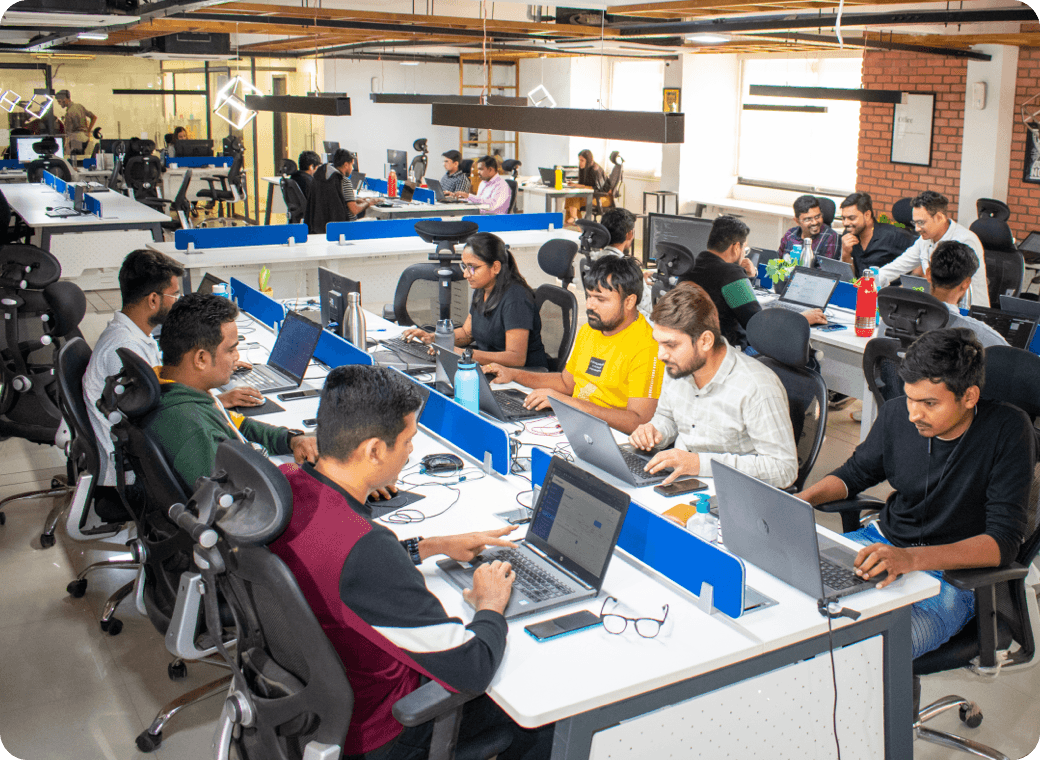

Healthcare software development services for care and MedTech teams

Your care team gets one system for records, rosters and messaging, and your health product gets AI that works from your own records.

4.9 on Clutch from 45 reviews · 500+ projects since 2013

Custom healthcare software development services

As a healthcare software development company, we build the records systems, patient and staff apps, and AI assistants your care business runs on. Startups reach users sooner, and providers retire spreadsheets one workflow at a time. See all the industries we build for.

  • Healthcare app development

    Healthcare app development covers patient, caregiver and staff apps for iOS, Android and Windows, with secure messaging and encrypted storage on the device. Your users carry their care tools with them, and you maintain one codebase instead of three.

  • Healthcare web development

    For clinics and health businesses, we build patient portals, EMR web apps, scheduling and billing tools, and provider websites that AI assistants can read. Staff and patients work in one browser-based system, and updates reach everyone without an install.

  • Healthcare IT services

    This service is for teams that already run healthcare software and need it audited, fixed, upgraded or extended with new modules. You keep the system your staff know while it becomes safer and cheaper to change.

  • HL7 FHIR integration

    EHR integration work starts by mapping your data to FHIR R4 resources and designing how your product will exchange records with systems such as Epic. You go into vendor conversations with a written integration plan instead of an open question.

  • Medical imaging software

    Medical imaging software covers browser-based DICOM viewers, cloud PACS storage, anonymized uploads and reading layouts for each scan type. Radiology and imaging teams review studies from any workstation, without a desktop viewer on every machine.

Adding AI to clinical or quality records?

See RAG development and AI agent development.

Techuz at a glance

One team designs, builds and supports your healthcare software, from the first spec to monthly releases. More about Techuz.

  • 12+ yearsbuilding software (since 2013)

  • 500+projects delivered

  • 250+clients

  • 4+countries with healthcare clients, including the US, UK, Canada and Australia

Who we build healthcare software for

Most healthcare teams that call us have already tried off-the-shelf tools and patched the gaps with spreadsheets. Hospitals hit the same wall. In Qventus’s April 2026 CIO report, 74% of health system leaders named EHR dependency as a top barrier to their AI plans.

Medical device and MedTech companies

Quality management with document control, change orders, training records and e‑signatures built for FDA 21 CFR Part 11 requirements. AI can also help classify a device under EU MDR rules and find similar FDA-cleared devices.

Clinics and medical practices

Records, appointments, billing and reports in one web app, with invoices passed on to accounting tools such as QuickBooks. The front desk and the practitioner work from the same record.

Disability and community care providers

Care management that follows each client from funding plan to roster, shift, timesheet and claim, with a phone app for support workers. We’re scoping one now for an Australian NDIS provider, where approved shifts become invoices, claim files and Xero entries.

Healthcare staff communication

Private messaging for agency care staff on Android, iOS and Windows, with each agency kept apart from every other. Managers and admins get a web dashboard alongside the apps.

Clinical training and medical education

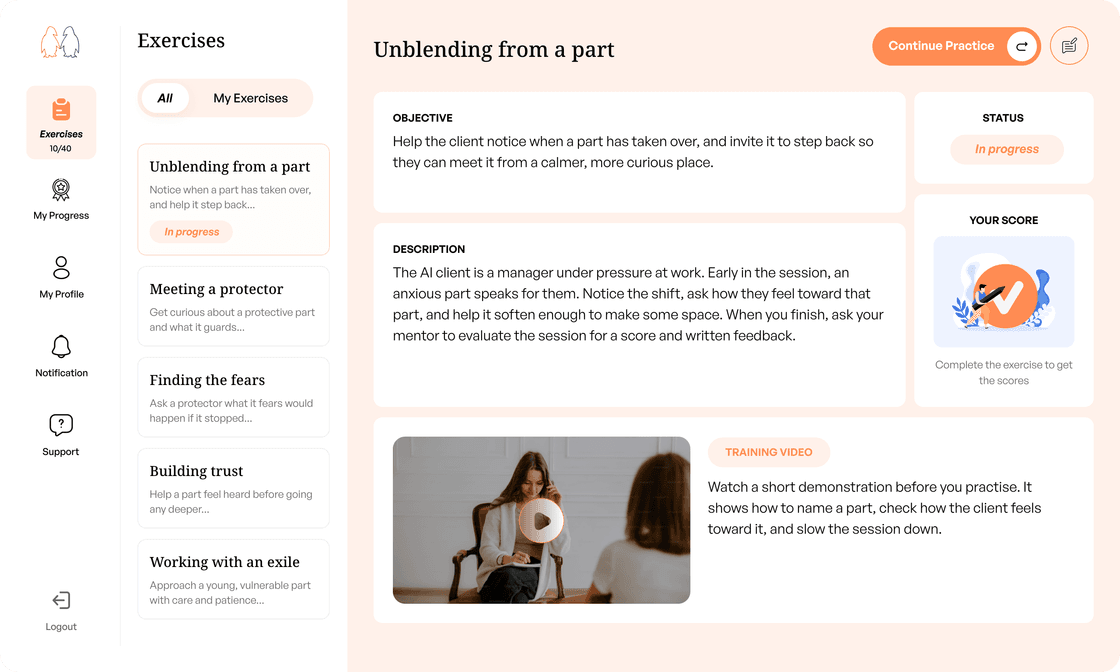
Voice role-play where trainee therapists practice sessions with an AI client, and browser-based image reading for clinical trainees. See education software.

Health tech startups

Multi-tenant SaaS with each customer’s data kept separate, custom roles, subscriptions and a super-admin console. Development, testing and production environments stay separate from the first release. See SaaS development.

How AI fits into healthcare software

AI is already part of daily clinical work, and privacy decides how far it can go. In the American Medical Association’s March 2026 survey, 81% of physicians said they use AI, and 86% called data privacy critical to wider adoption. We design for both.

AI in how we build

Our engineers write and review code with Claude Code, and a tech lead checks every change before it merges. Across the 8+ projects we built with Claude Code in the last year, delivery took up to 50% less time than comparable builds the year before. On healthcare products, we spend the time saved on testing access rules, audit trails and edge cases.

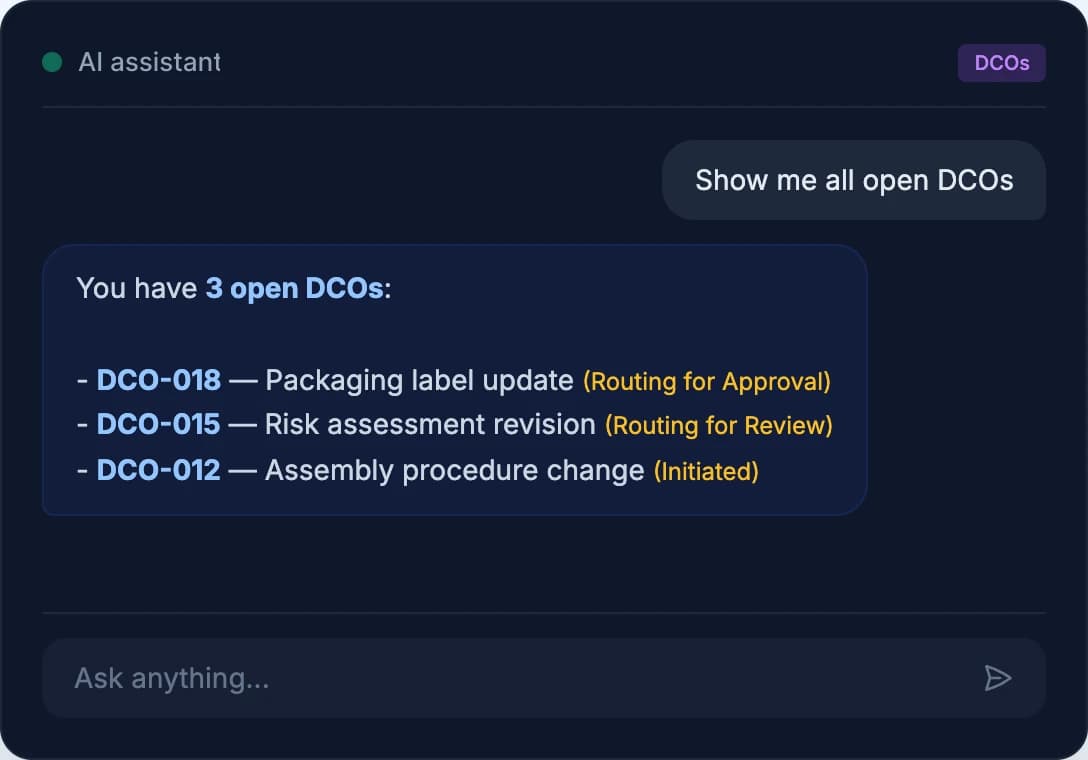
    AI features we build

    Assistants that search, summarize and update regulated records, link every answer to its source and change nothing until a person confirms. We’ve also built an AI radiology reporting assistant. When patient data can’t leave your control, we can fine-tune and run open-source models on your own Google Cloud.

      See our AI development services.

      HIPAA compliant software development, built into the code

      We build healthcare software to HIPAA requirements in the application code and the hosting setup, and we’re plain about what that covers. Techuz holds no certifications, so what follows are controls we’ve shipped or designed, not badges. In IBM’s Cost of a Data Breach Report 2026, published in July 2026, the average healthcare breach cost $6.64 million.

      1. 1

        Encryption and access on a clinical messaging app.

        It runs on HIPAA-eligible Google Cloud services under Google’s BAA. Patient data is encrypted on the phone, in transit and on the server, and audit logs record who sees each message. See Google Cloud.

      2. 2

        Lost phones and outages.

        Staff phones can be wiped from a distance, and the app has written recovery targets for data and service. Our healthcare app development page lists every control.

      3. 3

        Signatures built for FDA 21 CFR Part 11 requirements.

        The signer re-enters their password and states what the signature means. The signed content gets a SHA-256 fingerprint, a PDF certificate lists every signer, and the audit trail can’t be edited afterwards.

      4. 4

        Data residency by design.

        For an Australian care provider, the system is designed to run in AWS Sydney, in an account the client owns. The design encrypts backups and keeps an audit log that can only be added to.

      HHS now expects to finalize its HIPAA Security Rule update no earlier than July 2027, according to an Alston & Bird advisory from July 2026. We check new builds against its proposed controls, such as encryption and multi-factor sign-in, during discovery, so the final rule doesn’t force a rebuild. See application security.

      Healthcare projects from a medical software development company

      Three healthcare products we built: a quality system for medical device makers, an AI practice app for therapists and a live clinic platform.

      Client logo

      Nirvan AI

      Medical device SaaS, USA

      A quality management system where medical device teams control documents, run change orders, assign training and sign approvals. We replaced an outside e-signature service with signing built into the platform, and it has had 20+ releases to production since go-live.

      Team
      5 people
      Timeline
      13+ months, ongoing
      Budget
      $100k–250k
      Nirvan AI — Medical device SaaS
      AI practice app for therapists in training — Clinical training
      Client logo

      AI practice app for therapists in training

      Clinical training, UK

      A voice practice app for trainee IFS therapists: an AI client speaks back, an AI supervisor offers hints, and each session ends with a score. Each therapy approach can run its own branded site from the same platform.

      Team
      3 people
      Timeline
      About 11 months
      Budget
      $30k–50k
      EMR and clinic management software — Clinic software
      Client logo

      EMR and clinic management software

      Clinic software, Canada

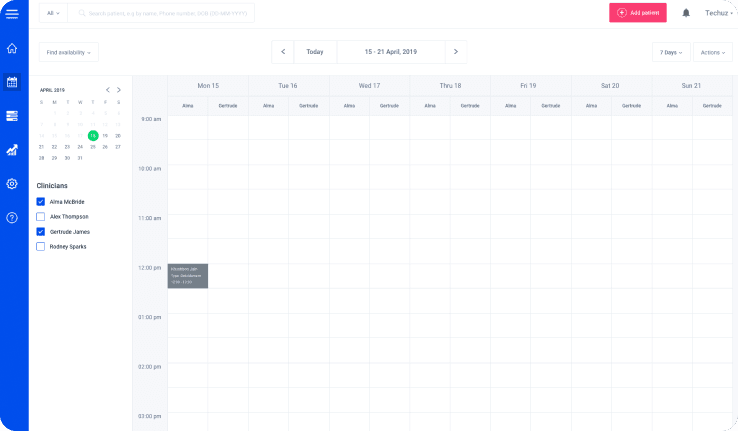
      One web app for patient records, appointments, billing and built-in reports. The client ran the hosting, and we built the privacy rules into the application code. It’s live with clinics, with billing flowing straight through to QuickBooks.

      Team
      7 people
      Timeline
      About 6–9 months
      Budget
      $25k–50k

      What our clients say

      Clients on Clutch, where we hold a 4.9 average across 45 reviews. Quotes are the reviewers’ own words; the result lines are ours.

      5.0 out of 5on Clutch
      They’re a trustworthy team and always deliver what is assigned to them.

      The result

      New features shipped rapidly, and the client’s customers are happy.

      Client logo

      Owner, Software Company

      Software

      5.0 out of 5on Clutch, Mar 2018
      Their resources are abundant, and they’re very cost-effective.

      The result

      High-quality, well-structured code: Techuz builds about 90% of each project and the client’s team adds the final polish.

      CTO, Analytics Company

      Dental analytics

      5.0 out of 5on Clutch, May 2017
      This was the most reliable app development we’ve had in some time.

      The result

      Met every key criterion on time and on budget; changes needed only added fields, and the end client referred more clients.

      James Abraham, IT Manager, SecureVault Consulting

      IT consulting

      How long does healthcare software development take?

      A focused MVP takes 8–12 weeks, and a portal, SaaS product or app with three or four user roles takes 12–24 weeks. A multi-tenant platform with web, mobile, AI and compliance work takes 6–12 months. Each range runs from discovery to launch, once the scope is clear.

      Typical length, discovery to launch
      • Focused MVP

        8–12 weeks

        One workflow, one or two user roles

      • Portal, SaaS or app

        12–24 weeks

        Three or four user roles

      • Multi-tenant platform

        6–12 months

        Web, mobile, AI and compliance work

      Pick your starting point

      • A new health product

        Start with product discovery, then build the MVP. See MVP development.

      • One workflow to fix

        A one-week Discovery Sprint, then a fixed-price build.

      • Software you already run

        An audit first, then a support plan through our healthcare IT services.

      Five phases for every healthcare build

      Every build runs through the same five phases, and each one ends with something you can review.

      Our take

      Start with the workflow your staff complain about most, not the whole platform. A rostering fix or a records screen people trust earns the budget for everything after it.

      What does healthcare software development cost?

      Healthcare software with Techuz costs $10k–15k for a small build, $25k–50k for a mid-size product and $50k+ for a large platform, built in phases. Compliance work such as audit trails, e-signatures and data residency is scoped in discovery, not added as a fixed fee.

      Typical cost by project type (steps not to scale).
      1. Small build

        8–12 weeks

        An MVP or one-workflow tool with one or two user roles

        $10k–15k

      2. Mid-size product

        12–24 weeks

        A patient portal, clinic app or SaaS product with three or four roles and payments

        $25k–50k

      3. Large platform

        Built in phases · 6–12 months

        A multi-tenant platform with web, mobile, AI and compliance controls

        $50k+

      Discovery before the build

      Discovery Sprint
      A signed spec and estimate
      $1,500–2,000
      About 1 week
      Product Discovery
      Adds wireframes, system design and a compliance assessment
      $4,000–6,000
      3–4 weeks

      What moves the price

      • Integrations: EHR and FHIR, PACS, accounting or payroll
      • User roles and platforms (web, iOS, Android, Windows)
      • AI features and their running costs
      • Compliance evidence: audit trails, e-signatures, data residency
      • Data migration from spreadsheets or an old system

      Before you budget

      Your estimate covers discovery to launch, QA and project management.

      Hosting, BAA-covered cloud services and AI model fees are listed monthly in the proposal.

      Our rates run $20–25 an hour by role and seniority.

      Which engagement model fits your healthcare project?

      Pick fixed price for a scoped MVP or one workflow. Choose time and materials when audits or user feedback will reshape the backlog, and a dedicated team for a health product you’ll keep growing.

      Scope is written

      Fixed price

      Best for

      A scoped MVP or one workflow tool

      How it works
      Discovery fixes the scope, and you pay by milestone after each demo

      Watch out for

      Changes after sign-off are priced separately

      Priorities will shift

      Time and materials

      Best for

      Products where audit findings or user feedback change priorities

      How it works
      Hours billed monthly against a cap you set; you reprioritize every sprint

      Watch out for

      You need a product owner who sets priorities

      Six months or longer

      Dedicated team

      Best for

      A health product you’ll grow for six months or longer

      How it works
      Engineers work only on your product, from 160 hours a month each, starting in 1–2 weeks

      Watch out for

      Scaling down takes 30 days’ notice

      Compare engagement models, or hire a dedicated development team.

      Why choose Techuz as your healthcare software development company

      We build healthcare software with your experts, to your rules, and we stay on after launch.

      Your experts set the clinical rules

      We don’t have clinicians on staff, and we don’t pretend to. Your clinical, regulatory or training experts define the rules, as a medical device client’s regulatory team and a therapist-trainer founder did on our projects. We turn those rules into software they can check.

      • Document controlRegulatory team
      • Scoring rubricThe founder
      • Clinical decisionsNot ours

      We build what your experts sign off

      Specs that leave nothing guessed

      Our AI-assisted spec process turns discovery calls and your real forms, rosters and documents into a written specification. Every open question is logged and answered before the build price is fixed.

      • Requirements166 written (Phase 1)
      • Open questions64 logged
      • Build priceFixed after answers

      Working hours that overlap yours

      You get 4 hours of daily overlap with your US workday, with the tech lead and project manager on your calls. Decisions happen while your team is still at work, not overnight.

      • Houston, TXSales office
      • AhmedabadDelivery team

      4 hours of daily overlap with your US workday

      Support that continues after launch

      Support plans of 40, 80 or 160 hours a month cover fixes, security patches and new modules. A P1 outage gets a response within 1 hour during Indian business hours (IST), with extended cover by agreement. Plans also include monitoring and a health summary every month.

      • Plans40, 80 or 160 hours a month
      • P1 outage1-hour response (IST hours)
      • MonitoringIncluded
      • Health summaryEvery month

      Healthcare software technologies we use

      We pick each tool for the job and explain the choice in writing.

      1. Web

      2. Mobile

      3. Back end

      4. Data and search

        • MySQL
        • PostgreSQLwith row-level security
        • Pinecone
      5. Cloud

      6. Imaging

        • OHIF viewer
        • Orthanc PACS
        • DICOMweb
      7. AI

        • Claude and GPT modelsthrough OpenRouter
        • Open-source modelsfine-tuned on Google Cloud

      Healthcare software development FAQ

      • Techuz isn’t the right fit if you need a vendor with ISO 13485, SOC 2 or HITRUST certification, because we hold none. We also haven’t built video consultations or e-prescribing. If you need a team with many Epic go-lives behind it, a specialist integrator is a better fit; we’re strongest when the integration sits inside a product we build with you.

      • Healthcare software is any application that runs clinical, care or business work in health. Examples include EMRs, scheduling tools, patient and staff apps, imaging viewers and quality systems. Techuz builds custom versions when off-the-shelf products don’t fit, and our medical software development covers design, build, hosting and support.

      • At Techuz, custom healthcare software costs $10k–15k for a small build, $25k–50k for mid-size and $50k+ for a large platform, built in phases. Integrations, AI features and compliance controls move the price most. A paid Discovery Sprint ($1,500–2,000, about one week) fixes the scope and estimate first.

      • A focused healthcare MVP takes Techuz 8–12 weeks from discovery to launch. A portal or SaaS product with three or four user roles takes 12–24 weeks. A multi-tenant platform with web, mobile, AI and compliance controls takes 6–12 months, once the scope is clear.

      • Techuz builds healthcare software to HIPAA requirements: encryption, access rules, audit logs and hosting on HIPAA-eligible cloud services under the provider’s BAA. Compliance also depends on how your organization runs the system, so we document our controls and your compliance lead confirms the rest. Techuz holds no certifications of its own.

      • Techuz’s FHIR work is FHIR R4 mapping and integration design. We’ve mapped a breast-imaging tool’s data to FHIR R4 against Epic, and that client’s Epic integration build is in progress. We can build your product to FHIR R4 so it’s ready to connect.

      • You do: Techuz works in code repositories and cloud accounts in your name. The code, the hosting and every patient record stay yours if we stop working together. Where data must stay in one country, we choose the hosting region in discovery.

      Get a Ballpark Estimate for Your Project

      Tell us what you're building. We reply within 24 hours and send a ballpark estimate within 48.

      Tell us about your project

      A few lines are enough. We reply within 24 hours.

      By sending this form I confirm that I have read and accept the Privacy Policy