Generative AI development services for content, documents and voice

We build the generative AI layer on top of your company’s knowledge or your product’s data, so users get results generic AI tools can’t.

4.9 on Clutch from 45 reviews · 500+ projects since 2013 · Voice AI that replies in about 0.3 seconds

Our generative AI development services

Our generative AI development services build a generative layer on your company or product brain: documents, records, rules and user data. Established firms turn years of know-how into answers; new products get sharper with every user, so rivals can’t copy the output.

  • Content and document generation

    Generative AI for content creation produces drafts, summaries, reports, practice quizzes and structured documents in your exact format, from your own material and rules. Your experts review and approve a first draft instead of starting from a blank page.

  • Generative AI in your existing product

    Inside your current app, login and permissions, our generative AI integration services add writing, summarising or voice features with no rewrite. Users meet the new feature where they already work, so adoption doesn’t hinge on another tool. See AI software development.

  • Voice AI experiences

    Spoken role-play, interviews and practice partners run on OpenAI speech models, steered by your server and scored after each session. Your users get a conversation that feels natural, and your team gets a scored record instead of a recording nobody reviews.

  • Image and try-on features

    Virtual hair and nail try-on runs on specialist image APIs that we integrate into your product. Customers see a look on their own photo before they book, and API spend follows revenue.

  • Generative AI apps and MVPs

    Generative AI application development covers the whole product around the model: sign-in, subscriptions, admin panel, analytics and white-label branding. You launch a product people can sign up for and pay for, not a demo. See MVP development.

  • Generative AI consulting and proof of concept

    A 1–2 week discovery and a working proof of concept on your data are where our generative AI consulting services start. You fund a build only after a go/no-go on your own data, not a slide deck.

What does generative AI development do for your business?

Generative AI pays off wherever people repeat work with words, documents, images or voice. Built on your own knowledge, it answers, writes and personalises in ways a generic tool can’t, and it sits in the screens your team already uses.

Answers from your own knowledge

Staff and customers ask in plain words and get answers from your documents and records, each linked to its source. In an NBER study of about 5,000 support agents, an AI assistant raised issues resolved per hour by 14%, and by about 35% for the least experienced.

Content written to your rules, at scale

Proposals, posts, reports and quizzes come out in your format and voice, ready for a person to approve. On an exam-prep platform, AI writes a fresh syllabus-aligned quiz for every request, so students never run out of practice. More on AI in education.

A personal experience for every customer

Each user gets output shaped to them: a try-on image from their own photo, a quiz at their level, a draft in their tone. Personalisation that once needed a team now runs on every request.

Documents turned into usable data

CVs, forms and long PDFs become structured fields and scored reports your systems can use. Your team stops retyping and starts reviewing.

Practice and feedback at any hour

A spoken AI plays the client or runs the interview, then scores the session against your rubric. When we rewrote 46 real answers in fluent native English, our AI interviewer’s scores moved by only 0.13 out of 10.

AI costs you control, with no lock-in

Quotas per plan keep model fees in line with income, and routine jobs go to a smaller, cheaper model. Features call one model gateway, not one vendor, so you can switch to a better model without a rebuild.

What we generate, and what keeps it accurate

Generative AI services cover four kinds of output. Each fails in its own way, so each gets its own check.

What we generate, and what keeps it accurate
Text and documentsStructured contentVoiceImages and try-on
Good forPosts, drafts, summariesQuizzes, interview plans, scored reportsRole-play, interviewsLooks on the customer’s own photo
What we’ve shippedLinkedIn posts written in each user’s own voiceSyllabus-aligned quizzes; interview plans and reports built from a CVAn AI therapy client on GPT-4o; an interviewer on OpenAI RealtimeHair and nail try-on through Perfect Corp’s API
The check that mattersCurrent facts from cited web search, not model memoryFormat and rule checks; untested topics show “Not Assessed”, never zeroA spending limit on every call, 120-second browser keys, recordings deleted after 90 daysA daily quota per plan; the model is Perfect Corp’s, not ours

We don’t train language or image models.

Build, buy or combine: which generative AI route fits?

Buy when the job is generic or a specialist API already does it well. Build custom when the output is your product’s edge or depends on your data. In Menlo Ventures’ December 2025 survey of US enterprises, 76% of AI use cases were bought, not built.

Build, buy or combine: which generative AI route fits?
Off-the-shelf tool (e.g. ChatGPT Enterprise)Specialist API in your appCustom generative AI
Best whenThe job is generic, like everyday draftingA vendor already solves one narrow jobThe output is your product, or needs your data and rules
Time to a first versionDaysWeeks, inside your buildA 2–4 week proof of concept; an MVP in 8–14 weeks
Running costA licence per seatA fee per call, capped by planModel fees per call, paid to the provider
What you ownYour content and settingsThe integration, with vendor accounts in your nameCode, prompts, eval set and provider accounts

Not sure which route fits?

On a 30-minute call, an AI engineer will tell you, including when not to build.

Projects from our generative AI development company

Three products where AI speaks, scores or writes, each in production. Two are our own.

Client logo

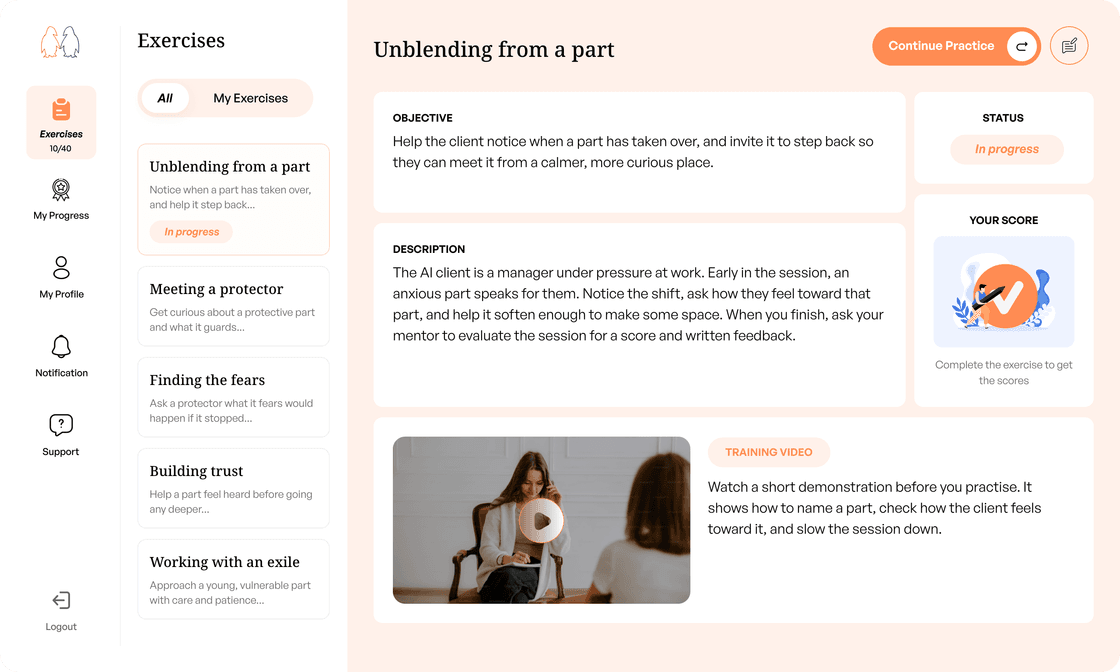
AI role-play practice for therapists

Therapist training, UK

A practice app where GPT-4o plays the client out loud through OpenAI voices, and an AI supervisor gives hints on request. The client’s team edits all seven prompt types in an admin panel, with no code release. Each session ends with a score and written feedback, so practitioners track progress over weeks.

Team
3 people
Timeline
About 11 months
Budget
$30k–50k
AI role-play practice for therapists — Therapist training
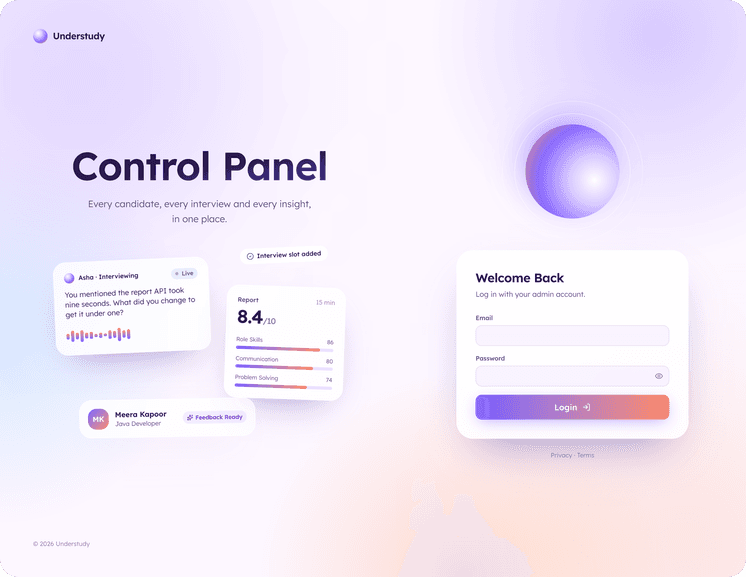
Understudy, our AI interviewer — HR tech
Understudy

Understudy, our AI interviewer

HR tech, Our own product

A spoken interviewer on OpenAI Realtime over WebRTC that turns each CV into 8–14 topics and shapes every follow-up to the last answer. 500+ real first-round interviews run. Tuned against our founder’s hand scores, the AI’s average gap fell from 1.75 to 0.4 out of 10.

Team
2 people
Timeline
About 3 weeks to a working scoring method
Budget
Under $30k (internal build)
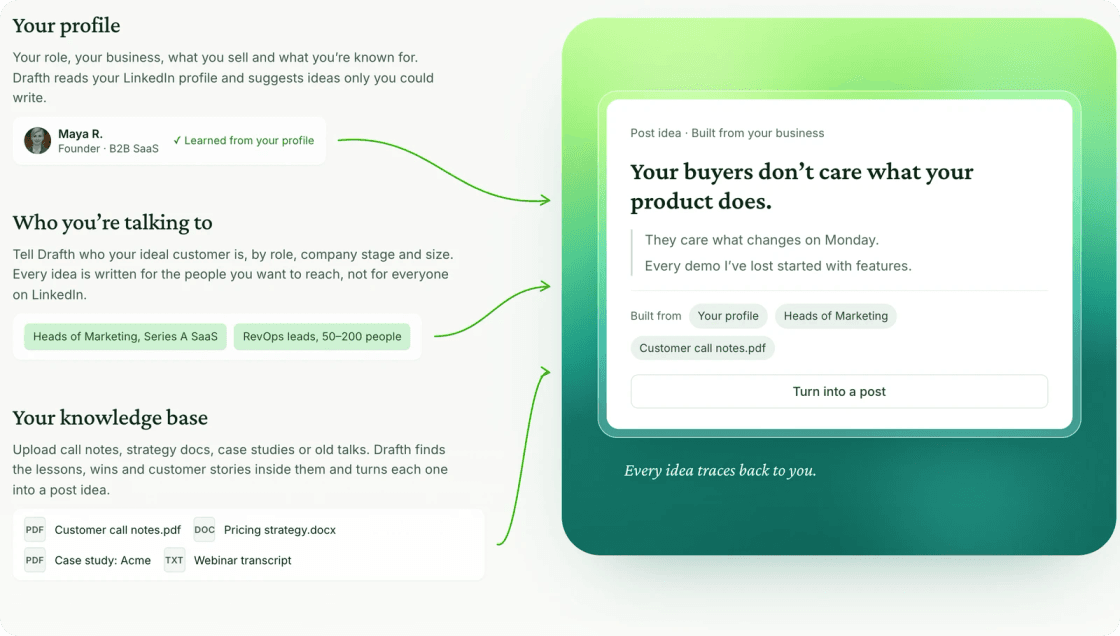
Drafth, multi-agent AI for LinkedIn posts — Marketing tech
Drafth

Drafth, multi-agent AI for LinkedIn posts

Marketing tech, Our own product

A content workspace where separate agents each own one job, from hooks to edits, shaped by each user’s story. Research agents add sourced, current facts through the Perplexity API. Users go from a blank page to a post that sounds like them in a few minutes.

Team
4 people
Budget
Over $250k (internal investment)

How to build a generative AI application: our six steps

A generative feature added to your existing product reaches users in 3–6 weeks. With our generative AI app development services, a new app or voice MVP takes 8–14 weeks, plus 1–2 weeks if sample data isn’t ready.

Typical timelines
  • Paid proof of concept

    2–4 weeks

    2–3 models on your samples, ending in a go/no-go

  • Generative feature

    3–6 weeks

    Quiz, report or summary generation in your app

  • App or voice MVP

    8–14 weeks

    A spoken practice or interview product with billing

The six steps

Our engineers build with Claude Code, and a tech lead reviews every change.

Across the 8+ projects we built with Claude Code in the last year, delivery took up to 50% less time than comparable builds the year before.

How much does generative AI development cost?

Custom generative AI development services with Techuz cost $4k–10k for a proof of concept and $10k–25k for one feature in your product. A standalone app or voice MVP is $25k–50k; a multi-tenant platform starts at $50k, released in phases. Model fees are billed at provider prices with no markup from us and keep falling. In Stanford’s AI Index 2025, the cost of a fixed level of performance fell about 280-fold in two years. We estimate your fees per 1,000 calls before the build.

Typical cost by project type (steps not to scale).
  1. Paid proof of concept

    2–4 weeks

    $4k–10k

  2. Generative feature in your product

    3–6 weeks

    $10k–25k

  3. Generative AI app or voice MVP

    8–14 weeks

    $25k–50k

  4. Multi-tenant platform

    Built in phases, 5–9 months to first release

    $50k+

What moves the price

  • Voice and real-time replies
  • The accuracy bar and how much a person reviews
  • Monthly output volume
  • Compliance, from labelling to data residency

What’s included

Each price includes discovery, build, QA, project management and a 30-day warranty. Model and API fees are listed monthly in the proposal, and rates start at $20 an hour.

How do we keep generated content accurate and safe?

Techuz builds the checks into the product: generated content is grounded in your sources, checked for format and rules, and labelled where the law asks. The EU AI Act now requires providers of generative AI systems to mark AI-generated audio, images, video and text in a machine-readable way. Article 50 has applied since 2 August 2026.

Grounded in your sources

Where facts matter, drafts and answers come from your documents or cited web search, not the model’s memory. With no relevant source, the AI answers “not found” rather than guess.

Checked before anyone sees it

Structured outputs pass format and rule checks, such as formulas that must render or a fixed question mix. Off-topic answers are capped, and a rule-based fallback takes over if the model provider is down.

A person makes the final call

Generated content advises; people decide. Understudy’s report is evidence for a hiring manager, and the therapy role-play is training, not clinical judgement.

Labelled where the law asks

Generated media carries a machine-readable AI mark and, where Article 50 applies, a visible label. Consent is recorded before any voice imitates a real person.

Your data, your accounts

OpenAI and Anthropic don’t train on business API data by default, and we turn off any sharing settings. For stricter cases, Azure OpenAI runs inside your own Microsoft tenant. Through our model gateway, requests go only to providers that don’t store or train on your prompts. More on AI security.

Technology we use for generative AI

Techuz picks the model for each feature by testing two or three on your own samples. One gateway, OpenRouter, gives us the major models through a single API, so switching is a setting change.

  1. Models

    Current models we test on your eval set; routine jobs go to the smallest one that passes

    • Claude Opus 5.5
    • Claude Sonnet 5.5
    • Claude Haiku 5.5
    • GPT-6.1
    • GPT-6 Luna
    • OpenRouter (one API, provider fallback)
    • Azure OpenAI in your tenant
  2. Voice

    Real-time speech for role-play and interviews

    • OpenAI Realtime over WebRTC
    • Whisper
    • OpenAI text-to-speech
  3. Specialist APIs

    Try-on and CV parsing

    • Perfect Corp YouCam (try-on)
    • Affinda (CV parsing)
  4. Retrieval and research

    Cited web search; a separate search space per customer

    • Perplexity API
    • Pinecone
    • OpenAI embeddings
  5. Application and cloud

    The product around the AI, in your cloud account

  6. Quality and monitoring

    No prompt change ships until it passes your test cases

    • Eval suites
    • Git
    • Sentry
    • CloudWatch

Generative AI development FAQ

  • When a fixed template fills in the output just as well, AI only adds cost per output and more to check. We’ll also say no where no one checks high-stakes outputs, like treatment or hiring decisions, or before you have real sample inputs.

  • Generative AI development is building software that uses AI models to create new text, documents, speech or images inside a real product. Techuz’s generative AI development services run from discovery and a proof of concept on your samples to launch and monthly quality and cost checks.

  • Generative AI creates something: a draft, a quiz, a spoken reply or a try-on image. A chatbot holds a conversation over your data, a copilot sits beside a user inside an app, and an agent takes actions in your systems. Many products combine them, and Techuz builds all four.

  • Accurate enough to measure, not perfect. At Techuz, your domain expert writes the expected output for each test case, and every release is checked against that set of 30–100 real cases. Outputs cite their sources and pass format checks before anyone sees them.

  • You own the code and prompts. At Techuz, code, prompts, eval sets and AI provider accounts are in your name, handed over at launch. Rights in the generated content follow your model provider’s terms, so ask your legal adviser to confirm them for your use.

  • If your product serves people in the EU, probably yes. Article 50 of the EU AI Act applies from 2 August 2026. It asks for AI-generated media to be marked, and for deepfakes and some public-interest text to be labelled. Have a lawyer confirm what applies to your product.

  • Usually you don’t need to fine-tune or train your own model. Techuz starts with current models, your prompts and your examples, and fine-tunes an existing model only when tests on your samples show a gap prompts can’t close. We don’t train foundation models. So far, no client project of ours has needed LLM fine-tuning in production. More on LLM development.

Get a Ballpark Estimate for Your Project

Tell us what you're building. We reply within 24 hours and send a ballpark estimate within 48.

Tell us about your project

A few lines are enough. We reply within 24 hours.

By sending this form I confirm that I have read and accept the Privacy Policy