AI copilot development services, built into your product

A copilot beside the record your user is working on: it answers from your own data and drafts the next step.

4.9 on Clutch from 45 reviews · 500+ projects since 2013 · An in-app copilot with 55 tools on medical device quality records

Our AI copilot development services

Our AI copilot development services turn the products your team already uses into a place to ask, draft and decide. Sales, support and operations get the same answers from the same data, so handoffs stop losing context.

  • Copilots inside your product

    Custom copilot development adds a side panel or inline assistant to your SaaS product or portal, working inside the screens your users already have. Customers get help where they click, and nothing that works gets rebuilt. See AI software development services.

  • Enterprise AI copilots for internal teams

    An enterprise AI copilot lives in the system your staff use all day, finding records, summarising their history and preparing the next task. Time spent hunting through screens goes back into the work. See enterprise AI agents.

  • Copilot tools, actions and MCP

    Tool calling links the copilot to your APIs, or to an MCP server we build around your product’s actions. Built once, those tools also work with any AI client that supports MCP, so you aren’t tied to one vendor.

  • Answers grounded in your records

    Retrieval over your documents puts a source link under every answer, and when nothing matches, it tells the user there is no answer. Your team checks any answer in one click, so a wrong one gets caught before it spreads. See RAG development services.

  • Drafting and review copilots

    AI assistant development for drafting covers replies, reports, posts and summaries written from your data, which the user edits before anything goes out. Your team starts from a solid first version, and the final word stays with a person. See generative AI development services.

How an AI copilot fits into your app

An in-app copilot is a panel in your interface plus a service behind your API, never a direct line to your database.

Your app holds the record and a copilot panel. Each request carries the record, page and role (1). Answers link to the record they came from (2). Tools call your own API (3). Changes wait for the user’s confirmation (4). The copilot service behind your API logs each call with its model and cost, and tags suggestions as accepted, edited or rejected (5). It never reaches your database directly.

  1. 1

    Screen context

    On new builds, each request carries the current record, page and user role, so questions stay short.

  2. 2

    Your records, with sources

    Each answer links to the exact record it came from, not just the document.

  3. 3

    Tools through your own API

    Read and write tools call the same API your screens use.

  4. 4

    Confirm before change

    On our medical device quality copilot, code, not the prompt, enforces the confirm rule. On new builds, we also log each change with the user who confirmed it and add one-step undo where the record allows.

  5. 5

    Logged, costed and measured

    Every call is logged with its model and cost per customer account. Suggestions are tagged accepted, edited or rejected, showing which jobs people trust.

We ship each copilot read-only. Write tools switch on one role at a time, once 2–4 weeks of logs show users accept its suggestions and permission tests pass. See how we build every AI feature.

AI copilot vs AI agent, or a chatbot: which do you need?

Pick a copilot when a person stays in charge inside your app. Choose an agent when work runs across systems unattended, and a chatbot for customer questions. A common path is to start with a copilot, then hand repeat work to an agent once it has proven itself.

AI copilot vs AI agent, or a chatbot: which do you need?
AI copilotAI agentAI chatbot
Where it livesIn your app, beside the userBehind the scenes, across systemsWebsite, app or WhatsApp
Who starts the workThe user, each timeA trigger or scheduleA customer’s question
What it can changeProposes changes in the user’s sessionActs within set limitsNothing; hands over to a person
Learn moreThis pageAI agent developmentAI chatbot development

Work from our AI copilot development company

These three live products each run AI beside a person, not instead of them.

Client logo

AI quality management for medical device teams

Medical device SaaS, USA

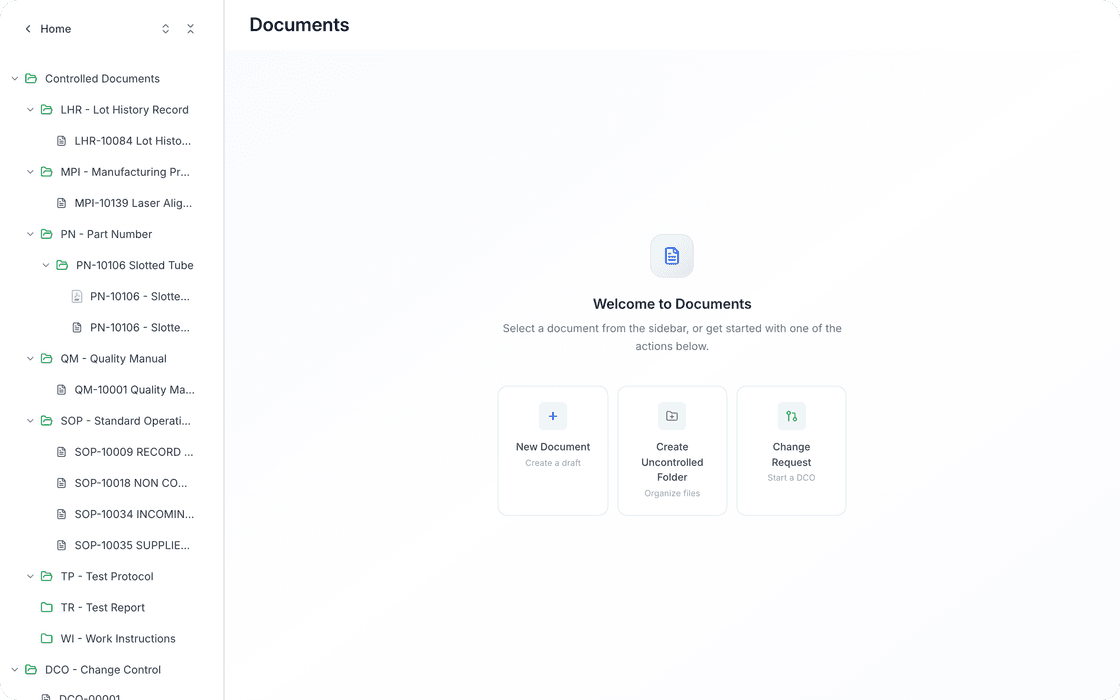
A copilot for medical device quality teams, on a platform built for FDA 21 CFR Part 11 requirements. Its 55 tools look up, summarise and update the documents, approvals and training those teams manage. Quality teams run documents, approvals, training and signatures in one place, with the copilot beside them.

Team
5 people
Timeline
13+ months, ongoing
Budget
$100k–250k
AI quality management for medical device teams — Medical device SaaS
Drafth, AI writing workspace for LinkedIn — Marketing tech
Drafth

Drafth, AI writing workspace for LinkedIn

Marketing tech, Our own product

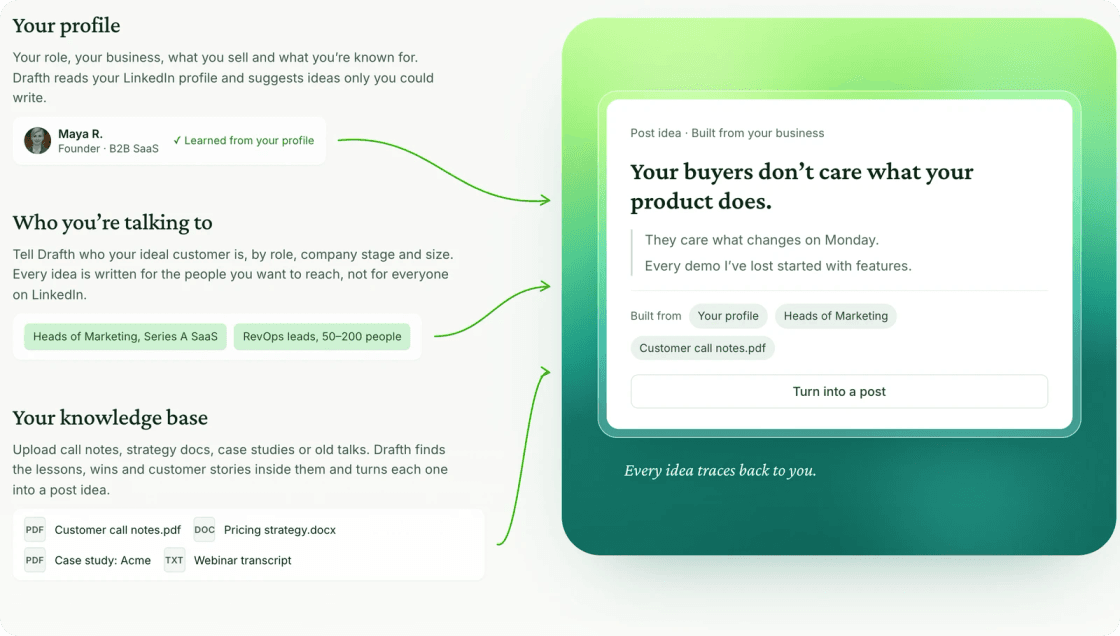
Users chat in a panel beside the post editor, and each request goes to the idea, post or edit agent that fits. It learns from what each user picks, edits and publishes.

Team
4 people plus a shared PM
Budget
Over $250k (internal investment)
AI role-play practice for therapists — Therapist training
Client logo

AI role-play practice for therapists

Therapist training, UK

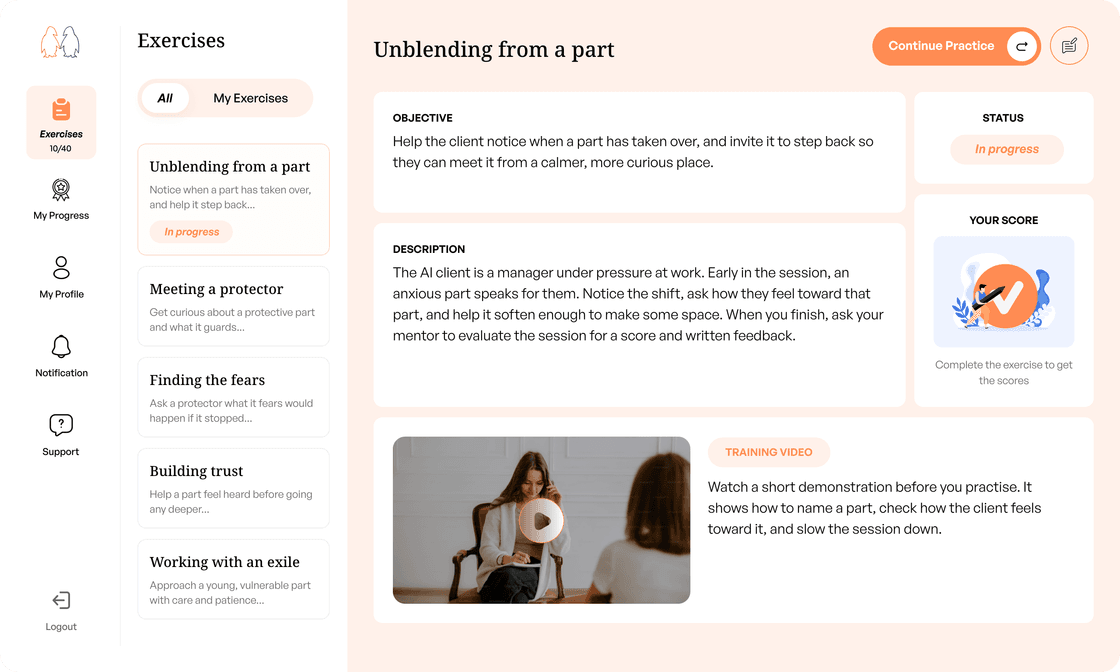
As a practitioner talks with an AI client, an AI supervisor suggests what to try next when asked, then writes feedback and a score. Live, with Techuz credited as app developer on the client’s own site.

Team
3 people
Timeline
About 11 months
Budget
$30k–50k

How we build an AI copilot, step by step

Every copilot goes through five phases. In an existing product, phases 1 and 2 fold into 1–3 weeks, and phases 3 and 4 run as one sprint.

Typical timelines
  • Proof of concept

    2–4 weeks

    Your data, 2–3 models compared

  • Copilot in an existing product

    3–6 weeks

    One screen, a few jobs

  • Copilot with search and actions

    8–14 weeks

    Sourced answers, write tools, cost tracking

  • Multi-tenant copilot platform

    5–9 months

    To first release: many tools and accounts, plus compliance

The five phases

Across the 8+ projects we built with Claude Code in the last year, delivery took up to 50% less time than comparable builds the year before.

How much does an AI copilot cost?

An AI copilot costs $4k–10k as a proof of concept and $10k–25k inside an existing product. With document search and actions it costs $25k–50k, and a multi-tenant platform $50k+, built in phases. Model fees are separate: you pay your provider directly, and the proof of concept prices them per 1,000 calls.

Typical cost by copilot type (steps not to scale).
  1. Proof of concept

    2–4 weeks

    $4k–10k

  2. Copilot in an existing product

    3–6 weeks

    $10k–25k

  3. Copilot with document search and actions

    8–14 weeks

    $25k–50k

  4. Multi-tenant copilot platform

    5–9 months to first release

    $50k+, built in phases

What moves the price

  • Write access
  • Tool count
  • Messy data
  • The accuracy bar
  • Regulated records
  • Voice

What’s included

Prices cover discovery to launch, QA and project management.

Selling the copilot to your customers? See AI SaaS development. Compare engagement models and pricing.

How do we stop a copilot from overstepping?

OWASP’s August 2026 Top 10 for LLM Applications moved excessive agency, an AI with more tools or rights than its job needs, up to third. Techuz limits every copilot with four controls from that list.

The fewest tools each role needs

Tool lists are set per role in the architecture document, and read-only roles get no write tools. A mistake has fewer places to spread.

Acts as the signed-in user, never an admin

The copilot calls your API with the user’s own session, never a shared service account, so it reaches only what that user could.

Tested against hidden instructions

Before launch, QA plants instructions in documents the copilot reads and tries to pull other users’ data through it. Failures are fixed and retested before release.

A budget cap before each model call

A budget check runs before each model call, as in Understudy, our AI interviewer. A runaway loop stops at a limit you set.

See AI security for the wider threat model.

AI copilot development FAQ

  • If the task follows fixed rules, plain automation beats a copilot on cost and predictability. Techuz is also the wrong choice if nobody will review the output or you have no real questions to test on. We’ll flag either during the scoping call.

  • An AI copilot is an assistant built into software that works beside a user, answering from their data, drafting and suggesting while the person decides. Unlike an AI agent, a copilot works while the user is present, not in the background. Techuz builds them into your own product.

  • Use Microsoft 365 Copilot when the work lives in Word, Outlook and Teams. Build your own when it happens in your product, needs your roles and records, or serves your customers. Techuz builds custom copilots inside your product, not Copilot Studio set-ups.

  • Yes: Techuz gives the copilot write tools that call your own API, such as assigning training or updating a field. On our medical device quality copilot, 23 of its tools change records, each only after the user confirms it in the panel.

  • The cheapest model that clears your eval set, so you never pay for a larger model than the job needs. Techuz runs your real questions through several Claude and GPT models, then routes each job to the one that fits. Before any later model change, the eval set is re-run. See LLM integration.

  • With Techuz, a proof of concept takes 2–4 weeks and one copilot in an existing product 3–6 weeks. A copilot with document search and actions takes 8–14 weeks, and a multi-tenant one reaches first release in 5–9 months, once the scope is clear.

Get a Ballpark Estimate for Your Project

Tell us what you're building. We reply within 24 hours and send a ballpark estimate within 48.

Tell us about your project

A few lines are enough. We reply within 24 hours.

By sending this form I confirm that I have read and accept the Privacy Policy