
Your accounts, your keys, your region
Your OpenAI or Anthropic accounts, or Azure OpenAI in your own tenant on request, sit in your name from day one. So does the cloud, in a region agreed in discovery.

Agents that work across your internal systems, keep data in your cloud and model accounts, and leave a record your compliance team can read.
4.9 on Clutch from 45 reviews · 500+ projects since 2013 · An AI agent live in a medical device quality system built for FDA 21 CFR Part 11 requirements
Our enterprise AI agent development services build agents that take on the work your teams lose hours moving between systems that don’t talk to each other. Each one works inside the access rules and audit trail your company already trusts.
AI agents added to the product you already sell, as a service behind its existing login, roles and tenant checks, with no rewrite. Your enterprise customers get AI features they can put through their own vendor review. See AI copilot development.
One agent per workflow reads and updates records across the tools a team already uses, through each system’s own API. Staff stop re-keying the same data between systems, and the hand-offs where errors creep in disappear. For fixed, rule-based jobs, see business process automation.
We build MCP servers that expose your systems’ actions with their own permission checks, so every approved agent connects the same governed way. You can add or change AI vendors later without rebuilding a single connection.
Knowledge agents answer from policies, SOPs and controlled records the asking user is cleared to read, citing the record behind each answer. Policy questions stop queuing for the one expert who knows, and confidential files stay with their owners. See RAG development services.
In regulated workflows, an agent prepares change orders, document updates and training assignments, then hands them to the right approver inside your e-signature steps. Auditors keep the evidence trail they rely on, with the agent’s work recorded in it.
Support plans add monthly drift checks on sampled answers, track provider deprecation notices and add tools as workflows change. The agent stays accurate and inside budget long after the project team moves on. See MLOps and LLMOps.
Need one agent for one team?
Enterprise agents get approved when reviewers can check what each one can reach and do. In Okta’s February 2026 vendor survey of 150 IT and security leaders, 80% named over-privileged access among their agent security concerns. Only 27% said their identity systems were fully equipped to govern non-human identities at scale.
An enterprise agent reaches your systems through five layers, and your team can inspect each one. Under the MCP specification released on 28 July 2026, client credentials are bound to the authorization server that issued them and can’t be reused with another.
What it does: Carries the user’s role and organisation into every tool call
What it does: Read tools on your APIs or MCP servers; write tools sit behind user confirmation
What it does: Searches only the records the user’s role and organisation allow
What it does: Routes each job to a model through your back end, never the browser
What it does: Limits spend and gates each release on test results
Our shipped agents work on product databases, document stores, regulatory data and live web research. Systems without an API get a tool layer first; see enterprise AI integration and technical architecture.
If the work starts and ends inside one suite, use the agents that suite already sells. Build custom when work spans several systems, lives in your own product, or needs your own audit and cost controls.
Need several agents handing work to each other?
See agentic AI development. On a 30‑minute call, we’ll tell you if the platform you already pay for can do the job.
Techuz has three agent products in daily use: one on regulated quality records, two of our own.

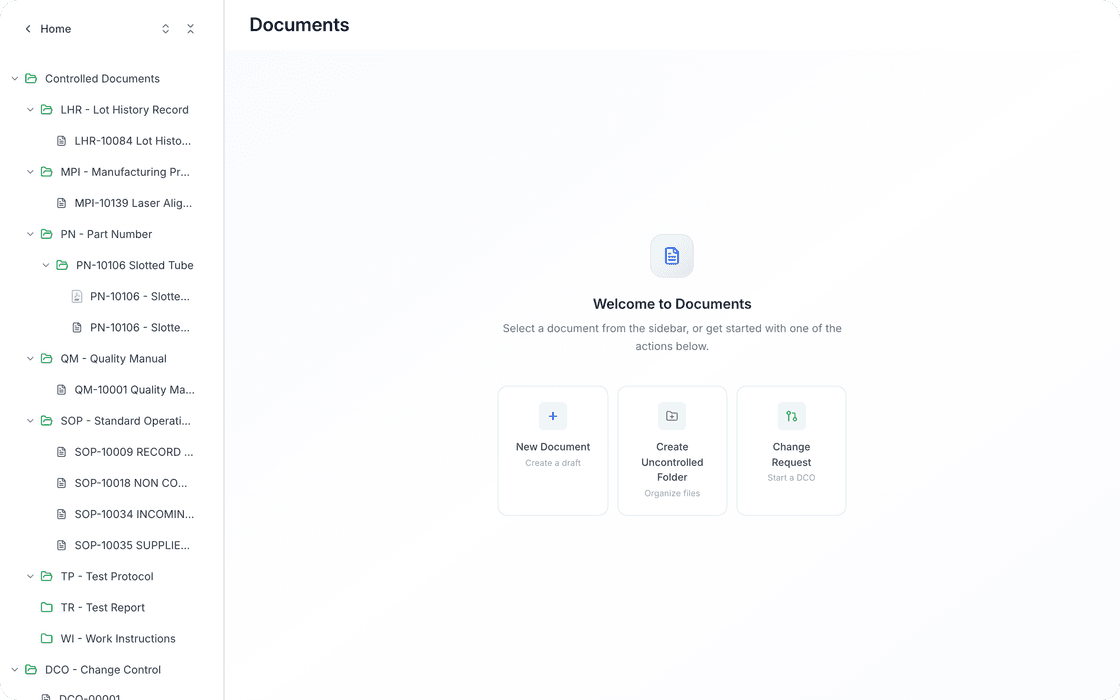
Every change this assistant makes in a multi-tenant quality system goes through the app’s own API, across 55 tools (32 read, 23 write). Each customer has a separate search space, and AI usage and cost show per customer in the admin console. Prompt caching cut AI cost per call by 74–90%, depending on the model.
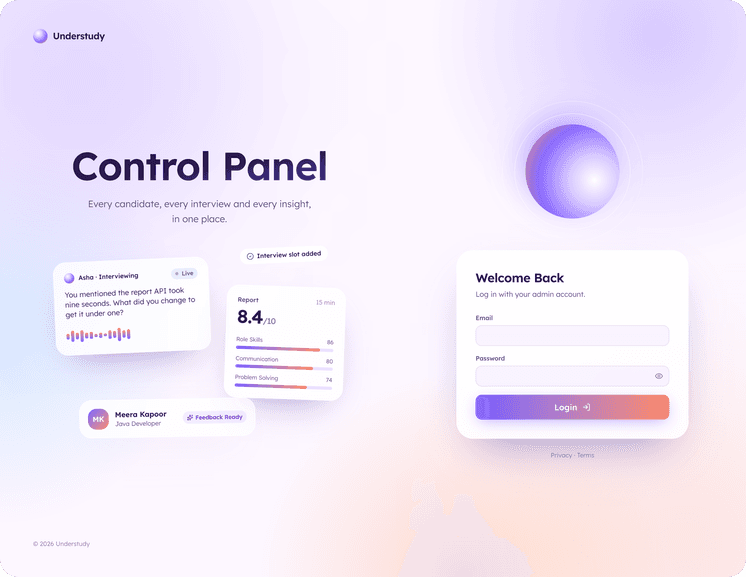

A spoken interviewer where our server creates every response and checks every AI call against a spending budget. Candidates consent first, recordings are deleted after 90 days by default, and browser voice keys expire in 120 seconds. 500+ real interviews run, and a person makes every hiring decision.
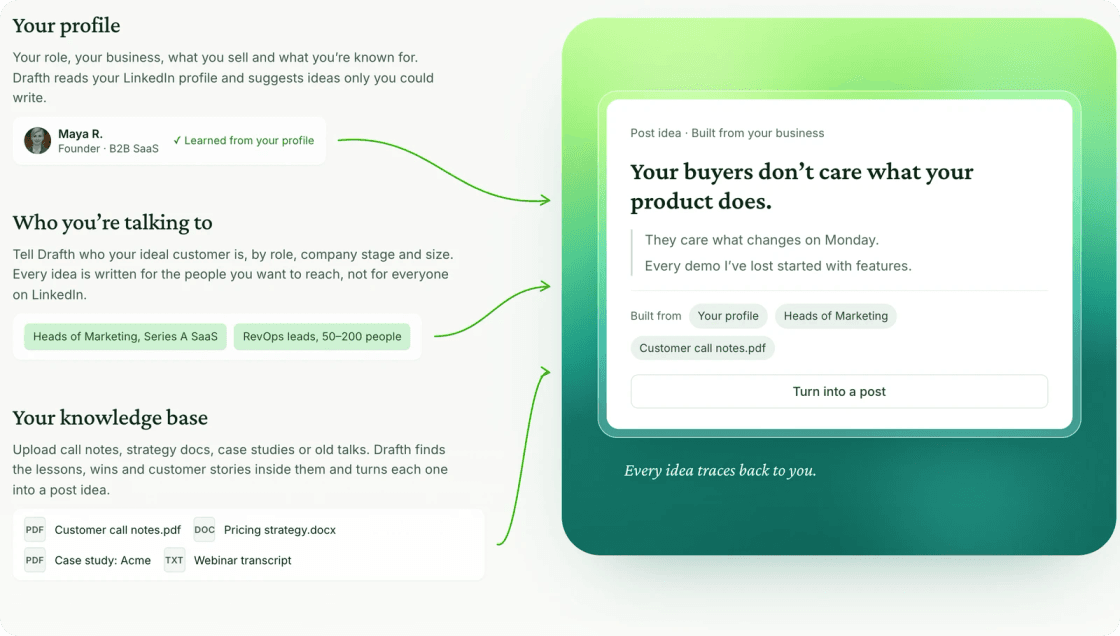
Ownership is clear across agents orchestrated with LangGraph. Each has one job and its own tests, and together they use Claude, OpenAI and Gemini models. Before any code, we raised questions on data access, switching model providers and cost per post. One agent’s step can be improved without breaking the rest.
Enterprise agents move through six phases, from a paid pilot to rollout one team at a time. A single agent inside an existing product compresses phases 1–3 into its first fortnight.
Paid pilot
2–4 weeks
One workflow, read-only
Agent in an existing product
3–6 weeks
One agent, one team, read tools plus one confirmed write action
Agent MVP
8–14 weeks
An agent with admin, logs and cost tracking
Multi-team or multi-tenant platform
5–9 months
To first release: several agents across teams or customer tenants, each with its own roles, cost tracking and audit evidence
Across the 8+ projects we built with Claude Code in the last year, delivery took up to 50% less time than comparable builds the year before.
With Techuz, an enterprise AI agent starts with a $4k–10k paid pilot. One agent in an existing product costs $10k–25k, and multi-team or multi-tenant agent platforms start at $50k, built in phases. Your provider bills model usage directly, and the pilot measures it per 1,000 calls so you can budget for it.
$4k–10k
Paid pilot
2–4 weeks
$10k–25k
Agent in an existing product
3–6 weeks
$25k–50k
Agent MVP
8–14 weeks
$50k+, built in phases
Multi-team or multi-tenant platform
5–9 months to first release
Paid pilot
2–4 weeks
$4k–10k
Agent in an existing product
3–6 weeks
$10k–25k
Agent MVP
8–14 weeks
$25k–50k
Multi-team or multi-tenant platform
5–9 months to first release
$50k+, built in phases
Discovery, QA and project management are in the price, and broken eval cases are fixed free for 30 days.
See engagement models and pricing. Need AI engineers inside your own delivery process? Set up a dedicated development team, with rates from $20 an hour.
A governed agent is one you can list, limit and switch off. In April 2026, Gartner said only 13% of organisations believe they have the right AI agent governance. Two of its six steps are an agent inventory and agent identity, both covered below.
For the models, data and cloud beneath your agents, see our approach to enterprise AI agent security.
Techuz picks each model and tool per job on your eval results, and keeps the setup simple enough for your team to audit.
Current models we test on your eval set
Vector search over your records; cited web research
Releases gated by evals; errors watched in production
When the work stays inside one vendor suite, that vendor’s own agents usually cost less. Techuz is also the wrong partner for fully rule-based jobs, for teams with no agent owner, or for training a foundation model. Need a full enterprise system instead? See enterprise software development.
Enterprise AI agents are AI systems that plan a job’s steps and use tools across a company’s systems, under its identity, data and audit rules. At Techuz, building one runs from workflow mapping and a paid pilot to a team-by-team rollout and monthly monitoring.
Yes, through their APIs or MCP servers, though Techuz hasn’t shipped an agent on Salesforce, SAP or ServiceNow yet. We can build AI agents for CRM and ERP systems, and have integrated CRM and helpdesk APIs in non-AI work. Your pilot proves the connection first.
It stays in your own cloud and model accounts, and Techuz sends a model only the data sources you approve in writing. OpenAI and Anthropic don’t train on business API data by default, and we switch off sharing. For stricter rules, we can deploy Azure OpenAI in your tenant or open-weights models in your VPC.
No, Techuz holds neither SOC 2 nor ISO 27001 certification. Instead, your security team gets a security review pack, prepared in 1–2 weeks, with the identity model, tool access matrix, data-flow diagram and threat model. We also support your audits with the evidence it contains.
With Techuz, mapping takes 1–2 weeks and the read-only pilot 2–4 more, so you see the agent on your real tasks within about six weeks. The first team goes live after build, evals and UAT, and each later team joins after a 30-day value review of the team before it. Larger multi-team or multi-tenant platforms take 5–9 months to first release, once the scope is clear.
Tell us what you're building. We reply within 24 hours and send a ballpark estimate within 48.


