Never run out of ideas
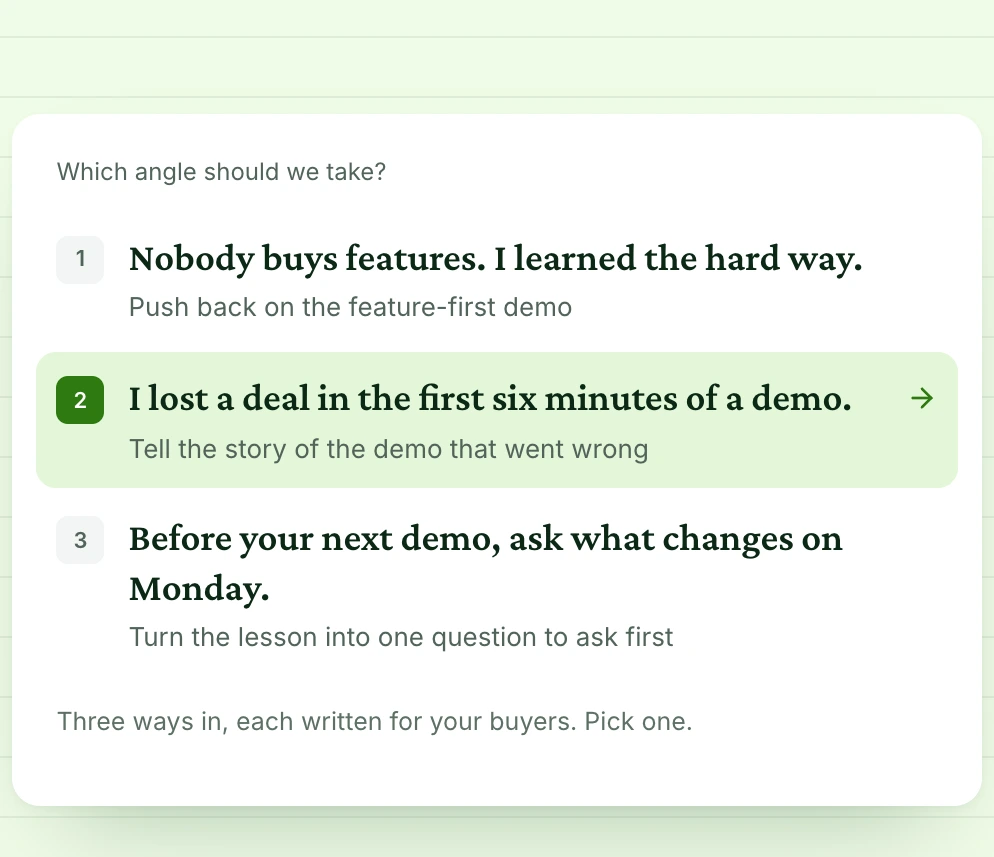
Personal idea categories, then ideas, angles and hooks, with a hook preview score

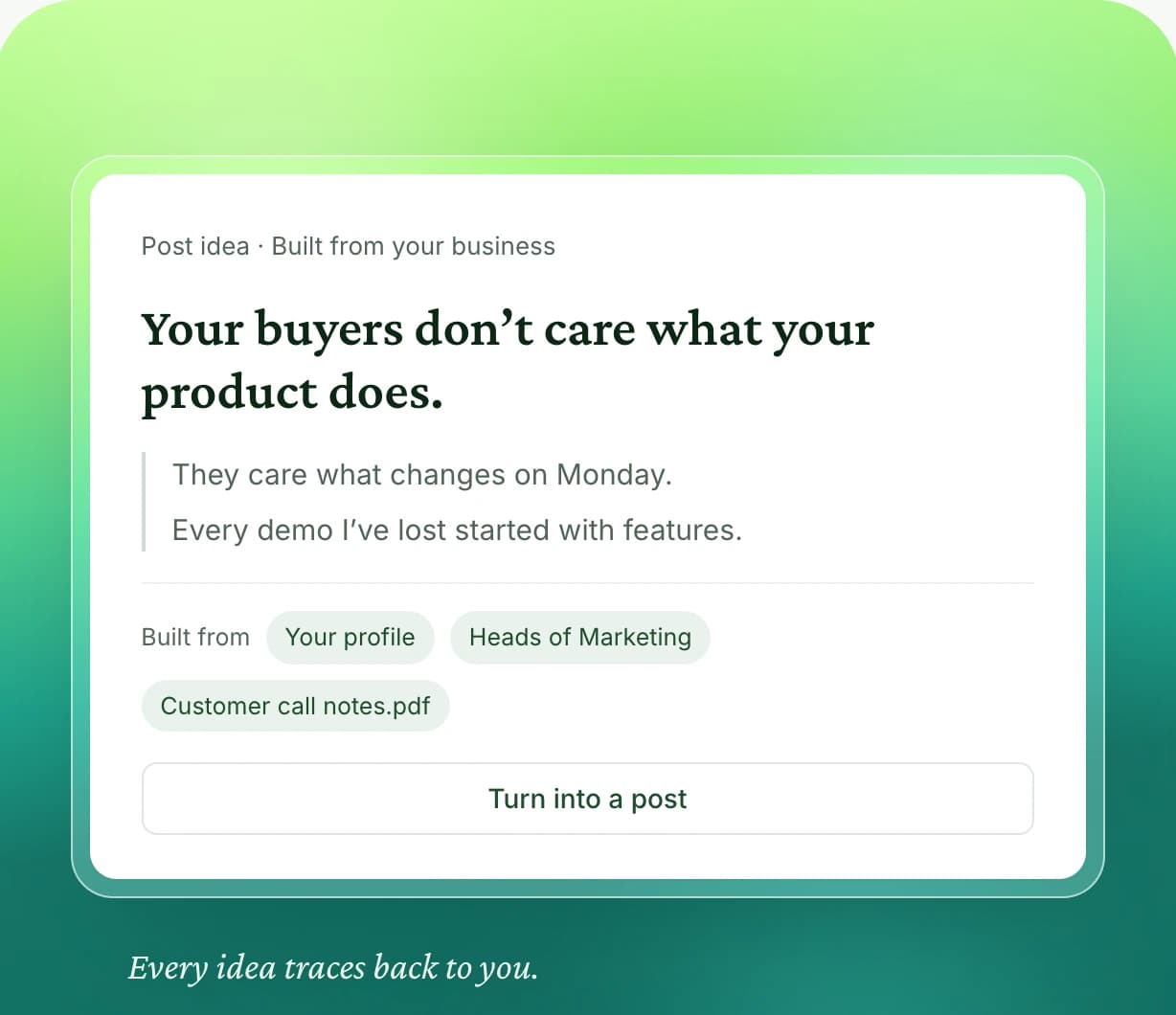
Professionals get ideas, angles, hooks and full posts drawn from their own story and knowledge, then schedule them. It's live.
 Techuz's own product
Drafth is Techuz's own LinkedIn content workspace for founders, consultants and creators who want to post consistently in their own voice. It builds a profile of each user, from their story and audience to their offers and knowledge, and uses it at every step. Behind it, 28 AI agents each do one job, with live web research so posts can cite current facts.
Generic AI tools write bland, impersonal LinkedIn posts. And most professionals can't post consistently, because they run out of ideas.
We wanted one tool that finds the ideas and writes the posts, shaped by each user's identity and knowledge.
The hard part isn't generating text. It's text that sounds like one specific person.
It also has to say something current and true.
Three choices shaped Drafth. We split the work across many small agents and researched the live web instead of trusting model memory. We also started with a feedback loop.
The easy option was one large prompt that does everything. We split the work into 28 agents for ideas, angles, hooks, posts, edits, research and more.
The chat reads what the user wants and routes each request to the idea, post or edit agent that should handle it.
Research agents call the Perplexity API for live results with sources, and posts can reference them.
The easy option was to promise a full persona model from day one. Drafth learns from what each user picks, edits and publishes.
Questions before code. We reviewed the requirements document before writing code. We raised questions on LinkedIn API access, how profile data is fetched, an AI layer that can switch model providers, and cost per post.
More than one model. The agents use Claude, OpenAI and Gemini Flash models in combination.
Users sign up, tell Drafth who they are and who they write for, and then work in one web app from idea to scheduled post.
Personal idea categories, then ideas, angles and hooks, with a hook preview score
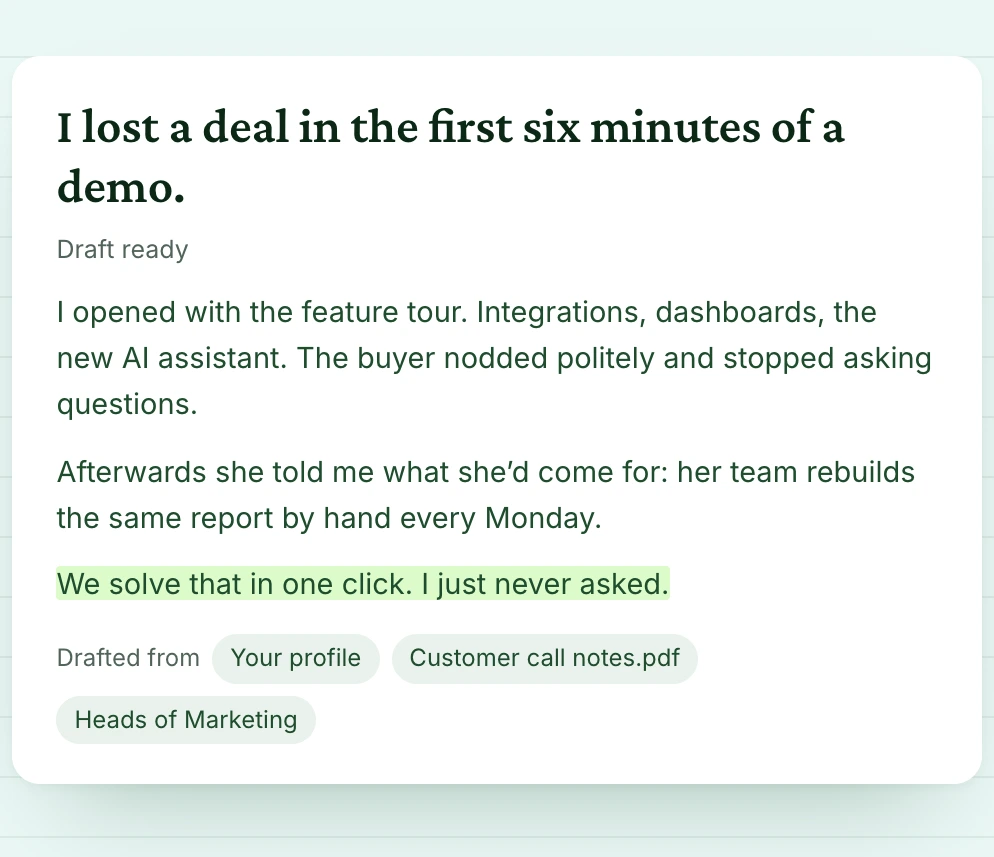
Their identity, knowledge base, swipe file of posts they like, and ideal customer profile used as context
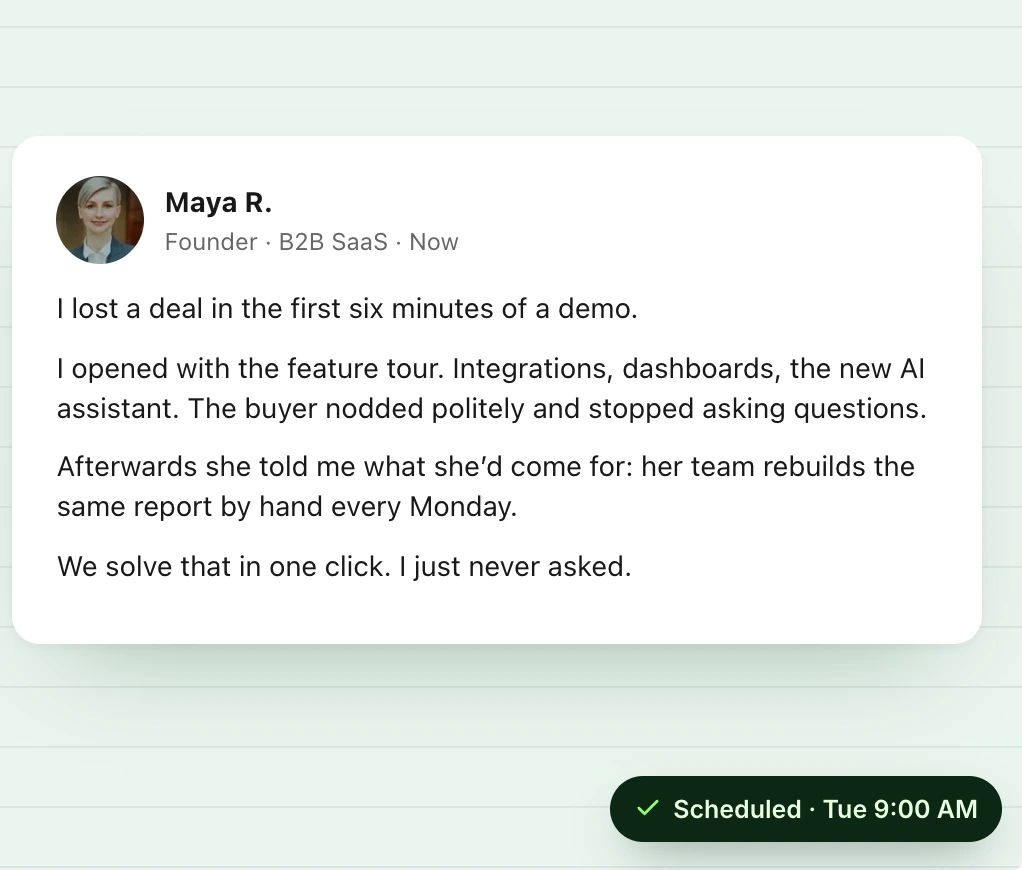
Scheduling in their own time zone
We worked from a written requirements document with 11 modules.
Next on the roadmap: a “done-for-you” layer where Drafth's own team writes for managed clients, then workspaces for agencies managing many clients.
4people
Drafth is live at drafth.com. Users go from a blank page to a post that sounds like them in a few minutes. The ideas keep coming from their own story and knowledge. Posts can cite current facts with sources, instead of guessing. And we can improve one step without breaking the rest.
Live web results with sources
Small agents are easier to test and tune, and a weak step can be fixed alone. Here, 28 agents each handle one job, from ideas to edits, and cost per user has to be planned because each post takes more AI calls.
Give the model the person: their story, audience, offers and knowledge. Here, Drafth uses each user's profile, knowledge base and swipe file at every step, and learns from their edits.
Research the live web and keep the sources. Here, research agents call the Perplexity API before a post is written.
Tell us what you're building. We reply within 24 hours and send a ballpark estimate within 48.