Education software development company for learners of every age

Get a learning product people come back to, built through edtech software development that fits your business: a children’s app, a course marketplace, workplace learning or a schools platform.

4.9 on Clutch from 45 reviews · building EdTech since 2017 · 500+ projects since 2013

Our edtech software development services

As an education software development company, we build children’s apps, course marketplaces, workplace learning and school systems. Founders get a first release built around one behavior, like daily reading; schools and training firms replace the platform they’ve outgrown. See all the industries we build for.

  • Custom LMS development

    A learning management system built around how you enroll, teach, test and certify, for training businesses, school groups and course companies outgrowing a plugin. You own the platform outright, so you don’t pay a license fee for every learner you add.

  • Custom eLearning development

    Course platforms, assessments and learner portals for organizations that sell or run training online, with lessons your team can update without a developer. New courses go live faster, and your trainers keep control of what learners see.

  • Education app development

    For founders and schools who want learning on a phone or tablet: iOS and Android apps with lessons, progress tracking, rewards and parent accounts. Learners open the app between lessons, so learning becomes part of their day.

  • Video learning platforms

    Recorded courses that adapt to each learner’s connection, plus live classes held inside your own platform with attendance marked automatically. Students keep watching on patchy mobile data, and you can see who actually turned up.

  • Microlearning app development

    Short daily lessons, quick quizzes and streaks sized for five spare minutes, for workplace training or for young learners. Small wins each day build the habit that long courses rarely manage.

  • AI in education

    Practice quizzes, smarter search and onboarding drafts that AI prepares and a person approves, added to a new learning product or one you already run. Teachers and trainers spend less time on repetitive work and more on their learners.

Building the mobile side, a generative AI layer or video at scale?

See mobile app development, generative AI development and AWS services.

EdTech is four different businesses

Each kind of EdTech succeeds or fails on something different. Find the one closest to yours: it decides what we build first.

Children’s learning apps

Success is a child who comes back tomorrow without being told. That takes rewards tied to real reading or practice, streaks, badges worth collecting and leaderboards scoped to a class or a school. Parents own the account and see the progress.

Course and skills marketplaces

Success is a learner who finishes the course and gets hired, and a trainer who gets paid correctly. The build centers on trainer onboarding, search that understands loose queries, live and recorded classes, and payouts that handle tax per trainer.

Workplace learning platforms

Success is content the client already owns playing on day one. Good elearning software development here means a SCORM player for existing course packages, coaching and communities, and plans you can sell by tier.

Schools and colleges

Success is a platform staff trust with pupils’ data. Logins, roles and what each person can see are settled before any screen is drawn, and the interface is built to WCAG 2.1 AA. For US public colleges and other large public bodies, the Justice Department’s April 2026 rule sets the deadline at April 26, 2027 (Duane Morris, April 2026). LMS course materials are in scope.

Techuz at a glance

We’ve built education software since 2017 for clients in India, the US and the UAE. More about Techuz.

  • 12+ yearsbuilding software (since 2013)

  • 500+projects delivered

  • 250+clients

  • 30,000+commits across four EdTech platforms

Child safety and student privacy

If your users are children, safety decides how login, profiles, content and messaging work from the first sprint. The UAE’s Child Digital Safety Law came into force on January 1, 2026, Clyde & Co reported in January 2026. Platforms have one year to comply.

On a schools platform

  • No child email addresses. Young pupils sign in with a QR code or a PIN, and only a teacher can reset it.

  • No social features. The youngest pupils reach the platform only through their teacher.

  • Scores stay with staff. Pupils never see their own wellbeing scores.

  • Need-to-know dashboards. The teacher overview shows no pupil names; details open only in the teacher’s own class, across five staff permission levels.

  • No lost warnings. A safety flag is stored even when a school switches off the email alert.

On a family app

  • Parent-owned accounts. A parent registers and confirms a mobile number with a one-time code, and the child’s profile sits under that account.

  • Age-locked content. Books outside the child’s age range stay locked until the parent opens them.

  • Sharing off by default. The parent decides whether the child can share anything.

  • Moderated community. Every contest entry and comment can be reported into an admin moderation queue.

Data protection under UAE PDPL

We build to the PDPL baseline in your contract: collect only what the purpose needs, use it for that purpose alone, and delete on request. Staff actions go into their own audit trail, separate from login events, so a school can always answer “who opened this child’s record?”.


Where AI fits in an education product

AI belongs where a teacher or learner does slow, repetitive work, with a person approving what it drafts. In Gallup’s October 2026 survey of US K-12 educators, 59% had used AI tools in the last school year, often for lesson prep and grading.

Practice quizzes on demand

A student picks board, grade, subject and quiz size, and the AI writes a fresh set. Every question joins a growing bank, and nobody gets a question they’ve already tried. See the AI practice quizzes for school learners.

Search that understands loose queries

A search like “.net trainer” turns into the five most relevant skills and course categories, so learners find the right trainer.

Faster trainer onboarding

An AI parser reads the uploaded CV and fills in the profile, then a model drafts a bio the trainer can rewrite with one click.

Spoken practice for trainees

AI plays a therapy client out loud so trainees rehearse real conversations, and a second AI gives supervisor-style feedback afterwards. See the AI role-play practice for therapists.

See how we build AI in our AI development services.

Platforms our edtech development company has built

From a child’s first book to an adult’s first tech job: two platforms in daily use.

Client logo

Tutorac

Skills marketplace with live classes, India

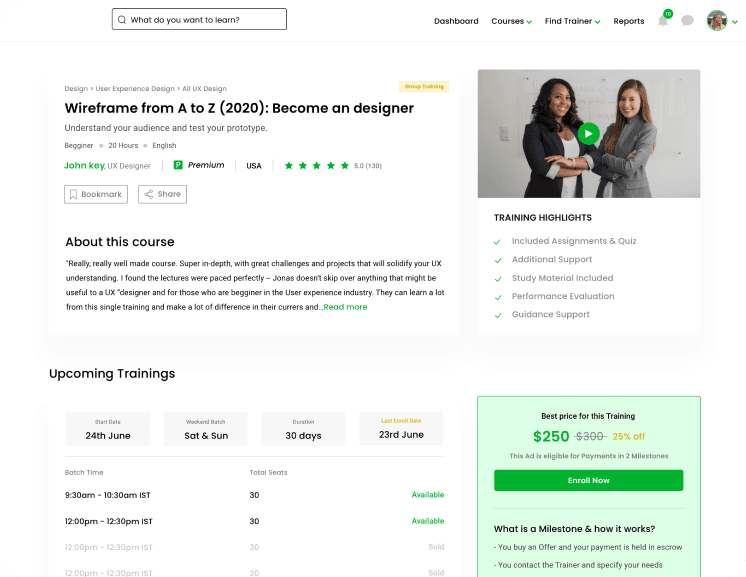
A marketplace where students find IT trainers, buy courses and join live batches, with a job-placement track backed by 300+ hiring partners. Lessons stream as adaptive HLS at four qualities, and live classes ran inside the platform with attendance marked on join. Across Tutorac’s marketplace and academy: 750+ video topics, more than 200 live classes a month and a 10K+ user base.

Tutorac — Skills marketplace with live classes
Children’s reading app — Consumer EdTech
Client logo

Children’s reading app

Consumer EdTech, India

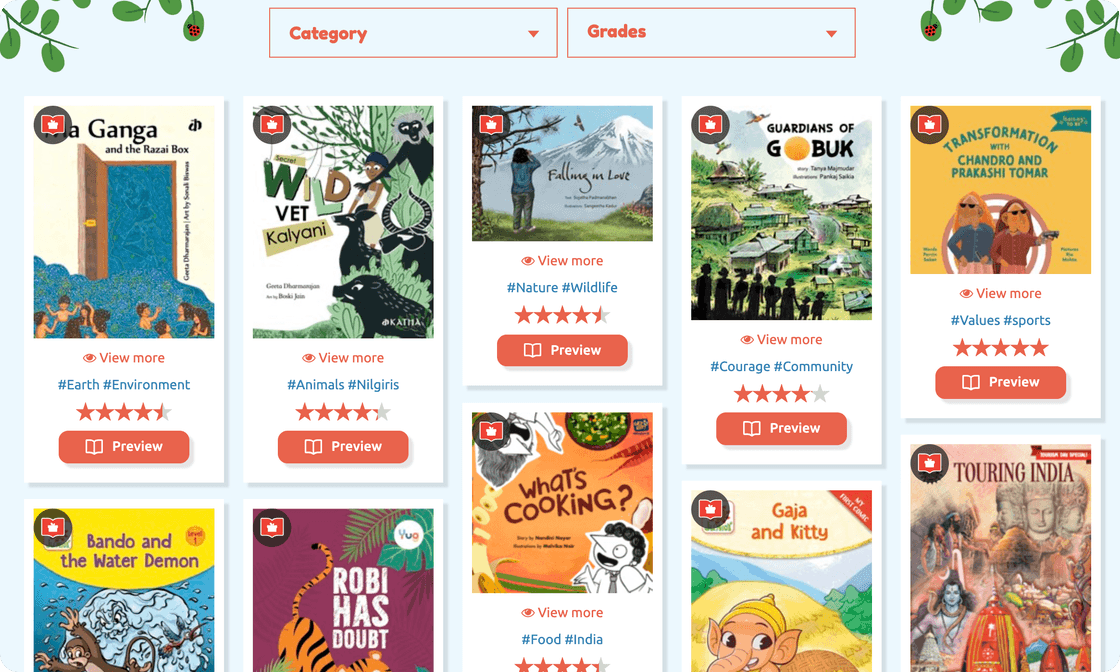
A reading app wrapped in a game layer: points for real reading, growing streak bonuses and 19 collectible badges. A short quiz follows each book, and leaderboards rank readers by grade, school and city. A 10K+ user base across the web and iOS and Android tablet apps.

What our clients say

Clients on Clutch, where we hold a 4.9 average across 45 reviews. Quotes are the reviewers’ own words; the result lines are ours.

5.0 out of 5on Clutch, Mar 2018
They are good at solving problems and getting to grips with the specifications of the brief.

The result

Painstaking research and efficient project management gave the startup excellent stability, even on highly complex requirements.

Co-Founder and CEO, Publishing Company

Publishing & media

5.0 out of 5on Clutch, Feb 2024
Most impressive was their ability to take my requirements, build a scope document and follow it.

The result

Weekly Zoom updates and a revised scope of work kept the project flexible as needs changed.

Client logo

Kevin Lewis, CEO, Schedash

Real estate SaaS

5.0 out of 5on Clutch, Dec 2023
Their proactive communication fostered a sense of trust and collaboration throughout the project.

The result

A scalable, future-proof product that met performance metrics and raised user satisfaction, with clear timelines throughout.

Client logo

Kalyan Gummadi, Engagement Manager, Product Strategy & Design Firm

Product strategy & design

Project size
Under $10K
Length
Aug – Nov 2023
Team
2–5 people

How long does education software development take?

A small build or MVP takes 8–12 weeks, and a marketplace or LMS with web, admin and payments takes 12–24 weeks. A large platform with web, mobile, AI and compliance work takes 6–12 months to its first release, built in phases.

Typical length to first release
  • Small build or MVP

    8–12 weeks

    One app or web product with one core loop

  • Marketplace or LMS

    12–24 weeks

    Web, admin and payments

  • Large platform

    6–12 months

    Web, mobile, AI and compliance work, built in phases

Pick your starting point

  • A new learning product

    Start with discovery and a first release built around one core behavior. Start with an MVP.

  • Replacing a platform that no longer fits

    We plan the move of your content and learner data in discovery, before any new code.

  • Adding to a live product

    One module at a time on time and materials, released every sprint.

Five phases

Our take

Build the habit loop or the hiring outcome first, and the admin panel second. A product learners return to can grow its back office later; an admin panel with no learners has nothing to manage.

How much does education software development cost?

Custom education software development with Techuz costs $10k–15k for a small build and $25k–50k for a mid-size platform. Large platforms cost $50k+, built in phases. Rates run $20–25 an hour, depending on role and seniority.

Typical cost by project type (steps not to scale).
  1. Small build or MVP

    8–12 weeks

    One app or web product with one core loop, such as a reading app with streaks or a single course storefront

    $10k–15k

  2. Mid-size platform

    12–24 weeks

    A marketplace or LMS with web, admin, 3–4 roles, payments and recorded video

    $25k–50k

  3. Large platform

    Built in phases · 6–12 months to first release

    Web, mobile and admin, live classes, AI features and child-safety compliance

    $50k+

What moves the price

  • Live classes and adaptive video
  • The number of roles: learner, parent, teacher, trainer, admin
  • Child accounts, consent and safety rules
  • Importing existing content such as SCORM packages, slides or ePub books
  • AI features and their running cost
  • Payments, payouts and tax per seller

Before you budget

Your estimate covers discovery to launch, QA, project management and the 30-day support window.

Video hosting, streaming, AI usage and app-store fees are billed by those providers.

Mid-size builds start with a Discovery Sprint ($1,500–2,000, about 1 week), and large ones with Product Discovery ($4,000–6,000, 3–4 weeks).

Which engagement model fits your EdTech project?

Pick fixed price for a scoped first release and time and materials for a live product with a shifting backlog. Choose a dedicated team for a platform you’ll grow for years.

Scope is written

Fixed price

Best for

A first release with a clear scope

How it works
Discovery fixes the scope, and you pay by milestone after each demo

Watch out for

Changes mid-build go through a change request

Backlog will shift

Time and materials

Best for

A live platform whose backlog shifts with learner feedback

How it works
Hours billed monthly against a cap you set; you reprioritize every sprint

Watch out for

An open budget: we report against the cap every week

A year or more

Dedicated team

Best for

A platform you’ll keep growing for a year or more

How it works
Engineers work only on your product, from 160 hours a month each, with 4 hours of daily overlap with your US workday; shortlist in 2–4 working days

Watch out for

Who sets priorities: you need a product owner

Why choose Techuz as your edtech software development company

We’ve built all four kinds of EdTech, and our clients keep us for years.

All four EdTech businesses

Children’s reading, skills marketplaces, workplace learning and school safeguarding each taught us a different rule. You get a team that already knows what decides success in your market.

  • Children’s appsA daily habit
  • MarketplacesHires and correct payouts
  • WorkplaceContent you already own
  • SchoolsChild safety

Your content comes with you

Years of SCORM courses, slide decks and ePub books are an asset, not a migration problem. We build the platform to play what you already own, so launch day starts with a full library.

  • SCORM1.2 and 2004
  • SlidesGoogle Slides embeds
  • BooksePub and PDF

Partners for years, not one release

Our longest EdTech partnerships ran eight and five years, from launch through every stage of growth. Product knowledge stays with one team instead of resetting with each new vendor.

  • Longest partnership8 years
  • Next longest5 years

Product knowledgeStays with one team

Your experts, our engineers

We don’t have teachers on staff, and we don’t pretend to. Your educators, safeguarding leads and trainers set the learning rules; we turn them into software and walk every flow through with them.

  • Learning rulesYour educators
  • SafeguardingYour leads
  • Teaching contentNot ours

We build what your experts sign off

Senior engineers who build with AI

Our engineers build with Claude Code, and a tech lead reviews every change before it merges. Across the 8+ projects we built with Claude Code in the last year, delivery took up to 50% less time than comparable builds the year before. See how we work.

  • Every changeTech lead review
  • Delivery timeUp to 50% less

Technologies behind our education platforms

Tools we’ve shipped in education products, chosen per project.

  1. Video and live classes

    Recorded lessons that adapt to the connection, and live classes inside your platform

    • Brightcove
    • AWS MediaConvert
    • Video.jsHLS
    • BigBlueButton
  2. Learning content

    Play the courses and books clients already own

    • SCORM 1.2 and 2004simplify-scorm runtime
    • Google Slides embeds
    • ePub and PDF reader
    • Read-aloud text-to-speechEnglish and Arabic
  3. AI

    Drafting and search where the manual work is

    • OpenAI models
    • Affinda CV parsing
  4. Engagement and messaging

    The right nudge at the right point in the learner journey

    • MoEngage
    • GupshupWhatsApp
    • TwilioSMS
  5. Payments and payouts

    Course sales, subscriptions and trainer payouts

    • Razorpay
    • Stripe
    • Stripe Connect
    • Direct bank payouts
  6. Cloud and apps

    Serverless content processing and native tablet apps

    • AWS Lambda
    • Amazon S3
    • iOS and Android

Education software development FAQ

  • Techuz isn’t the right fit if you need an off-the-shelf LMS running this week; a hosted product will be faster and cost less. Our work is the platform; your team or a content partner creates the courses. And if nobody on your side can own learning decisions, name that person before the build starts.

  • EdTech, short for education technology, is software that helps people teach or learn. It ranges from children’s reading apps and online course marketplaces to workplace learning platforms and school systems. Techuz builds all four kinds as custom products for the companies and schools that run them.

  • Education software development is the design, build and support of software for learning: apps, learning management systems, video platforms, assessments and their admin tools. At Techuz, one team runs it from discovery to support after release.

  • The best education software is the one built around what decides success for you. A children’s app needs a daily habit, a marketplace needs hires and correct payouts, workplace learning needs your existing content, and schools need child safety.

  • At Techuz, a small education app or MVP costs $10k–15k, and a marketplace or LMS with payments costs $25k–50k. A large platform with web, mobile and AI costs $50k+, built in phases.

  • Techuz builds a small web platform or MVP in 8–12 weeks (a simple app can launch in 3–6 weeks) and a marketplace or LMS in 12–24 weeks. Large platforms with web, mobile, AI and compliance work take 6–12 months to a first release, built in phases.

  • Yes, Techuz has built for primary pupils in the UAE and young readers in India. Both products use parent- or teacher-controlled accounts, collect no child email addresses and record who saw what. For US products, we design consent and data retention to the amended COPPA rule, with your legal adviser signing off. Mondaq noted in May 2026 that the rule has required full compliance since April 22, 2026.

  • Usually, yes, you can keep the courses and content you already have. Techuz has built a SCORM 1.2 and 2004 player that tracks progress, scores and objectives from existing packages. We’ve also embedded lessons straight from a client’s Google Slides, and we check your formats in discovery before the build starts.

Get a Ballpark Estimate for Your Project

Tell us what you're building. We reply within 24 hours and send a ballpark estimate within 48.

Tell us about your project

A few lines are enough. We reply within 24 hours.

By sending this form I confirm that I have read and accept the Privacy Policy