
Smooth on every iPhone you support
Animations and touch respond instantly because the code runs on Apple’s own frameworks. SmartBrain, our puzzle game with 5M+ downloads on Google Play, went native for this reason: the feel was the product.

We build native iPhone and iPad apps in Swift for products people open daily, from booking and marketplace apps to games. Then we keep them current with every iOS release.
4.9 on Clutch from 45 reviews · 500+ projects since 2013 · Building mobile apps since 2015
Our iOS app development services build native iPhone and iPad apps where speed, animation or deep device features are the product. We decide native or Flutter in writing before design, so you pay for Swift only when users will notice.
iPhone app development for products your customers use on the go, with iPad layouts added when they also work on a larger screen. Customers get one app that fits whichever Apple device they pick up.
Native Swift fits apps where smooth animation, instant touch response or long media sessions decide whether people stay: casual games, e-book readers, video courses. Your users get the responsiveness that keeps them coming back, and your ratings reflect it.
This service is for products that rely on the iPhone itself: alerts near a place, camera and audio, push notifications with deep links, and live updates over WebSockets. Customers get the right prompt at the right moment, which turns installs into repeat visits.
The API, admin panel and user permissions are planned in the same architecture phase and priced in the same estimate as the app. Your staff run bookings, refunds and user approvals from the admin panel, not through a developer. See backend development.
iOS app takeovers are for owners who inherited code from another team: we audit it, list what blocks your roadmap and keep what still works. Each June we plan for Apple’s next iOS release, so your app is ready before users update in September.
AI features such as smart search, practice quizzes or an in-app assistant run through your backend, so API keys never sit in the app. Discovery compares Apple’s own models with a cloud model on cost per use, so AI stays affordable as users grow. See AI development services.
Building for a specific sector?
Native Swift gives the smoothest feel and first access to Apple’s new features, which matters when feel decides who stays. In Luciq’s February 2026 vendor survey of 1,000+ US app users, 15.4% uninstalled an app after a single crash, so stability is planned from sprint 1.
App Store review is planned from sprint 1, not hoped for at the end. Your app ships under your own Apple Developer account from the first TestFlight build, and QA works through Apple’s rules before UAT. Since February 2026, Apple’s updated Declared Age Range API (in beta) helps apps meet new state and regional age laws.
What we prepare: Your own Apple account, with Techuz added as a team member; you pay the $99 yearly fee
What we prepare: Digital goods and subscriptions sold through Apple’s in-app purchase where the rules require it
What we prepare: Text that explains why the app needs the camera, location or notifications
What we prepare: Labels matched to every third-party SDK in the build, plus a privacy policy URL
What we prepare: In-app account deletion, a demo login and notes for the reviewer
What we prepare: Age rating answers, plus age-range checks where Utah (from May 2026) or Louisiana (from July 2026) rules apply
A phased release lets us pause a bad build before it reaches every user. If Apple rejects the app, we reply in Resolution Center, fix it and resubmit. That usually takes days and is free when the fix is in agreed scope.
Choose native Swift when performance, protected media or the newest iOS features are the product. For most business apps that need iPhone and Android, one Flutter codebase costs less to build and maintain.
Need both stores from one codebase?
See Flutter app development, or read how we choose between native and cross-platform. No phone feature needed at all? PWA development may be the smaller first step.
Three native iOS apps, for tennis players, golfers and pet owners, each built alongside an Android app and the backend behind both.

Native Swift and Kotlin apps for players and coaches, plus an Angular web app where facilities run their schedules. Bookings are confirmed on the server, so a slot taken on one phone disappears from every other open screen. While the apps ran, no two players could book the same slot, and a booked slot disappeared from every screen at once.
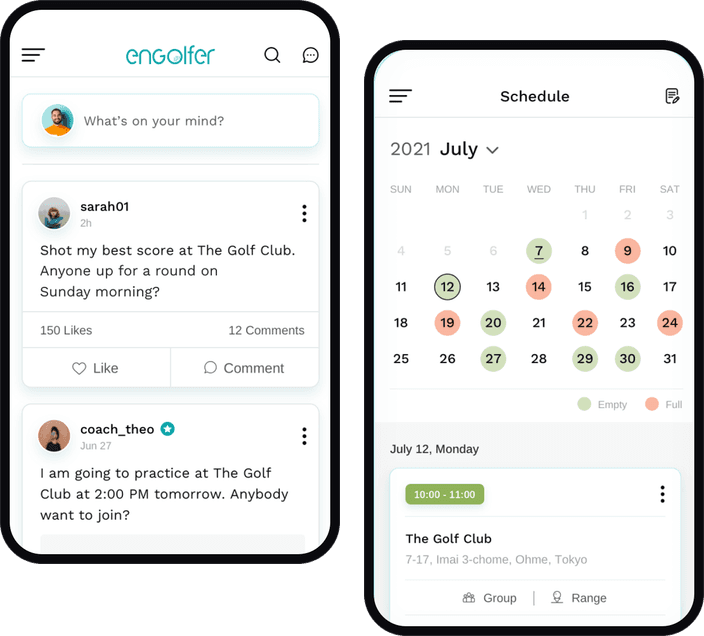
PlayMore Tennis, a match app with 2K+ players and 15K matches. Players schedule singles or doubles and invite a friend, all their friends or anyone at their 0–10 level, on iOS, Android and the web.
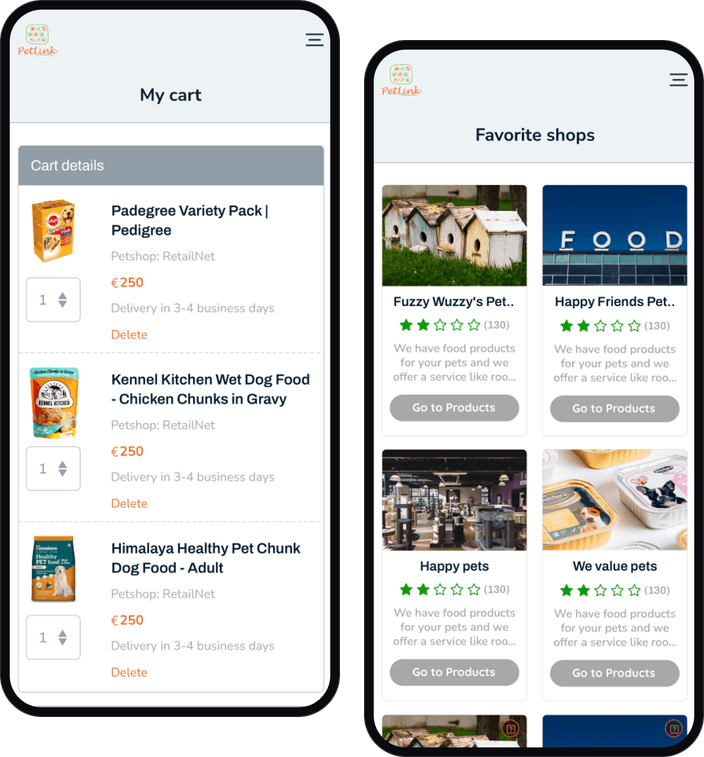

A pet marketplace, native on iPhone and Android, where owners ordered products, booked services and paid in the app. A geofence around each pet shop triggered an in-app alert when an owner came close.
Reviews from clients whose iPhone and Android apps we built, from Clutch, where we hold a 4.9 average across 45 reviews. Quotes are the reviewers’ own words; the result lines are ours.
They’ve been very good. I’m very happy.
The result
Over 200 users, more members playing new opponents, and higher overall club usage.
Brian Cushnie, Director, Wallace Park Indoor Tennis Center
Tennis club
They never look for shortcuts, and I know they won’t cheat me.
The result
Product live for about six months with successful results and a particularly useful backend.

CEO, E-Learning Company
E-learning
Whatever we expected, Techuz delivered it.
The result
The new feature works just as intended, delivered within budget with consistent communication over Slack.
Executive, FinTech Company
Financial services
A medium iOS app takes 8–12 weeks across the phases below, including Apple’s review of your first release. A first version for testing the market follows our MVP development process.
Small app
3–6 weeks
Discovery and design in about a week, 1–2 short sprints, then UAT and store release in the final week
Medium app
8–12 weeks
The seven phases below
Large app
3–5 months
Multi-role apps, built in phases
A small iOS app costs $10k–15k, a mid-size app $25k–50k and a large app $50k+, built in phases. Our rates are $20–25 an hour depending on role and seniority.
$10k–15k
Small
3–6 weeks
One iPhone app, 1–2 user roles, sign-in, push notifications and a basic admin
$25k–50k
Mid-size
8–12 weeks
An iPhone app plus Android or iPad, with an admin panel, payments, booking or maps, and 2–3 roles
$50k+, built in phases
Large
3–5 months
Multi-role apps, protected video or content, real-time features or AI
Small
3–6 weeks
One iPhone app, 1–2 user roles, sign-in, push notifications and a basic admin
$10k–15k
Mid-size
8–12 weeks
An iPhone app plus Android or iPad, with an admin panel, payments, booking or maps, and 2–3 roles
$25k–50k
Large
3–5 months
Multi-role apps, protected video or content, real-time features or AI
$50k+, built in phases
Every price includes QA, project management and 30 days of free support. Apple’s $99 yearly developer fee, third-party SDK fees and cloud hosting are extra. We show them as a monthly running cost before you approve the build.
Mid-size and large apps start with a Discovery Sprint ($1,500–2,000, about one week). See engagement models and pricing.
On real devices, against a matrix you sign, because iPhone users update fast. By June 7, 2026, 79% of all iPhones ran iOS 26, according to Apple’s App Store figures reported by MacRumors on June 9, 2026. So every build is tested on the current and previous major iOS.
A mobile lead with 6+ years of experience oversees every mobile project, and a tech lead who also writes code reviews every pull request. Our iOS and Flutter developers have 3–5 years each, and we can add people to your team within 1–2 weeks.
Native code, style-checked on every pull request
When one codebase for iPhone and Android costs less
The API and admin panel behind the app
Chosen per app in the architecture phase
Builds on your phone, push notifications and crash alerts
Card, wallet and subscription payments, tested in sandbox
Techuz is not the right fit if your users are mostly on desktop or need no phone feature: a web app or PWA costs less. For 3D games, AR/VR, Apple Watch or car apps, hire a specialist studio. Without budget for Apple’s yearly iOS release, the app falls behind within a year.
iOS app development is designing, building and releasing apps for iPhone and iPad through Apple’s App Store. Native apps are written in Swift with Apple’s tools, and cross-platform apps use frameworks such as Flutter. Techuz covers design, build, store release and yearly updates, with the app published under your own Apple account.
At Techuz, a small iOS app costs $10k–15k, a mid-size app with payments, booking or maps $25k–50k, and a large app $50k+, built in phases. Apple’s $99 yearly developer fee and hosting are extra.
At Techuz, a small iOS app takes 3–6 weeks, a medium app 8–12 weeks and a large app 3–5 months, including Apple’s review of your first App Store release.
Yes, if your customers mostly use iPhones or your product depends on how the app feels. If you need both stores for a typical business app, Techuz usually recommends Flutter first, because one codebase costs less to build and maintain.
For a native iOS app, Swift with Apple’s own tools is the best way. It gives the smoothest feel and first access to new iOS features. For an app that also needs Android, Flutter’s single codebase is usually better value. Techuz makes the call with you in discovery.
Tell us what you're building. We reply within 24 hours and send a ballpark estimate within 48.

