


AI development services, built for production

AI agents, assistants and generative AI features built into your product on your own data, tested against your real questions before launch, with running costs tracked from day one.

4.9 on Clutch from 45 reviews · 500+ projects since 2013

Our AI development services

Our AI development services put AI to work on your slowest manual job, inside your product and on your own data. In discovery we estimate each feature’s cost per use and payback, so you fund features that earn their cost. We also run AI automation and AI transformation programmes and machine learning and data engineering.

  • AI software development

    AI features added to the app you already run, behind its current login and permissions, or a new AI-first product such as an AI SaaS built from the first screen. Your users get AI where they already work, without a rewrite.

  • Generative AI development

    Assistants, copilots, chatbots, content tools and voice experiences that work from your own documents and data. Your team gets drafts and answers in seconds, grounded in your material instead of the open internet.

  • AI agent development

    Agents that call tools, update records and run multi-step jobs, connected to your business systems through APIs and MCP under each user’s permissions. They start read-only and act only after evals pass, so work moves without losing control.

  • RAG development

    Search and answers across your files, records and knowledge bases, filtered by customer and role before the model sees a word. One customer’s data never shows up in another’s answers, so AI is safe to offer every account.

  • LLM integration and fine-tuning

    Model choice by eval results across Claude, GPT and private Azure OpenAI, with each job routed to the cheapest model that passes. Fine-tuning happens only if your evals prove a gap.

  • AI consulting and automation

    A short assessment turns “we want AI” into two or three costed use cases, then we automate the workflow you choose, from document handling to multi-step business processes. You start with the job that pays back first, not the one that demos best.

Techuz at a glance

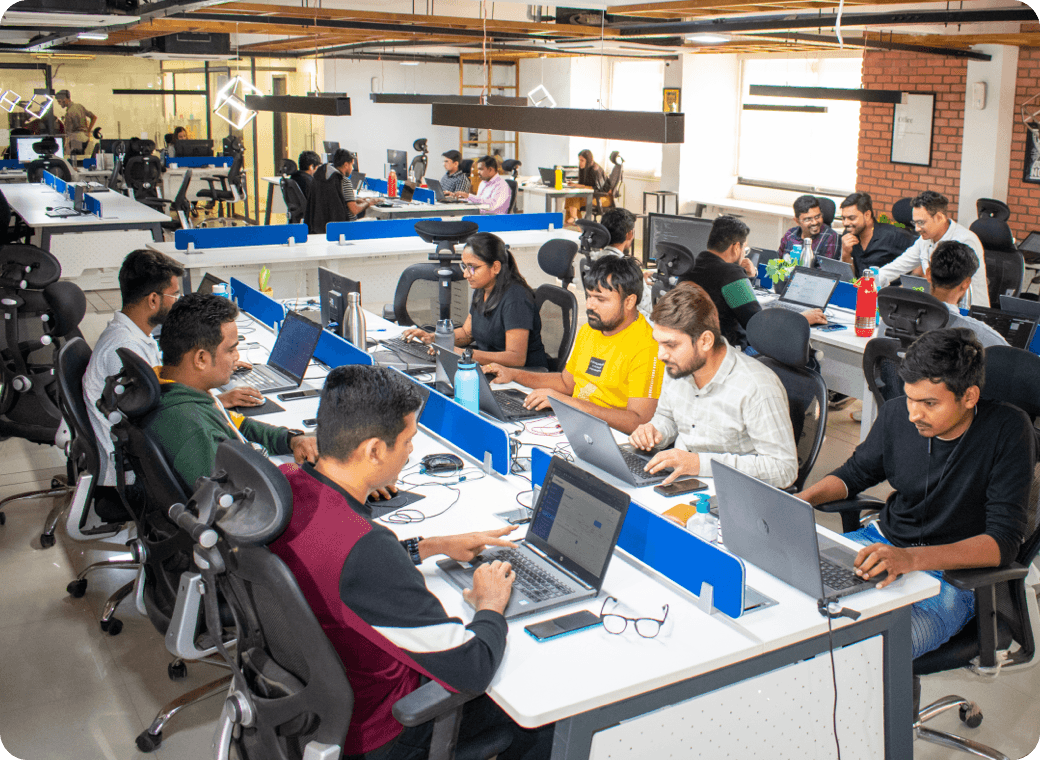
Our AI/ML engineers work inside our product squads, so AI ships in tested products for clients in the US and UK. More about Techuz.

  • 12+ yearsbuilding software (since 2013)

  • 500+projects delivered

  • 250+clients

  • 55 toolsin one production AI assistant

How we build AI that works in production

Production AI is your normal app plus an AI layer that finds the right data, calls the right model, checks the answer and keeps cost in view. Here’s where each part sits. AI also speeds up how we build; see how we work.

Classic web appReact UINode.js APIYour database
AI productReact UINode.js APIAI layer: retrieval · models · tools · checksYour database+ vector search

Your stack, plus an AI layer

Your interface and API keep their jobs. A Python service sits behind them and talks to the models, your search index and your own tools. Access checks, evals and logging run across every layer.

Web appReact, Next.jsMobile appiOS and AndroidAI agents and partnerscall your API or MCP toolsHTTPS, streamed answersAPI and login layer: Node.jsLogin · role and tenant checks · rate limits · streaming to the browser · model keys stay server-sidequestion + user’s role and accountAI layer: PythonThe new layerRetrieval (RAG) · prompts versioned in Git · tool calling · agents · output checksDecides what to retrieve, which model to call, which tool to run, and when to stop.model callssearch by meaningtool callsrecordsModel gatewayClaude · GPTAzure OpenAIroutes by costVector searchPineconeone index per customerfinds by meaningTools and MCPyour APIs and systemsuser’s own permissionsstops if a check failsYour datadatabasefile storagesource of truthembeddingsIngestion pipelineDocuments, records and tickets → clean → split into chunks → embed → index per customer, re-run when they changeAcross every layerAccess controlsearch and toolslimited to whateach user may seeGuardrailsanswers cite sources“not found” insteadof a guessEvals30–100 realquestions, re-runbefore each releaseLogging and costprompt version,model, sources andspend per customer
Green marks what an AI product adds. The grey layers are the web stack you already run.

What we build into every AI application

An assistant, a document tool or an agent, every AI application we build has the same six parts. The diagram shows them working together on one request.

React UINode.js APIAI layer (Python)Vector searchModel1 question + login2 role and account checked3 search, this customer only4 best passages5 rules + passages + history6 answer or tool callTool call? Run it under the user’s permissions,add the result, then repeat from step 5.7 checked answer + sources8 streamed to screenAnswer checked hereEvery step is logged: prompt version, model, sources, speed and cost, so answers can be reviewed and scored later.
Steps 3 to 6 in green are the AI part, retrieval-augmented generation (RAG). Steps 1, 2, 7 and 8 are the web stack doing what it always did.

Access built in

The AI works inside your app’s login, roles and tenants, so it can see and do only what each user can. In IBM’s 2025 breach report, 97% of organisations with breached AI apps lacked proper AI access controls. See application security.

Your data, ready for AI (RAG)

We clean, split and index your documents and records per customer, and re-index them when they change. Retrieval-augmented generation then gives the model only the passages it needs, so answers come from your data, not from the model’s memory.

The right model for each job

One gateway sends simple jobs to smaller, cheaper models and hard ones to stronger models, and logs the cost of every call.

Tools and agents with limits

When the AI needs to act, such as updating a record or starting a workflow, it works through your APIs or MCP, under the user’s permissions, and stops if a check fails.

Checked output

Answers are checked against their sources before they’re shown, and the AI says “not found” instead of guessing.

Measured and monitored

Every call is logged, and an eval set of your real cases is re-run before any prompt or model change.

Read how to integrate AI into an existing application, or see AI web applications.

AI projects we’ve shipped to production

Three AI products in daily use, from a spoken AI interviewer to an assistant that acts on regulated quality records.

Client logo

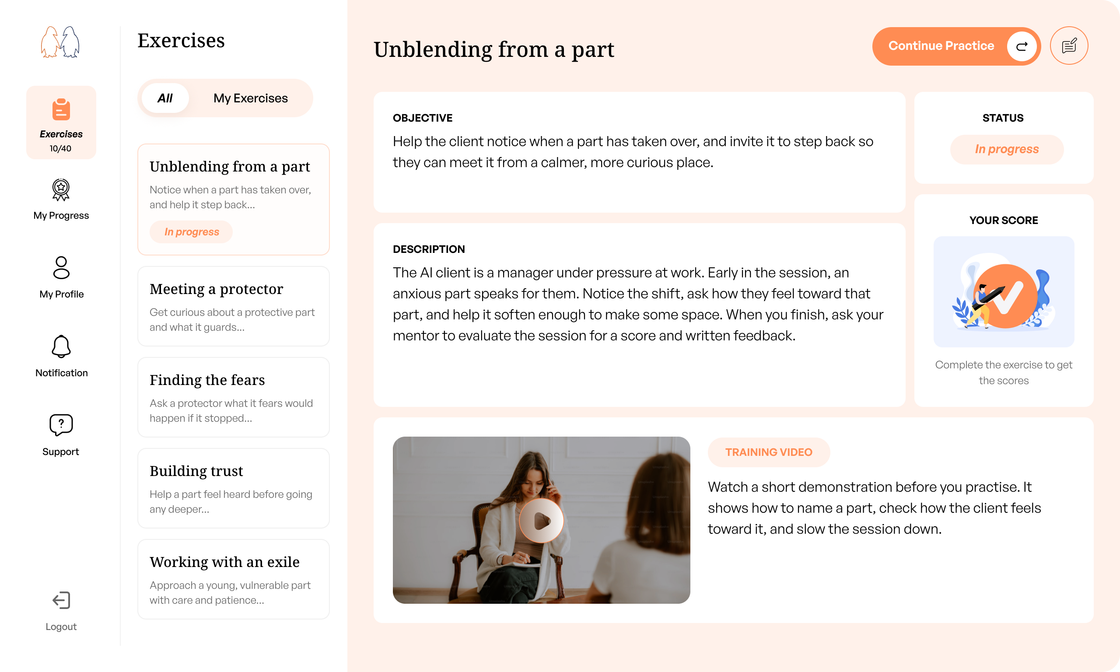
AI role-play practice for therapists

Therapist training, UK

Spoken role-play where GPT-4o plays the client out loud, an AI supervisor gives hints along the way and a smaller model scores the session. The client edits every prompt from the admin panel without a developer. Practitioners practise a full session whenever they have time, with a score and written feedback at the end.

Team
3 people
Timeline
About 11 months
Budget
$30k–50k
AI role-play practice for therapists — Therapist training
Understudy, our AI interviewer — HR tech
Understudy

Understudy, our AI interviewer

HR tech

A browser voice interviewer on OpenAI Realtime that replies in about 0.3 seconds, plans questions from the candidate’s CV and scores what people say, never their English. A person makes the final decision. AI scores now land within 0.4 out of 10 of a human reviewer’s, down from a 1.75 gap before tuning.

Team
2 people
Timeline
About 3 weeks to a working scoring method
Budget
Under $30k (internal build)
AI quality management for medical device teams — Medical device SaaS
Client logo

AI quality management for medical device teams

Medical device SaaS, USA

An assistant with 55 tools that searches, summarises and acts on quality records under each user’s permissions, inside a platform built for FDA 21 CFR Part 11 requirements. Every change it makes needs a person’s confirmation. AI cost per call is down 74–90% after prompt caching, depending on the model.

Team
5 people
Timeline
13+ months, ongoing
Budget
$100k–250k

How long does custom AI development take?

A proof of concept on your data takes 2–4 weeks, and one AI feature in an existing product takes 3–6 weeks. An AI MVP takes 8–14 weeks, and an agentic platform 5–9 months to its first release, once the scope is clear. Add 1–2 weeks if sample data isn’t ready. Not sure AI will work? Start with the proof of concept. Still at the idea stage? Start with an MVP.

Typical timelines
  • Proof of concept

    2–4 weeks

    2–3 models compared on your data, ending in a go/no-go

  • AI feature

    3–6 weeks

    Document Q&A, AI search or content generation in an existing product

  • AI MVP

    8–14 weeks

    A document or voice assistant with admin and billing

  • Agentic platform

    5–9 months

    To first release: many tools, several customer accounts, compliance needs

Seven phases, with an evaluation track added

AI work runs inside our normal delivery, with evaluation added at every step. Gartner expects over 40% of agentic AI projects to be cancelled by the end of 2027, over cost, unclear value or weak risk controls. That’s why the first two phases decide whether to build at all.

What’s the AI development cost for your project?

AI development with Techuz costs $4k–10k for a paid proof of concept and $10k–25k to add an AI feature to an existing product. A RAG assistant or AI MVP costs $25k–50k, and an agentic or multi-tenant platform $50k+, built in phases. In an October 2026 Gartner survey, 44% of CEOs said they struggle to show financial returns from AI. So we estimate model fees per 1,000 calls before the build, and you pay them straight to the provider.

Typical cost by project type (steps not to scale).
  1. Paid proof of concept

    2–4 weeks

    $4k–10k

  2. AI feature in an existing product

    3–6 weeks

    $10k–25k

  3. RAG assistant or AI MVP

    8–14 weeks

    $25k–50k

  4. Agentic or multi-tenant platform

    5–9 months to first release

    $50k+

What moves the price

Answers only, or acts tooAnd with how many tools
Messy dataScanned files, or no sample set
The accuracy barRegulated answers need bigger eval suites
Voice and real-time replies
Permissions and multi-tenancy
Compliance and integrations

Before you budget

Your estimate covers discovery to launch, QA, project management and 30 days of support, including agreed eval cases. Hosting and third-party fees are listed monthly in the proposal. Rates start at $20 an hour, depending on role and seniority.

Which engagement model fits your AI project?

Choose fixed price for a proof of concept or a scoped AI feature, time and materials when eval results will reshape the plan, and a dedicated team for an AI product you’ll keep improving.

A PoC or one scoped feature

Fixed price

Best for

A PoC or one scoped AI feature.

How it works
Discovery fixes the scope, and you pay by milestone after each demo.

Watch out for

Scope that depends on PoC results: fix the build price after the go/no-go.

Eval results will reshape the plan

Time and materials

Best for

Products whose backlog will change as eval results come in.

How it works
Hours billed monthly against a cap you set; you reprioritise every sprint.

Watch out for

An open budget: we report against the cap every week.

You’ll keep improving it for 6+ months

Dedicated AI development team

Best for

AI products you’ll keep improving for six months or longer.

How it works
AI engineers work only on your product, in your tools, from 160 hours a month each, with 4 hours of daily overlap with your US workday.

Watch out for

Who sets priorities: you need a product owner.

Compare engagement models and pricing in detail.

Why choose Techuz as your AI development company

As an AI software development company, we’ve shipped AI into live products since 2023, from voice and document assistants to agents that act on regulated records, across healthcare, education, HR and legal tech.

AI built into a working product

AI earns its keep inside a product people already use, with sign-in, roles, billing, audit trails and an admin console around it. We build both sides, so your AI launches as part of the product, not as a separate demo. See our software development services and SaaS development.

  • Sign-in and roles
  • Billing
  • Audit trails
  • Admin console
  • The AI inside it

HandoverOne team builds both

Not tied to one AI vendor

Model choice follows your eval results, not vendor news. Our assistants run on Claude and GPT, chosen per job and kept behind your backend, so no key reaches the browser and you can switch providers without a rewrite.

  • Long documents, tool callsClaude
  • Routine jobsSmallest model
  • In your Microsoft tenantAzure OpenAI

Keys stay server-side; switch providers without a rewrite

Senior engineers who build with AI

Our engineers use Claude Code, Lovable and Figma AI every day, and a tech lead reviews every change before it merges. Across the 8+ projects we built with Claude Code in the last year, delivery took up to 50% less time than comparable builds the year before.

  • Every dayClaude Code, Lovable, Figma AI
  • Every changeReviewed by a tech lead
  • 8+ projectsUp to 50% less time

We say when AI isn’t the answer

If clear rules or a simple search can do the job, AI only adds cost and unpredictability. We’ll tell you on the first call, before you pay for a build.

  • Fixed business rulesPlain code
  • Find a record by nameSimple search
  • Answer from 2,000 PDFsAI fits

AI technologies and models we use

We pick the model and tools for each job, and explain every choice in writing.

  1. Models

    Current models we test on your eval set; long documents and tool calling usually go to Claude, routine jobs to the smallest model that passes

    • Claude Opus 5.5
    • Claude Sonnet 5.5
    • Claude Haiku 5.5
    • GPT-6.1
    • GPT-6 Luna
    • Azure OpenAI in your tenant
  2. Retrieval and search

    A separate search space for each customer; cited web search for agents that need current facts

    • Pinecone
    • OpenAI embeddings
    • Perplexity API
  3. Agents and integration

    Custom orchestration with narrow tool lists, every tool call checked on the server

  4. Voice

    Real-time speech for spoken interviews and role-play

    • OpenAI Realtime over WebRTC
    • Whisper
    • OpenAI text-to-speech
  5. Application and cloud

    The product around the AI, deployed to your own cloud account

  6. Quality and monitoring

    Prompts and eval sets versioned like code; every AI call traced

    • Eval suites
    • Git
    • Sentry
    • CloudWatch

Agents now reach business systems through the Model Context Protocol (MCP); in Stacklok’s State of MCP in Software 2026 survey, nearly half of software companies used it in production. We build MCP connections in-house, limited to what each user may see and do.

AI development for your industry

Industries where our AI already runs in production, with the case studies to show it.

  • A quality system for medical device teams, built for FDA 21 CFR Part 11 requirements, with an AI assistant that works on its records.

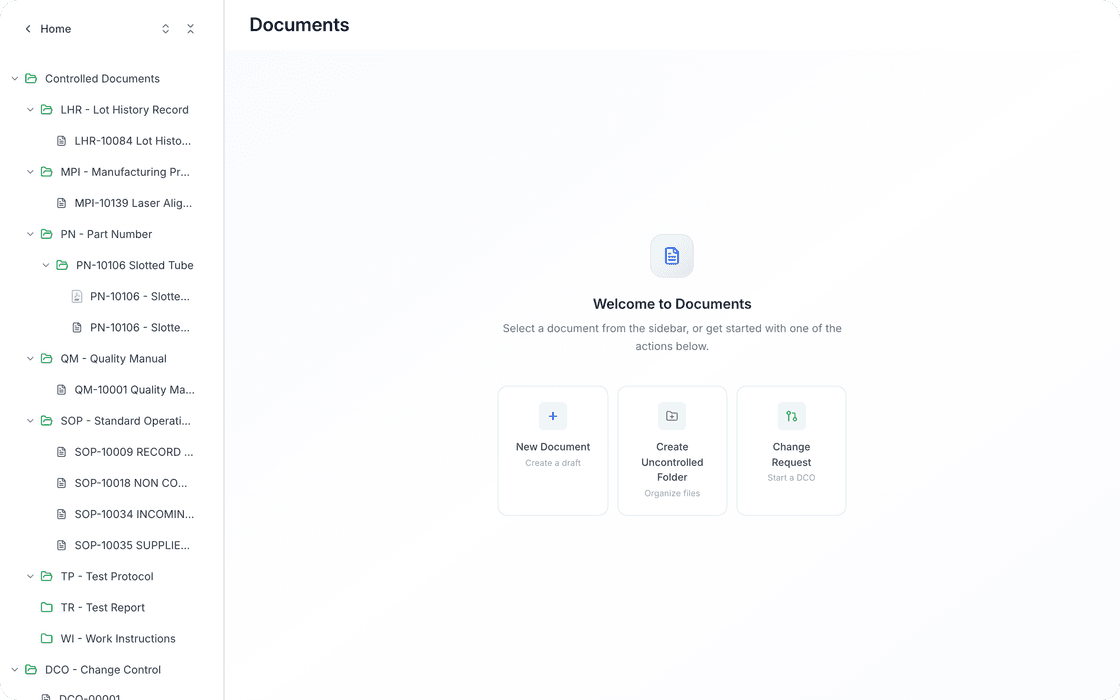
    An AI quality management system’s document tree
  • Voice role-play practice for therapists, and practice quizzes that AI writes and saves to a growing question bank, on the Grade 11 and 12 syllabus.

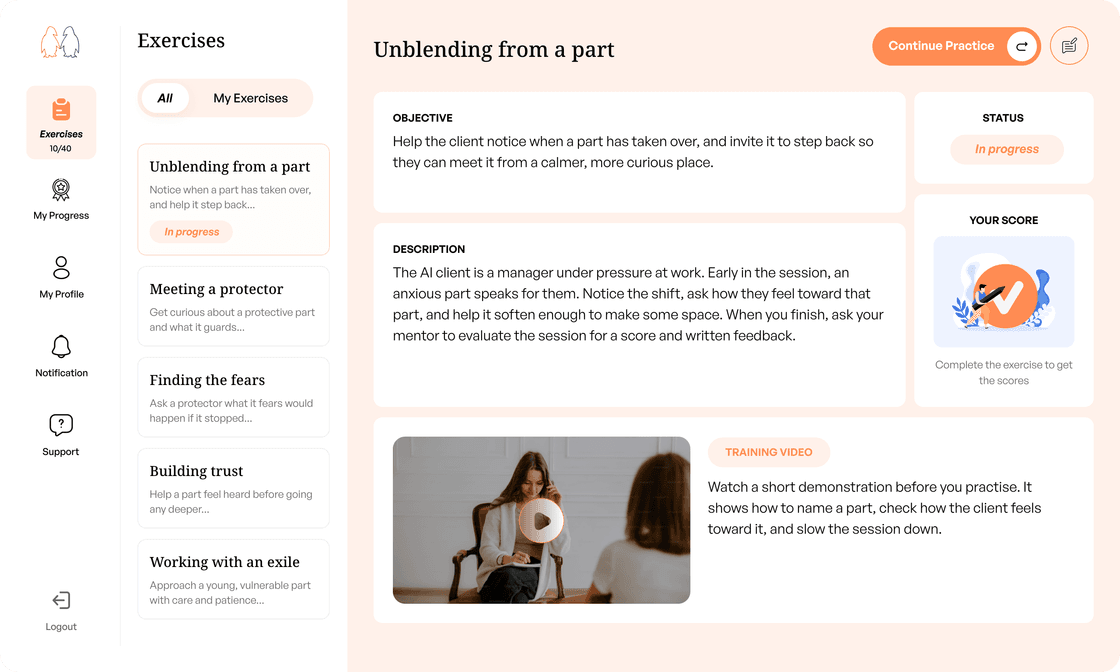
    An AI role-play practice platform’s exercise library
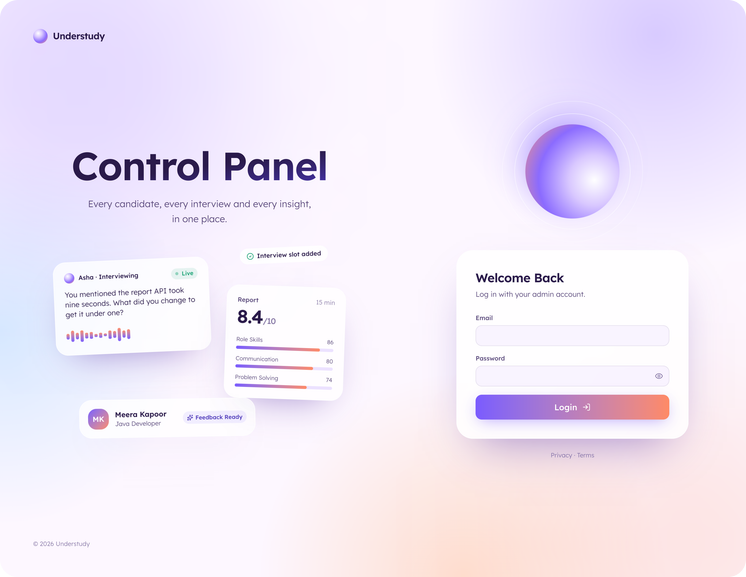
  • Spoken first-round interviews that score answers on content, not accent, and hand the hiring team an answer-by-answer report.

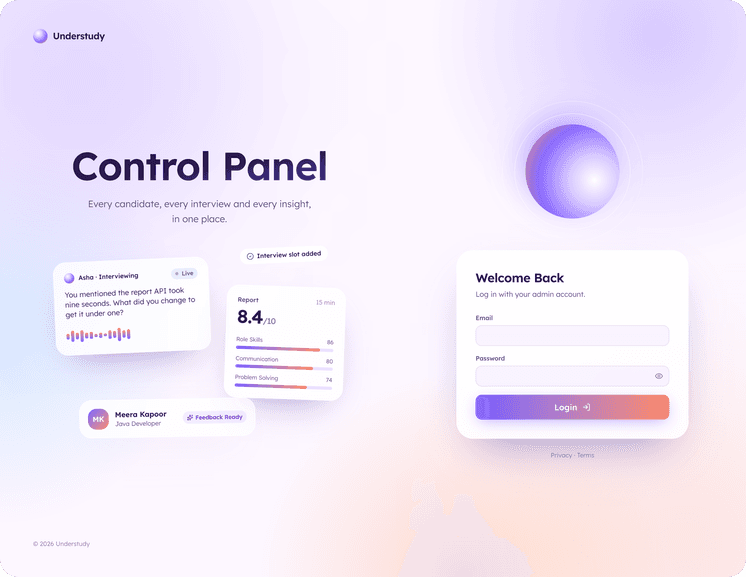
    Understudy’s control panel
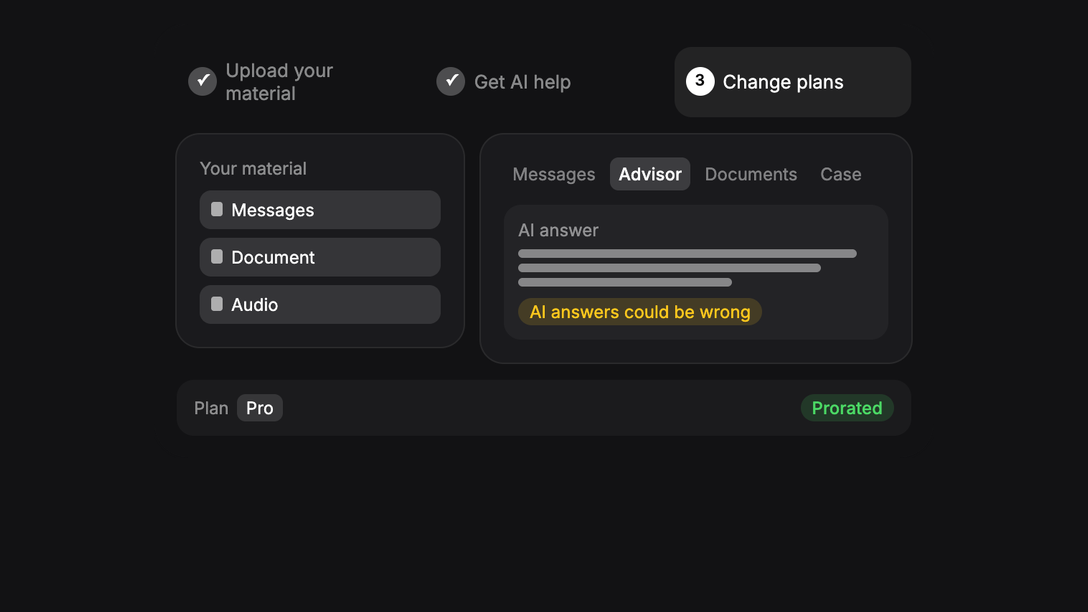
  • A GPT-4 divorce assistant that analyses documents, drafts messages and gives advice shaped for legal terms, with paid plans, built in about three months.

    An AI legal assistant for divorce

AI development FAQ

  • When no person will review the AI’s output and you can’t accept any wrong answers. AI should advise or draft, not make final calls on a diagnosis, a legal outcome or a hire. We’re also not the team to train a foundation model or build a large MLOps platform; a specialist ML lab fits better. And with no sample data or success metric yet, collect those first.

  • Artificial intelligence development services cover planning, building and running software that uses AI models to do a real job, such as answering questions from your documents or taking actions in your systems. At Techuz that runs from discovery and a proof of concept to launch in your cloud and monitoring after release.

  • An AI assistant can make things up, so we design against it. Answers come only from your own records, with a link to the source, and accuracy is measured on your real questions before launch. On the medical device quality platform, the assistant can’t change a record until the user confirms it.

  • No, data sent through OpenAI and Anthropic business APIs isn’t used for training by default, and we switch off any sharing settings. For stricter cases, we deploy Azure OpenAI inside your own Microsoft tenant, or open-weights models in your cloud on request.

  • Start with their past AI case studies and ask for a live demo of something they’ve shipped. Ask how they estimate running costs for models and AI infrastructure before the build. Then read their client reviews, or ask to speak with a past client about how the project went.

  • Usually, a business doesn’t need to fine-tune a model. Prompts, search over your own data and an eval set solve most business problems faster and cheaper, and they survive model upgrades. We fine-tune only when evals prove a gap, such as a strict output format. So far, no client project of ours has needed LLM fine-tuning in production.

  • If it serves people in the EU, some duties probably apply. Transparency duties under Article 50, such as telling users they’re talking to an AI, have applied since 2 August 2026. High-risk rules for areas like hiring apply from 2 December 2027, and for AI in products like medical devices from 2 August 2028 (Regulation (EU) 2026/1744). We check each feature in discovery, and your legal adviser makes the final call.

Get a Ballpark Estimate for Your Project

Tell us what you're building. We reply within 24 hours and send a ballpark estimate within 48.

Tell us about your project

A few lines are enough. We reply within 24 hours.

By sending this form I confirm that I have read and accept the Privacy Policy