
Sales and lead qualification
On your website, the bot answers product and pricing questions and asks the qualifying ones. Good leads reach your sales team with the conversation attached, so the first call starts where the buyer left off.

Chatbots and voice assistants for your website, app and WhatsApp. They answer from your own documents and link each answer to its source.
4.9 on Clutch from 45 reviews · 500+ projects since 2013
Our AI chatbot development services start from the questions your customers and staff ask, answered from your own documents. If the answer isn’t there, the bot passes the chat to your team instead of making one up.
We can build an AI chatbot for website visitors and app users that answers order, account and policy questions. Customers get answers from your help content at any hour, and your team keeps the cases that need a person.
Internal assistants search your policies, manuals, contracts and project files, then answer in plain language. New staff stop interrupting senior colleagues, and answers stay the same across shifts and offices. See RAG chatbot development.
Built into your SaaS or internal app, behind its login and roles, these assistants answer from the records each user is allowed to see. Your product gains a feature your users reach from any screen, without rebuilding what already works. See AI copilot development.
Our WhatsApp chatbot development runs on the WhatsApp Business Platform through a provider such as Gupshup, with AI search behind each reply. You reach customers in an app they already open many times a day.
AI voice assistant development gives users spoken conversations in the browser, with replies that start well under a second after they stop talking. People talk instead of typing, which suits training, interviews and hands-busy work.
If you need content generated rather than a conversation, see generative AI development services. If the bot must act in your systems, see our AI agent vs chatbot comparison.
A chatbot pays off where the same questions arrive every day and the answers already sit in your documents. These are the teams that feel it first.
Most chatbots start on one channel and add others once the answers are right. In-app web chat, browser voice and WhatsApp are channels we’ve shipped in client products and our own. Slack, Microsoft Teams and phone lines we can build on the same core.
On WhatsApp, Meta’s terms have barred general-purpose AI assistants on WhatsApp Business since 15 January 2026. Bots serving a business’s own customers stay allowed (respond.io, October 2026).
We build every channel on one set of indexed documents and one eval set, so a fix made once reaches them all. Read how to integrate AI into an existing application.
Use a chatbot builder when public FAQs are the whole job. Go custom when answers depend on who’s asking, live in your own systems, or must show their source. If a builder will do, we say so before you pay for a build.
Not sure which fits?
A short AI consulting assessment costs out both options first.
Three conversational products in production: a document chatbot in a crew payments platform and two spoken assistants.

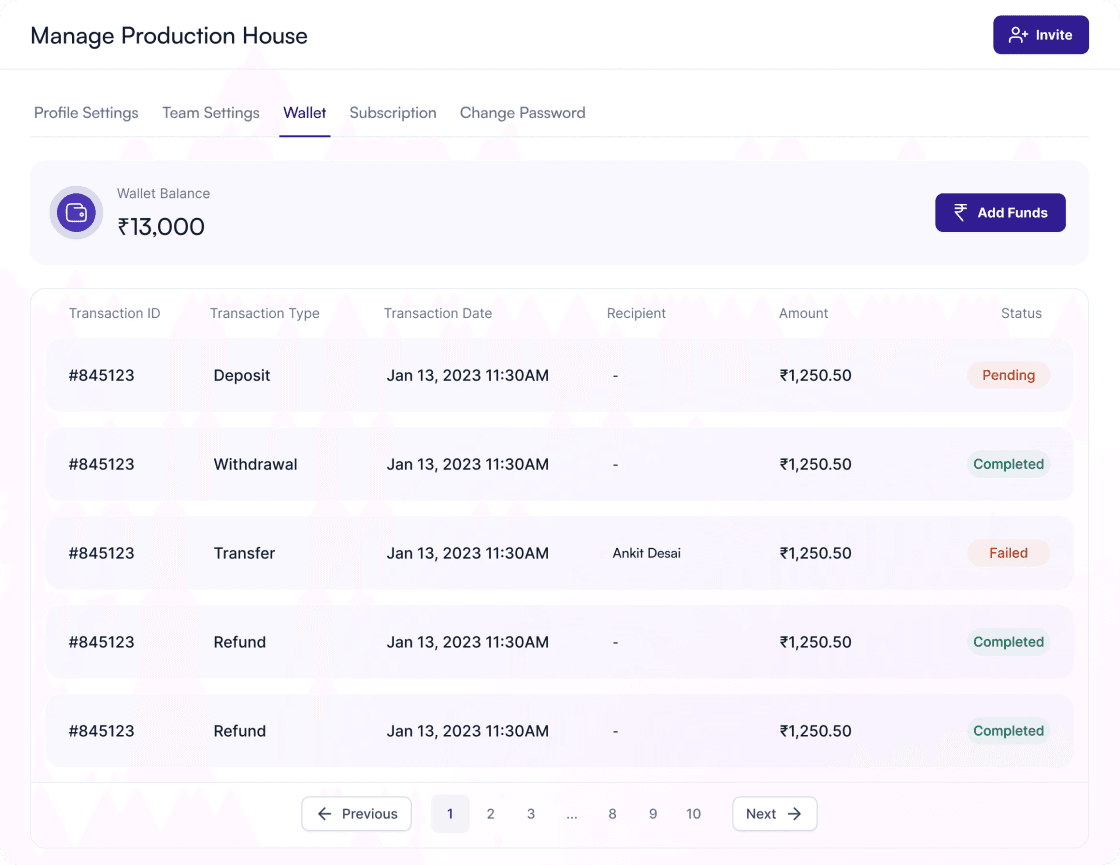
Crews ask questions of their own production’s documents, inside a platform that also runs contracts, attendance and payouts. GPT-4o-mini answers from a separate searchable store for each production. In production, answering only from each production’s own uploaded documents.
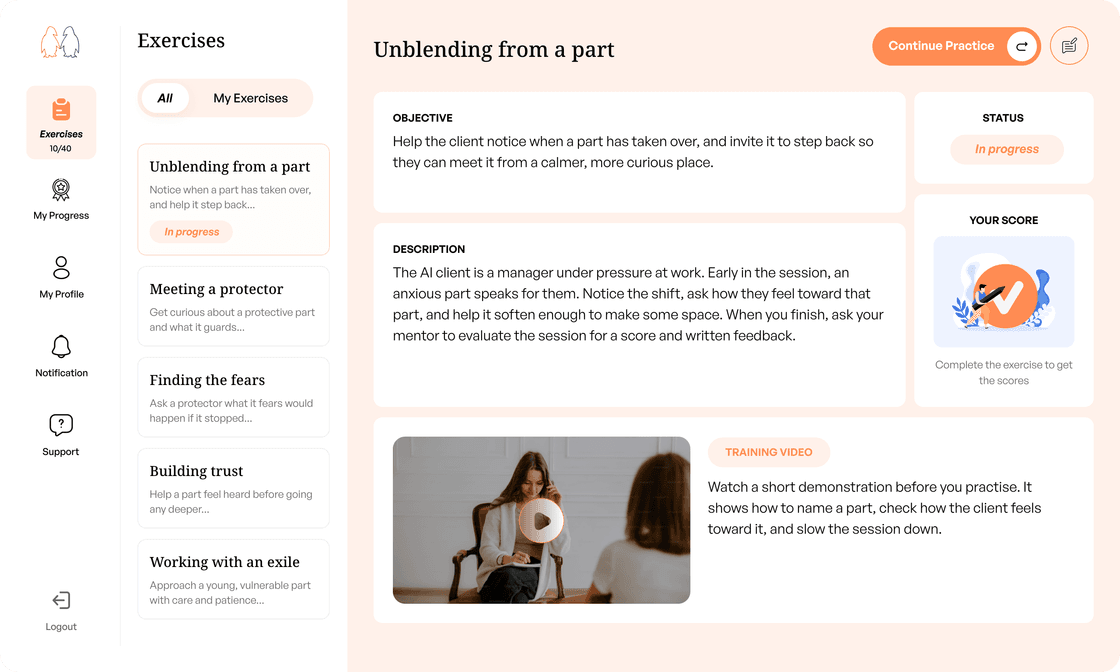

A spoken practice session: Whisper turns speech into text, GPT-4o replies in character as the therapy client, and an OpenAI voice speaks back. An AI supervisor gives hints, and a second model scores the session at the end. Practitioners rehearse out loud and get a score at the end of every session.
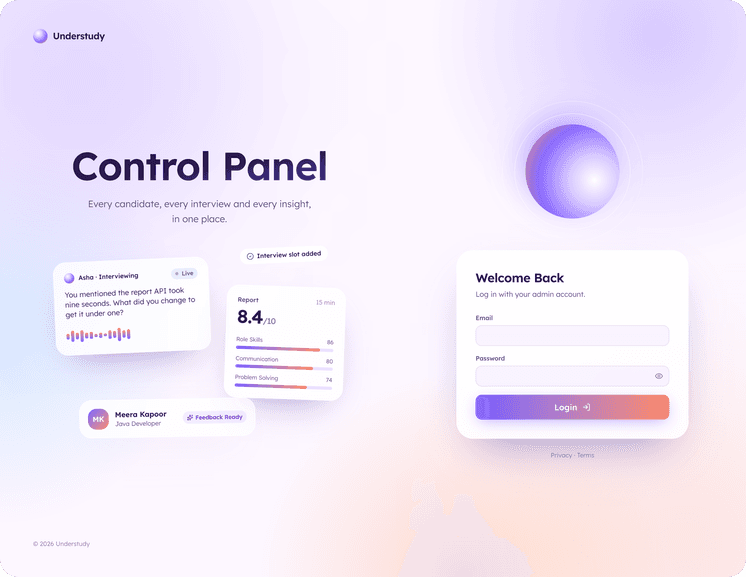

A spoken interview in the browser, where a coach agent shapes each next question from the candidate’s last answer. 500+ real candidate interviews run, with replies about 0.3 seconds after the candidate stops.
Six phases, each ending in something you can check. Smaller bots merge phases; see Cost for timelines.
AI chatbot development cost runs from $4k–10k for a paid proof of concept to $25k–50k for a document chatbot or voice assistant. Bots across several channels or customer accounts start at $50k, built in phases.
$4k–10k
Paid proof of concept
2–4 weeks
$10k–25k
Chatbot in an existing product
3–6 weeks
$25k–50k
Document chatbot or voice assistant
8–14 weeks
$50k+
Multi-channel or multi-tenant chatbot
Built in phases, set in discovery
Paid proof of concept
2–4 weeks
$4k–10k
Chatbot in an existing product
3–6 weeks
$10k–25k
Document chatbot or voice assistant
8–14 weeks
$25k–50k
Multi-channel or multi-tenant chatbot
Built in phases, set in discovery
$50k+
Every quote includes QA, project management and 30 days of free fixes after launch, agreed eval cases among them. The proposal lists hosting, the vector database and model fees monthly, and engineer rates start at $20 an hour.
With tests and limits you can check, not badges. OWASP’s Top 10 for LLM Applications, released in August 2026, keeps prompt injection first and moves runaway usage costs up four places. We test every bot against that list.
We pick the model for each job on your eval set and keep API keys on the server. Changing models later means a configuration change and an eval re-run, not a new project. It’s the same AI layer behind all our AI development services.
Chosen per bot from your eval results, weighing accuracy, speed and cost per call
A separate search store per customer or project
Real-time speech and messaging
Live data from your tools, under each user’s permissions
Prompts and eval sets versioned like code; errors and latency watched
When a builder tool or a good FAQ page already does the job, a custom chatbot only adds cost. We’re also the wrong team if nobody on your side will review answers, or if a chatbot is the goal with no job behind it.
AI chatbot development is designing, building and running a chatbot that answers from your documents and systems using a large language model. At Techuz it runs from question discovery and indexing your content to testing on your real questions, launch and monitoring.
A Techuz chatbot says it couldn’t find an answer instead of guessing. It logs the question and can pass the chat to your team with the transcript. Before launch, we test this on the 30–100 real questions in your question set. Unanswered questions show where your documents have gaps.
With Techuz, a chatbot on one knowledge source and one channel takes 3–6 weeks. A proof of concept first adds 2–4 weeks, and a document chatbot or voice assistant with an admin panel takes 8–14 weeks. Bots across several channels or customer accounts are built in phases.
Running cost is the model fees for each conversation, paid straight to your provider, such as OpenAI or Anthropic, plus hosting and the vector database. Fees depend on your conversation volume and the models that answer, and Techuz estimates them per 1,000 calls in the proof of concept. After launch, cost is tracked per account.
Techuz chatbots in production so far answer in English. Current models handle Hindi, Arabic and many others. Techuz adds a language only once it passes the same question set as English, and you see the pass rate before it goes live.
Ask for a live demo on your own documents, not a prepared script. Then ask how often the bot answers real questions correctly, its monthly running cost and which channels the team has shipped. At Techuz, we show the pass rate and running cost on your own questions in the proof of concept.
Tell us what you're building. We reply within 24 hours and send a ballpark estimate within 48.


