
Slow, multi-step operations work
Agents gather data, check rules and update records across your systems, then hand exceptions to a person. Your team handles more volume without more hires, and every exception is logged.

Multi-agent workflows that take multi-step manual work off your team. Agents follow your defined workflows, deliver accurate results and bring in a person only when needed.
4.9 on Clutch from 45 reviews · 500+ projects since 2013 · 55 tools in one production AI agent
Our AI agent development services build agents that use your tools and finish multi-step jobs. Each agent is tested on your real tasks before it gets write access, so you automate work without handing over control.
Custom AI agent development starts with one slow, multi-step job and a short list of tools. Your team stops copying data between screens and keeps the decisions that need a person. Part of our AI development services.
Assistants inside your app search, summarise and update records when users ask, linking each answer to its source record. Users finish tasks where they already work, and every change can be traced. See AI copilot development.
Bigger jobs are split across several agents, each owning one step, such as research, drafting or review. A weak step can be tested and fixed on its own, so quality improves without rebuilding the chain. See agentic AI development.
Research agents search the live web through the Perplexity API and return current facts with sources. Your agents work from today’s facts, not from what a model learned in training. See RAG development services.
Spoken agents in the browser plan questions and adapt to each answer, while your server controls timing and every response. People get a natural conversation, and you keep the script, the budget and the record.
For regulated teams, agents work inside the audit trails, e-signatures and per-organisation data separation your product already enforces. You add AI to controlled records without weakening the checks your auditors rely on. See enterprise AI agents.
For businesses, agents take over frequent, multi-step work spread across several tools. For product companies, a team of agents becomes a feature customers pay for. In McKinsey’s August 2026 state of AI survey, 40% of large organisations were scaling agents in at least one function.
An agent reaches your systems through your own API or a Model Context Protocol (MCP) server, never a shared admin login. Each connection gets its own permission list. MCP is now run by the Linux Foundation’s Agentic AI Foundation, which reported 110 million+ SDK downloads a month in April 2026. So connections you build now aren’t tied to one AI vendor.
Your agent
Action log
Every call logged
No API? We build the tool layer first.
If fixed rules can do the job, skip AI and use business process automation. If people mainly need answers, a chatbot is enough. Build an agent only when the job takes several steps and actions across tools.
As an AI agent development company, we have three agent products in daily use. One acts on regulated quality records, one writes LinkedIn posts and one interviews candidates out loud.

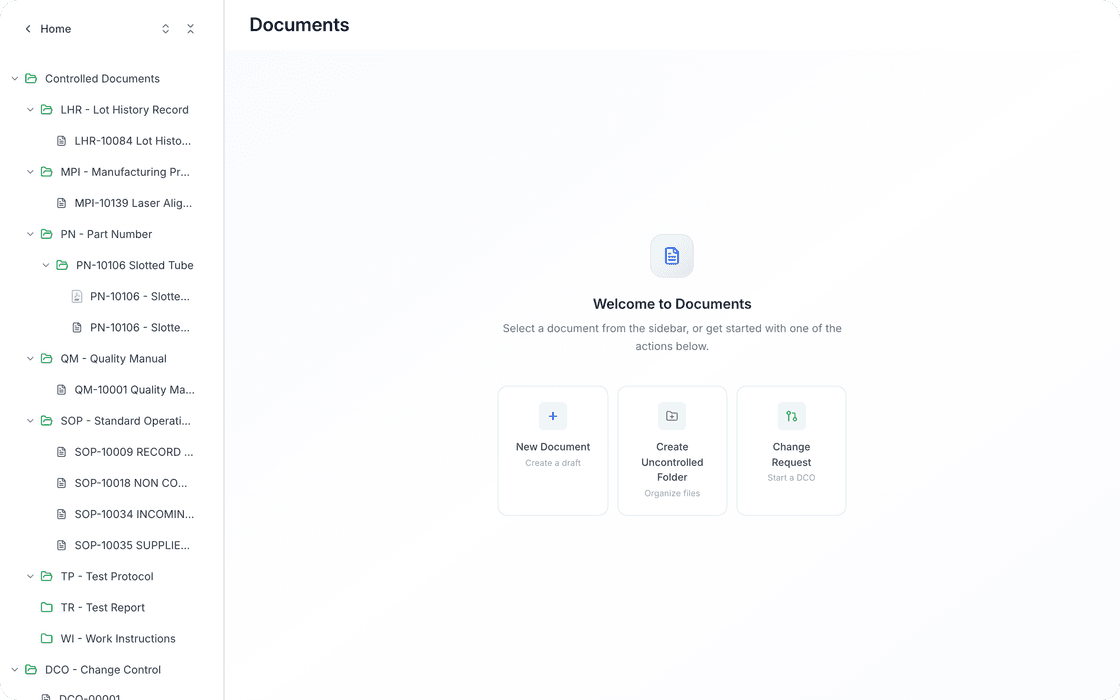
An assistant with 55 tools (32 read, 23 write) in a quality system built for FDA 21 CFR Part 11 requirements. The rule that the user confirms every change lives in code, not the prompt. We moved the default model to Claude Sonnet 4 after GPT-4.1 Mini didn’t use its tools reliably. Live with medical device quality teams, with 20+ releases to production since go-live.
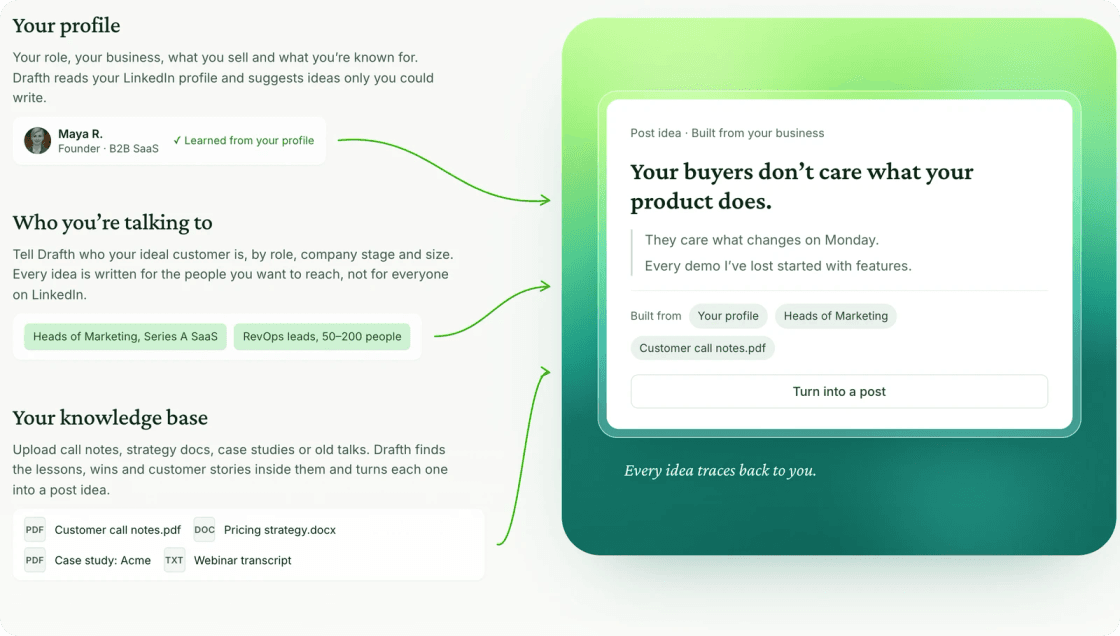
Separate agents, each with one job and its own tests, plan, write and edit posts. Users go from a blank page to a post that sounds like them in a few minutes.
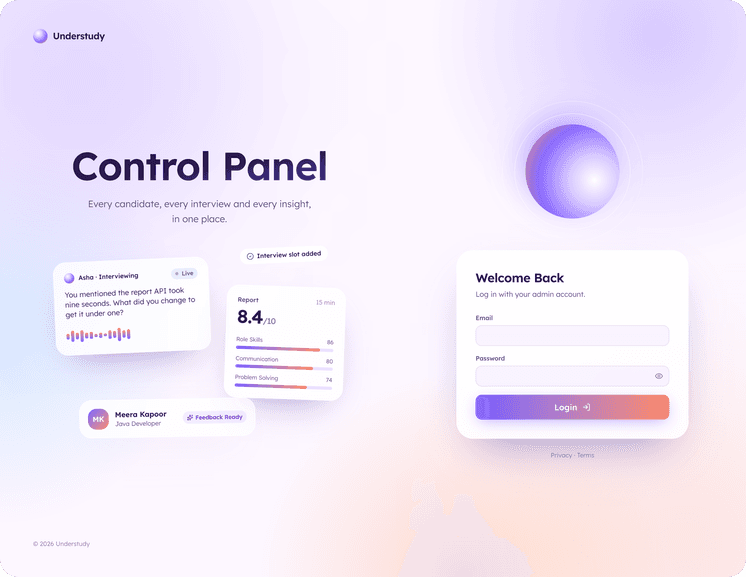

A voice agent leads the interview and replies in about 0.3 seconds, while a coach agent reads each answer and steers the next question. The server ends the interview if a response appears that it didn’t start. 500+ real interviews run, with 70%+ of candidates screened out in the first round.
Here is how to build an AI agent, in six phases with a deliverable at each. For one agent in an existing product, phases 1–3 fold into the first 1–2 weeks. Across the 8+ projects we built with Claude Code in the last year, delivery took up to 50% less time than comparable builds the year before.
Support plans of 40, 80 or 160 hours a month include a cost and drift review.
AI agent development with Techuz starts at $4k–10k for a read-only proof of concept. Model fees are separate: we estimate them per 1,000 calls, and you pay the provider directly.
$4k–10k
Read-only proof of concept
2–4 weeks
$10k–25k
Agent in an existing product
3–6 weeks
$25k–50k
Agent MVP
8–14 weeks
$50k+
Multi-agent or multi-tenant platform
Built in phases, 5–9 months to first release
Read-only proof of concept
2–4 weeks
$4k–10k
Agent in an existing product
3–6 weeks
$10k–25k
Agent MVP
8–14 weeks
$25k–50k
Multi-agent or multi-tenant platform
Built in phases, 5–9 months to first release
$50k+
Every estimate includes discovery, QA, project management and a 30-day fix period for agreed eval cases. Hosting and model fees are listed monthly.
See engagement models and pricing. Need people, not a project? Hire AI agent developers as a dedicated team, with rates that start at $20 an hour.
Techuz keeps an AI agent inside its limits with five checks you can verify. OWASP’s June 2026 agentic security report tracks real incidents and CVEs, from goal hijacking to tool misuse and privilege abuse. Each check below answers one.
AI agent security also covers your models, data and cloud; see AI security.
Models and tools are picked per job on your eval results.
Cheapest model passing your evals
Separate data, cited sources
Fast speech your server steers
Every call and cost logged
If the job never needs more than one step or one system, an agent adds cost without adding value. We’re also the wrong team if no person will review the agent’s important actions, or if you have no real sample tasks yet. We’ll say so on the first call.
AI agent development is building software where an AI model plans a job’s steps and calls tools to finish it. A tool might search or update a record. At Techuz it starts with a tool map and your real tasks, and ends with the agent live in your own cloud.
A chatbot answers questions; an AI agent plans steps and uses tools to change things, within limits you set. Techuz recommends an agent only when the job ends with a record changed. If users mainly need answers from your documents, see AI chatbot development.
With Techuz, a read-only proof of concept costs $4k–10k and one agent in an existing product $10k–25k. An agent MVP costs $25k–50k, and a multi-agent platform $50k+, built in phases. Model fees are extra, paid straight to the provider. Your proposal shows those fees per 1,000 calls.
Not unless you decide it should. At Techuz, each write tool goes live on its own, only after passing your sample tasks, and runs under the signed-in user’s role. If something looks wrong, an admin switch turns all write tools off at once, without a deploy.
Yes, Techuz uses LangGraph to orchestrate multi-agent systems, including Drafth, our own multi-agent product. We pick the framework to fit the job: LangGraph when agents share state and hand work to each other, plain tool calling when one agent runs a short task.
Ask for eval results on tool calls and write actions, not only a demo. Then ask how each action is limited, what one task costs to run, and who owns the code, prompts and model accounts. With Techuz, all of them are yours.
With Techuz, a read-only proof of concept takes 2–4 weeks and one agent in an existing product 3–6 weeks. An agent MVP takes 8–14 weeks. A multi-agent or multi-tenant platform reaches first release in 5–9 months, once the scope is clear.
Tell us what you're building. We reply within 24 hours and send a ballpark estimate within 48.


