
Recommendations a team can build
Each finding carries effort in days, written by leads who build on the same stacks every week: Node.js, Angular, React and Python.

Get a costed plan before you build: technical architects review the software you run, and business analysts map the workflows and requirements for the product you’re planning.
4.9 on Clutch from 45 reviews · 500+ projects since 2013 · Fixed-length reviews, from 1 to 4 weeks
Our software consulting services pair technical architects with business analysts: architects audit products that are stuck or changing hands, and analysts turn a founder’s idea into a scoped plan. You know what the work costs, and in what order, before you commit to a build.
A code audit is for a product that is slow, buggy or new to you: a senior engineer reviews architecture, code, security, tests and database design, ranking every finding by severity. You learn what to keep, what to fix and what stabilizing will cost before more budget goes in.
Discovery turns a rough idea into a clear spec: a one-week Discovery Sprint or a 3–4 week Product Discovery, each ending in an estimate. Every quote you collect afterward is priced against the same scope. See product discovery and MVP scoping.
An architecture review checks whether your live product can carry its next stage of growth: data model, API contract, permissions, tenancy and cloud bill. You get a roadmap with scaling triggers for the next 12–24 months, so you plan growth instead of reacting to it. See technical architecture services.
A migration assessment is for businesses planning a platform move or rewrite: we sort each module into keep, rebuild or move and flag risks to data, integrations and search rankings. You replace only the parts that block you, with a mapping plan that protects your data and traffic.
Our technology consulting services settle which stack to use, what to buy instead of build, and when microservices are worth the extra cost. You spend engineering budget only on the parts that set your product apart. See custom software development.
An AI readiness review shows where AI would save hours in your product or business, what your data and privacy rules allow, and which model fits the budget. Each AI idea gets a cost per use and a payback estimate, so you fund only the ones worth building. See AI consulting.
Planning the build itself?
Bring in an outside review when a decision is expensive to reverse and nobody on your side can judge the code or the plan.
Our advice is tested against what we ship every week, so it comes with estimates a team can act on.
We hold our own AI-assisted delivery to the bar we audit for: a tech lead reviews every pull request before it merges. Across the 8+ projects we built with Claude Code in the last year, delivery took up to 50% less time than comparable builds the year before.
We review six areas and give every finding a severity, the effort to fix it and a keep, fix or replace call.
A sample code audit report: a one-page summary counting findings by severity (Critical, High, Medium, Low), then one sample finding for each of the six areas with its call and the effort in days. Figures are illustrative.
Data model, module boundaries, API contract and error conventions, permissions per role and tenant isolation.
Linting, test coverage, pull request history, and whether CI has to pass before code can merge.
OWASP Top 10 on login, payments and file uploads, secrets left in the repo, and a dependency and open source license scan.
Environments, backups, monitoring with tools such as Sentry or CloudWatch, storage tiers, and what the monthly bill pays for. See our cloud services.
Branching, release checklist, rollback plan, and whether the documentation would let a new team take over.
Untested or duplicated AI-written code and dependencies added without review. For AI features: versioned prompts, an eval set and cost per call tracked.
The report opens with a one-page summary for non-technical owners, then ranks each finding Critical, High, Medium or Low, with effort in days. For a QA-only review, see our software testing services.
The audit decides which of three paths fits, by how far the problems reach into the core. In Ensono’s State of IT Modernization Report 2026 (reported September 2026), 71% of organizations went over their modernization budgets.
Not sure which fits?
A 1–2 week code audit answers it. For a rebuild across departments, see enterprise software development.
Three projects where the first job was a decision, about a platform, a payment flow or a backend.

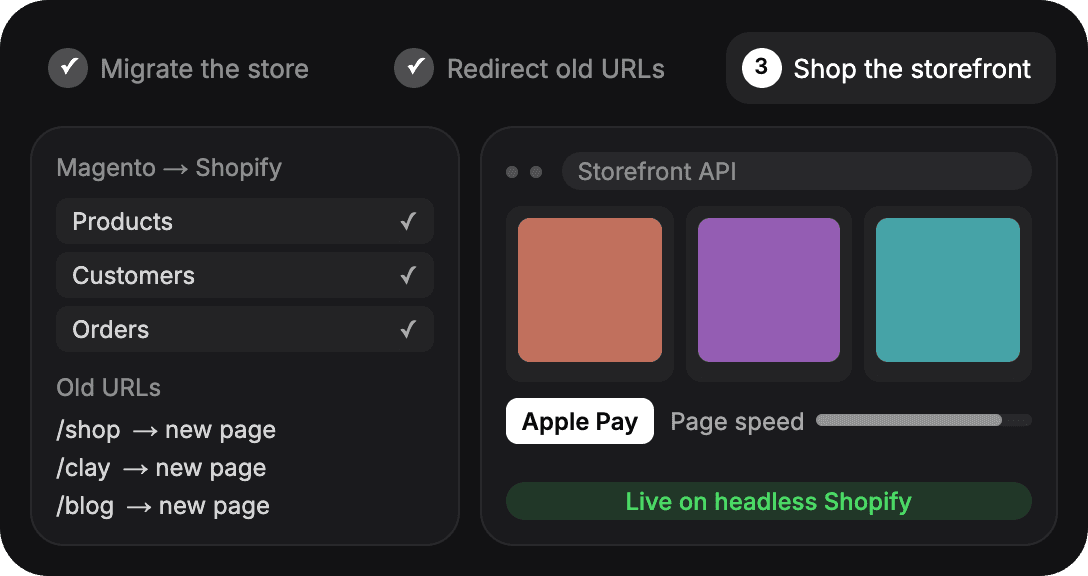
A polymer clay store moved from Magento to headless Shopify. 25K+ orders migrated with a few hours of downtime, a React front end on the Storefront API, and 40% higher page speed on core pages.
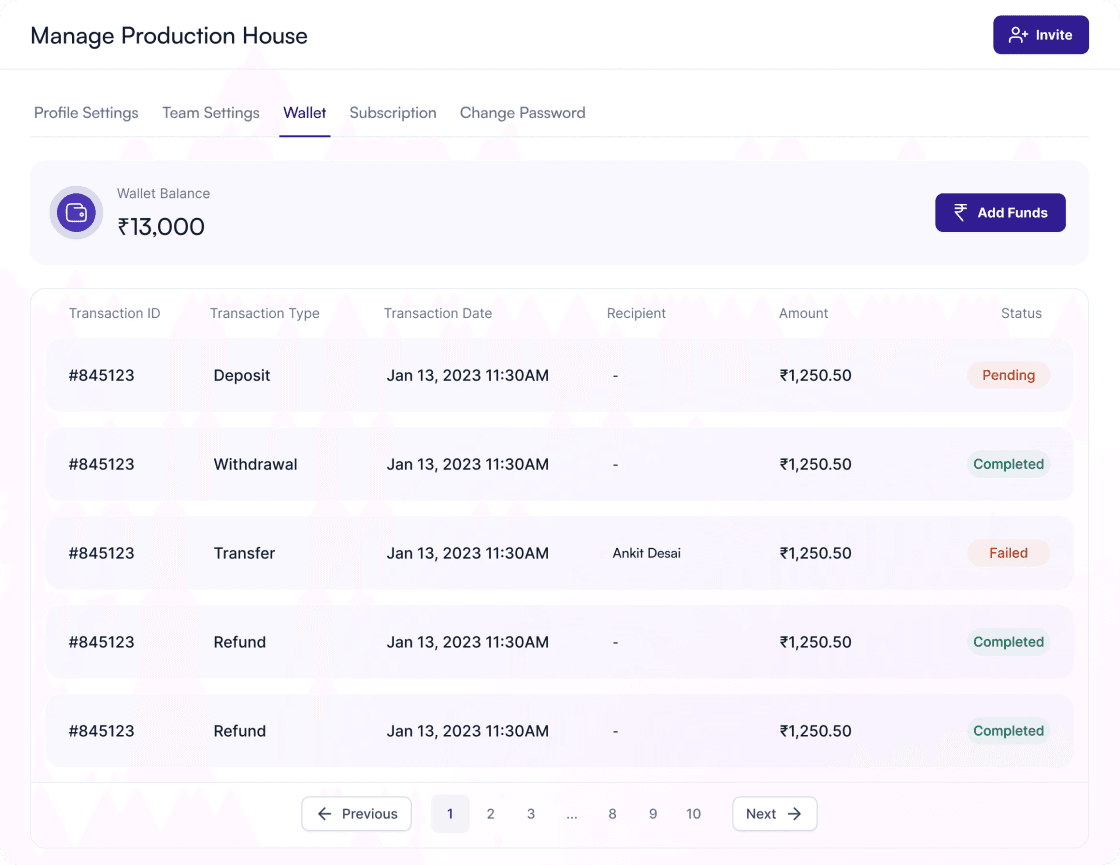

We chose payment gateways over direct bank APIs. Production houses pay whole crews from one wallet through Cashfree, and a signed webhook confirms each payout. Crews paid in one go, with GST and TDS worked out on every invoice.

Gravity Payments’ gift card backend, rebuilt on Node.js and AWS. Old and new systems ran side by side during the move, and each transaction went from 20 seconds to about 8.
Reviews from clients who started with a decision, from Clutch, where we hold a 4.9 average across 45 reviews. Quotes are the reviewers’ own words; the result lines are ours.
They never missed a deadline and were very transparent.
The result
Website delivered within budget against a tight milestone plan, with twice-weekly calls and room to pivot on ideas.
VP Marketing & Product Development, Craft Supplies Brand
E-commerce (baking clay)
The final code quality was excellent and our team has taken no issue.
The result
Server backend replaced successfully, setting up easier future updates and new features, with thorough documentation.

Pankaj Kumar, Architect, Gravity Payments
Payments
Most impressive was their ability to take my requirements, build a scope document and follow it.
The result
Weekly Zoom updates and a revised scope of work kept the project flexible as needs changed.

Kevin Lewis, CEO, Schedash
Real estate SaaS
Each review runs on two working sessions a week, with written minutes after each. The phases below are for a code audit. See how we work.
Code audit
1–2 weeks
The five phases below add up to 6–10 working days
Architecture review
1–3 weeks
Data model, API contract, permissions and running cost
Product Discovery
3–4 weeks
Full requirements, system design and a phased roadmap
Discovery packages have fixed prices, and code audits and architecture reviews are quoted after the free call. Rates are $20–25 an hour, by role and seniority.
Every engagement includes the tech lead’s time and editable documents. A build that follows is priced at $10k–15k small, $25k–50k mid-size or $50k+ large, built in phases.
With least privilege, a clean exit and your written approval before anything leaves your accounts. Each practice below is part of every engagement.
We review the stacks we ship on every week. If yours needs a specialist, such as a large Kubernetes estate or Kafka at scale, we say so. Tools we check for include GitHub Actions, ESLint and Playwright.
Default API stack; Python for AI and data
Relational by default for money, permissions and audit trails
AWS by default, Azure if you’re Microsoft-first
Models, document search, versioned prompts
Techuz is not the right fit for TOGAF-style enterprise architecture, large Kubernetes or multi-account cloud setups, petabyte data pipelines, or SAP and Salesforce work. If a regulatory filing needs a certified architect’s signature, hire a specialist: we hold no certifications. For a simple brochure site, a full review costs more than it saves.
Software consulting is outside engineers assessing your software, plans or a vendor’s work, then giving written recommendations you can act on. At Techuz it takes four forms: code audits, architecture reviews, paid discovery and AI readiness reviews, each with a fixed length.
A software consultant reviews code and architecture, scopes new builds, estimates cost and advises on stack and build-versus-buy choices. At Techuz, that’s a technical architect who also builds products on the same stacks, working with a business analyst when a new build needs scoping. So every recommendation comes with an effort figure a delivery team can work to.
Techuz rates are $20–25 an hour, depending on role and seniority. A one-week Discovery Sprint costs $1,500–2,000 and a 3–4 week Product Discovery costs $4,000–6,000. Code audits and architecture reviews are quoted after a free 30-minute scoping call, which ends in a written price for the review.
A Techuz code audit takes 1–2 weeks, working from read-only access to your repo, cloud and database. Architecture reviews take 1–3 weeks and Product Discovery 3–4 weeks. Each ends in a walk-through with your team and a findings report ranked by severity.
Ask each firm for a sample report, who will do the work, a fixed length and price, and whether the documents become yours. Check that the reviewers build on your stack, and read verified reviews: Techuz holds 4.9 on Clutch from 45 reviews.
No, you don’t have to hire Techuz to build after the review. Every Techuz report, diagram and estimate is yours to use with your own team, another vendor or a dedicated development team from us. If you build with Techuz, the Discovery Sprint fee is credited in full if you sign within 60 days, and Product Discovery at 50%.
Tell us what you're building. We reply within 24 hours and send a ballpark estimate within 48.


