Software product development services, from first release to roadmap

Get your product to paying users sooner and keep it improving, as one team launches your marketplace, learning platform or subscription app and ships every release after.

4.9 on Clutch from 45 reviews · 500+ projects since 2013 · Two learning products grown to 27,000+ commits in one product partnership

Our software product development services

Our software product development services turn a new idea or a stalled app into a product people pay for, then keep it shipping in two- to three-week sprints. Founders get version one live fast; product companies get a team that already knows their code.

  • New product builds

    Digital product development takes a new web platform, marketplace or customer app from discovery to first release with one team. You reach real users sooner, with a product ready for its second and third release. See MVP development.

  • Product discovery and roadmapping

    Product discovery is where you decide what to build first: we map each role’s workflow, sort features into now, later and never, and write the spec and first-quarter roadmap. You start the build with a firm estimate. See product discovery and MVP scoping.

  • Product architecture and back end

    Product architecture gives your product a structure that can take new users, roles and features: data model, API contract, permissions and multi-tenancy, then the back end to match. Each release then builds on the same code. See technical architecture and backend development.

  • AI features inside your product

    We add AI search, assistants and agents to your product where they save users time or earn money, with cost per use and payback estimated in discovery. You fund only the AI features with a clear payback. See AI software development.

  • Ongoing product engineering

    After launch, the team that built it keeps it moving: new features, releases, upgrades and performance work. Your roadmap continues without a hand-off between vendors.

  • Product takeover and rescue

    Product takeover picks up a product another team started: a code audit and gap analysis come first, so working parts stay and only blockers get rebuilt. You stop paying to rebuild what already works. See software consulting.

See also SaaS development, mobile app development and all our software development services.

What one product team changes for your business

With one team from day one, you pay for the foundation once, and no new team ever has to relearn your code.

No rewrite when you grow

Version one is planned for the roles and features you’ll add next, so they slot in instead of forcing a rebuild. In the Software Improvement Group’s State of Software 2026 (June 2026), 86% of code fell below the recommended maintainability rating.

Your earning flow launches first

Phase 1 is the one flow that earns money, and everything else goes on a written “later” list. You reach paying users sooner and plan the next release from real usage.

A team that already knows your code

The same tech lead owns your codebase across releases. If anyone on the team changes, both engineers overlap for the handover, and a replacement joins within two weeks at no cost.

Decisions written down, not remembered

Every weekly sync ends in written minutes you sign off, and each change request carries an estimate before it enters a sprint. Decision records and API docs stay current, so nothing lives only in someone’s head.

How your product keeps shipping after launch

After launch, your product runs as a continuous release train, not a series of new projects. We agree a quarterly roadmap with you, break it into two- to three-week sprints and groom the backlog in the weekly sync. You always know what ships next and why.

Releases on a fixed cadence

Production releases go out every sprint or every other, each with release notes, a regression pass and a rollback plan. P1 issues get a hotfix path.

Metrics you can see

You see velocity, production defects, release frequency, uptime and errors from Sentry and CloudWatch. We can add product analytics (sign-up, activation, feature use, retention) in PostHog or Mixpanel from the first release, with a one-page monthly product report.

A code health report every six months

The tech lead reports maintainability scores, dependency age, open security advisories and test coverage on critical flows, with the top three debt items costed. You see debt before it turns into a rewrite.

AI features kept in check

Prompts are versioned, test sets re-run before any model switch, and token cost reviewed monthly. In Revenera’s report (October 2026), almost half of software providers said customer adoption of their AI features was low or limited. So 30 days after launch, each AI feature is checked against its discovery estimate: keep, rework or retire.

One kids’ reading app we built grew from an ePub reader into a gamified reading platform with badges and a paid reading competition over eight years. To pause new features, a support plan of 40, 80 or 160 hours a month keeps the product patched and monitored.


Project build or product partnership: which does your product need?

Pick a project build when the scope is fixed and your team will run the product after launch. Pick a product partnership when users, releases and a roadmap lie ahead. Make that call before you choose a product development company.

Project build or product partnership: which does your product need?
Project buildProduct partnership
ScopeSigned spec, fixed for the buildQuarterly roadmap, re-planned each quarter
Who owns the roadmapYouYou, with our tech lead and PM in product decisions
Team after launchHandover pack, then your own teamSame tech lead and core team
ReleasesOne launch, then fixesEvery sprint or every other
How you payFixed price by milestoneMonthly: time and material, or a dedicated team
AI featuresBuilt to the specUse and cost reviewed every month
DocumentationHanded over at launchKept current every sprint

Want engineers inside your own team instead?

Set up a dedicated development team.

Products from our software product development company

Three products, each designed and built by one Techuz team.

Client logo

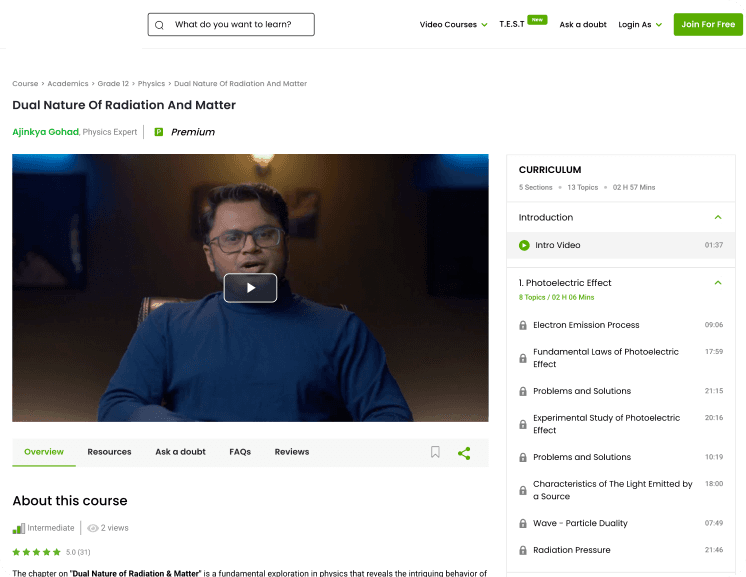
Exam-prep video learning platform

EdTech, India

A JEE and NEET video platform for slow internet, on the web and native iOS and Android apps. Lessons stream at the quality each connection carries, signed links replaced paid DRM, and GPT-4 writes fresh practice quizzes. Live on the web, iOS and Android, and the client no longer pays a DRM fee that grows with every view.

Team
11 people
Timeline
10 months
Budget
$50k–100k
Exam-prep video learning platform — EdTech
Beauty booking marketplace — Beauty services
Client logo

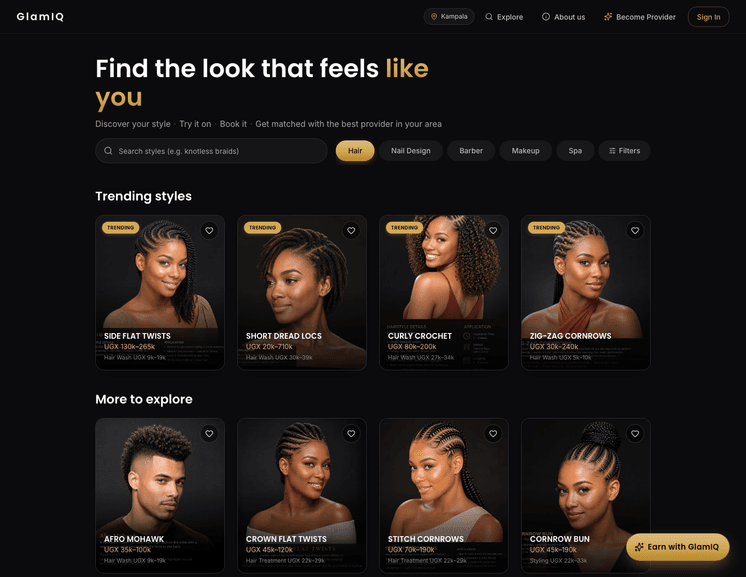
Beauty booking marketplace

Beauty services, Uganda

A mobile-first marketplace where customers try a hair or nail look on their own photo, then book a nearby professional. They pay into escrow by card or Mobile Money, and every repository and vendor account went to the client. Live with real payments, with 100+ bookings since launch.

Team
4 people
Timeline
About 6 months
Budget
$30k–50k
Antgage — Artist booking marketplace
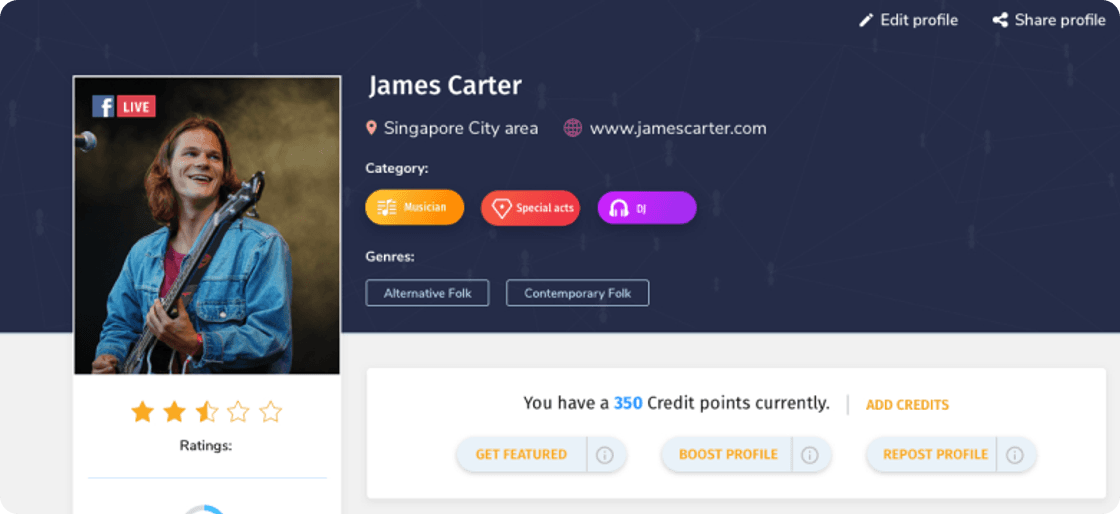
Antgage

Antgage

Artist booking marketplace, Singapore

A two-sided marketplace where artists listed shows, bands posted jobs, and event planners chatted with artists and booked them. It ran on Angular and Node.js on AWS, adding servers as more people joined. Planners found, chatted with and booked artists in one place.

Team
7 people
Timeline
About 10 months
Budget
$10k–50k

What our clients say

Reviews from clients whose products we kept building, from Clutch, where we hold a 4.9 average across 45 reviews. Quotes are the reviewers’ own words; the result lines are ours.

5.0 out of 5on Clutch, Mar 2020
Every problem was met with a solution.

The result

Platform launched with very positive sign-up rates and is being built out into a complete platform.

Client logo

Benedict Lee, Director, Antgage Pte Ltd

Arts & entertainment

Project size
$10K–$49K
Length
Aug 2018 – ongoing
Team
PM + developer
5.0 out of 5on Clutch, Feb 2024
Most impressive was their ability to take my requirements, build a scope document and follow it.

The result

Weekly Zoom updates and a revised scope of work kept the project flexible as needs changed.

Client logo

Kevin Lewis, CEO, Schedash

Real estate SaaS

Project size
$50K–$199K
Length
Feb 2020 – Dec 2023
Team
6–10 people
5.0 out of 5on Clutch, Dec 2018
They never look for shortcuts, and I know they won’t cheat me.

The result

Product live for about six months with successful results and a particularly useful backend.

Client logo

CEO, E-Learning Company

E-learning

Project size
$10K–$49K
Length
Jul 2017 – May 2018
Team
CEO-led team

Full cycle product development, step by step

End-to-end product development at Techuz takes 8–12 weeks of build for a small product. Mid-size products take 12–24 weeks and large ones 6–12 months, followed by ongoing sprints. Discovery adds 1–2 weeks up front, and a 2-week UAT sprint runs before release.

Typical build time
  • Small product

    8–12 weeks

    One product area, 1–2 user roles, one platform

  • Mid-size product

    12–24 weeks

    Web app and admin panel, 3–4 user roles, payments

  • Large product

    6–12 months

    Built in phases, then roadmap sprints

The seven phases

How much does software product development cost?

Software product development with Techuz costs $10k–15k for a small product, $25k–50k for mid-size and $50k+ for large, built in phases. Rates are $20–25 an hour, depending on role and seniority.

Typical cost by product size (steps not to scale).
  1. Small

    8–12 weeks of build

    One product area, 1–2 user roles, one platform

    $10k–15k

  2. Mid-size

    12–24 weeks of build

    Web app and admin panel, 3–4 user roles, payments

    $25k–50k

  3. Large

    6–12 months, then roadmap sprints

    Multi-tenant platform across web, mobile and admin, with AI features and compliance

    $50k+, built in phases

What moves the price

  • User roles and platforms
  • Payment and KYC integrations
  • Whether we design it
  • AI features
  • Audit logs
  • Booking or escrow flows
  • A tight deadline

What’s included

Every price includes QA, project management and 30 days of free support. Costs drop when phase 1 is one earning flow, designs are approved early and AI-assisted delivery saves hours, which we pass on in the estimate.

Running costs matter too. You approve our estimate of your monthly cloud, third-party and AI token bill before the build. Build times exclude discovery and the UAT sprint.

See engagement models and pricing, or book a 30-minute call.

How do we keep your product’s code and data secure?

With practices you can check, not certificates. In the Purple Book Community’s State of AI Risk Management 2026 (April 2026), 7 in 10 organizations reported confirmed or suspected vulnerabilities from AI-generated code in production. So AI-assisted code gets full review.

Every pull request reviewed by the tech lead

The tech lead reviews every pull request before it merges, after linting, a green CI run on GitHub Actions and a dependency scan. Known-vulnerable packages don’t ship.

OWASP Top 10 checks on login, payments and uploads

Sign-in, payment and file-upload flows are tested against an OWASP Top 10 checklist. Secrets stay out of the repository, and strict CSP and HSTS headers and rate limits guard the app. See application security.

Tenant and role isolation tested

The permission matrix is checked role by role before release. In multi-tenant products, tests confirm one organization can never read another’s records.

Your data stays in your cloud

UAT and production data live in your cloud account. Our team works over VPN with MFA and least-privilege access, revoked within 7 days of project end.

AI features that only see what the user may see

AI answers run inside each user’s permissions and stop when a permission check fails. Client data goes to third-party models only with your written approval, with training on your data switched off. See AI security.

Technology we use for software product development

We pick a stack your product, and the team that runs it after us, can live with. The reason goes into the architecture document.

  1. Front-end

    Angular for large, form-heavy apps; React and Next.js for dashboards and customer apps

  2. Back-end

    One language across API and front end; Python for AI and data services

  3. Mobile

    Flutter for new cross-platform apps; native code where performance is the product

  4. Data and cloud

    Relational by default for money, permissions and audit trails

  5. AI

    Models called through your back end, with prompts and test sets versioned

    • Claude
    • OpenAI
    • Pinecone
  6. Quality and monitoring

    Checks before merge, alerts after release

    • GitHub Actions
    • Playwright
    • Sentry
    • CloudWatch

Software product development FAQ

  • Skip a custom product if a tool you can buy already handles most of the job; build only the missing piece. Embedded firmware, SAP or Salesforce work and 24/7 operations centers are outside what Techuz offers. If your budget sits below our $10k–15k small tier, start with a clickable prototype instead.

  • Software product development is designing, building, launching and improving software that people use or buy as a product, with releases planned over its whole life. Unlike a one-off project, it continues after launch. Techuz runs it as discovery, design, build and release, then regular roadmap releases.

  • Product engineering is the engineering side of a product’s whole life: architecture, build, testing, releases, scaling and upgrades. Techuz’s software product engineering services cover all of it, from discovery to releases on a fixed cadence after launch. It matters most when a product will live for years and keep adding users, roles and features.

  • With Techuz, a small product takes 8–12 weeks of build, a mid-size one 12–24 weeks and a large one 6–12 months, followed by ongoing sprints. Add 1–2 weeks of discovery up front and a 2-week UAT sprint at the end. Approved designs and a tight first release keep you at the shorter end.

  • Techuz charges $20–25 an hour, depending on role and seniority. Small products cost $10k–15k, mid-size $25k–50k and large $50k+, built in phases. Ongoing work can also run as a dedicated team, from 160 hours a month per engineer, billed monthly.

  • No, if version one is built for growth. Techuz designs the data model and permissions for the roles you’ll add later and tests every module, so new releases extend version one. One learning marketplace’s API grew to about 1,160 endpoints on one contract without a rewrite.

  • You own the code, cloud accounts and IP. With Techuz, code sits in your Git organization and the product runs in your cloud account from day one. Third-party accounts are opened in your name and IP transfers on payment, so changing teams later means nothing to untangle.

Get a Ballpark Estimate for Your Project

Tell us what you're building. We reply within 24 hours and send a ballpark estimate within 48.

Tell us about your project

A few lines are enough. We reply within 24 hours.

By sending this form I confirm that I have read and accept the Privacy Policy