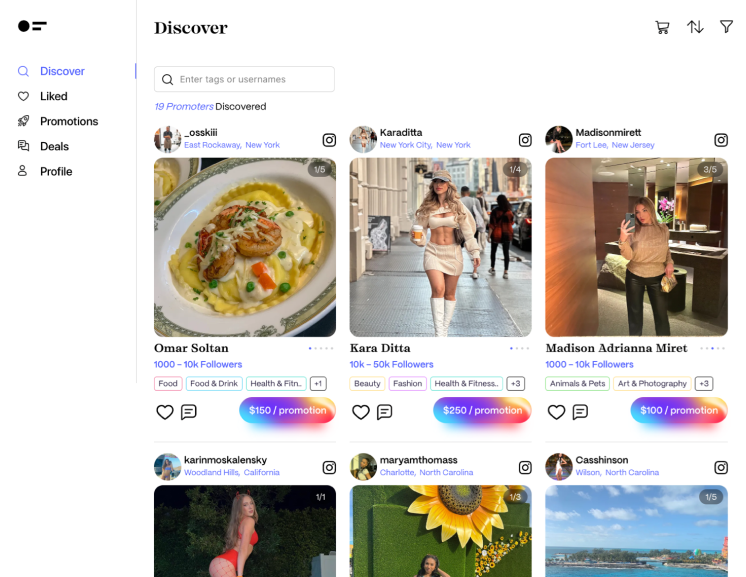
See a hairstyle or nail look on their own photo before they book
AI try-on through Perfect Corp

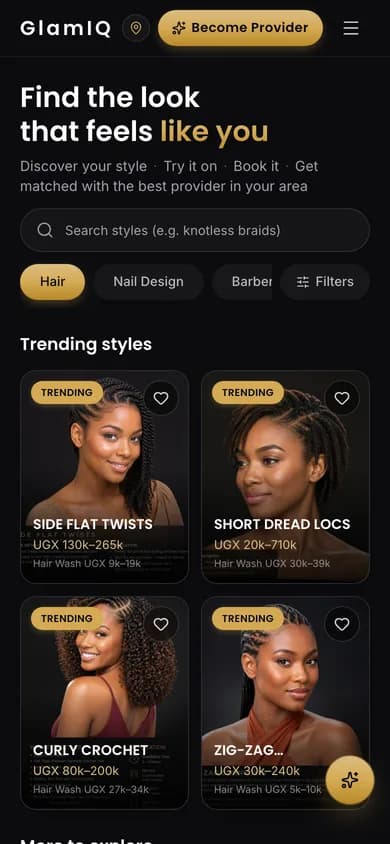
Customers try a look on their own photo, book someone nearby and pay into escrow, all from their phone. It's live with real payments.
 Beauty-tech startup
This beauty booking marketplace lets customers try a hairstyle or nail look on their own photo and book a nearby professional. They pay by card or Mobile Money, and the money waits in escrow until the job is done. Techuz built the customer app, provider portal, admin panel and backend in about six months, and the client owns the code and every vendor account.
The client links people with independent beauty professionals for hair, nails and similar services. Almost everyone books from a phone, and most pay with Mobile Money or a local card.
On the other side are the providers. Some work alone, some run salons. Each one covers a set area around them and decides their own hours and earnings.
Uganda came first, but the client always planned to grow into other countries, so we built for that from the first sprint.
The client wanted one simple flow on the phone. Find a style, see it on yourself, book someone good and pay, without jumping between apps.
The tricky part was trust. Customers pay upfront, so they want to know their money is safe until the job is done. Providers want to know they'll get paid once they've done the work.
Three choices shaped this platform. We kept payments in our own escrow, sent bookings to providers in rounds, and set everything up in the client's name from day one.
Every payment waits in escrow until the job is confirmed or a dispute is settled.
The easy option was to let the payment gateway split each payment between the provider and the platform. We built a wallet with escrow inside the platform instead.
Here's how it works. The customer pays upfront through Pesapal, and the provider's share is marked as held.
Once the customer confirms the service and a holding period set by the admin passes, that money becomes available to the provider. If anyone raises a dispute, it's frozen until an admin decides how to split it between payout and refund.
And if a customer simply forgets to confirm? An hourly check opens a dispute for them, so no booking is left hanging.
In the original plan, each booking went to one provider. If they didn't pick up, the customer simply waited until the timeout ran out, and then the next provider got a turn.
We suggested sending each request to a small group of providers at once. The platform picks the ones who cover that area, offer that service and are free at that time, then ranks them by distance and rating.
Each gets an SMS and a quick flash call. If nobody says yes in time, the next group hears about it automatically. The first provider to accept locks the booking, so two people can never win the same job.
We worked in our own repository and pushed every release to a second one the client owned. That way they could see the full codebase whenever they liked. Every vendor account, from AWS and Pesapal to Twilio and Perfect Corp, was opened in the client's name.
A mobile-first web app, not native apps. The first phase had to reach customers on any phone, quickly, with no app store in the way.
Slow work happens in the background. Try-ons, matching rounds, emails and subscription renewals run as queued jobs. The app stays quick, and anything that fails tries again on its own.
The client now runs four connected pieces: a customer app, a provider portal, an admin panel and the backend behind them. Providers use their portal to accept jobs, set their hours and track what they've earned. Admins look after matching rules, holding periods, disputes and withdrawals.
AI try-on through Perfect Corp

Matching in rounds, by area, availability and rating
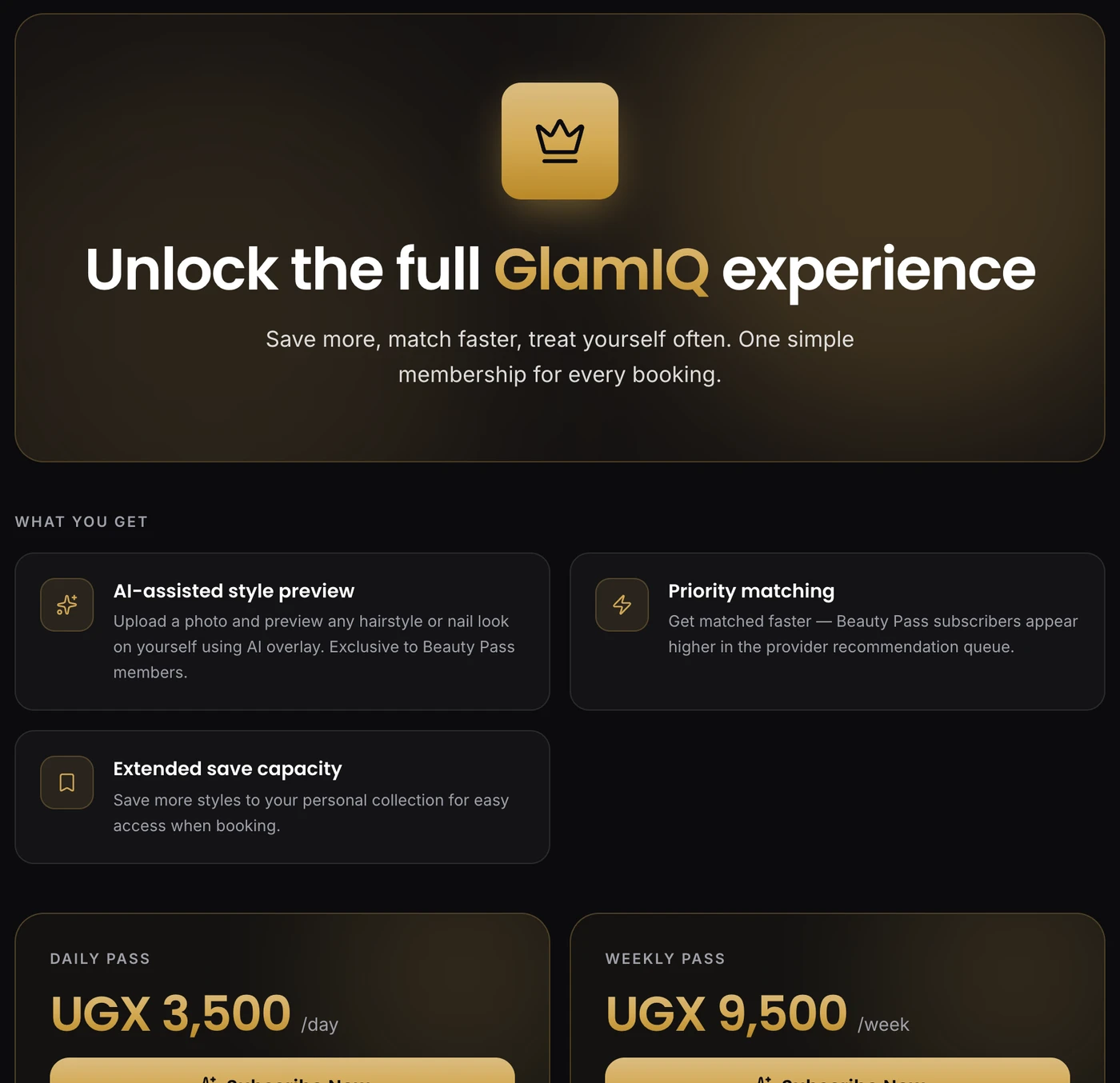
A Beauty Pass membership with recurring billing
It was a small team, and the client worked directly with the people building their product. There was no separate project manager. The developers ran client communication and delivery themselves, so every question went straight to someone who knew the code.
4people
The platform is live with real payments, and providers and customers are already using it. Customers book from their phones and pay by card or Mobile Money in one checkout. Providers get paid without chasing anyone, and the client runs commission, refunds and disputes from one admin panel.
Platform figures since launch.
A mobile-first web app works on any phone, with no app store to get through
One codebase for the API, the web app and the admin panel
Queues keep try-ons, matching and billing out of the way of the main app
Customers and providers see bookings and acceptances as they happen
Pesapal takes both cards and Mobile Money
A booking marketplace like this takes about six months from kickoff to handover. The timeline depends mostly on how many types of user you have, how your payment rules work and how many outside services you connect.
The customer pays upfront, and the provider's share waits in a wallet on the platform until the service is confirmed. A holding period gives customers time to raise a problem, and a dispute freezes the money until someone decides how to split it. Keeping escrow in your own platform means you set those rules yourself.
Yes, a booking app can take Mobile Money alongside cards. A gateway like Pesapal handles cards and Mobile Money in one checkout, and both can flow into the same escrow wallet. If you move into another country, the gateway may change, but your escrow rules stay the same.
Each booking goes to a set number of eligible providers at once, filtered by service radius, category, availability and service location, and ranked by distance and rating. Providers get an SMS and a flash call. If nobody accepts before the timeout, the next round goes out automatically, and the first provider to accept locks the booking so two providers can't win the same job.
We integrated Perfect Corp's YouCam API for hair and nail try-on. Each try-on runs as a queued background job, so the app stays responsive and failed requests retry. We didn't train a model; the AI is a third-party service in production.
At handover, the client should own everything: the code, the data and every third-party account. Here, all three code repositories moved to the client's GitHub organisation with full history, and AWS, Pesapal, Twilio, SendGrid, Google Cloud and Perfect Corp were opened in the client's name from day one, so there was nothing to migrate.
Tell us what you're building. We reply within 24 hours and send a ballpark estimate within 48.