
It fits the way your team already works
Discovery maps each role’s workflow before design. For an Australian care provider, discovery logged 64 open questions in writing instead of guessing the answers.

Run your business on software that fits how it works, whether that’s an operations app, a customer portal or a SaaS product, and own it outright.
4.9 on Clutch from 45 reviews · 500+ projects since 2013 · 250+ clients
Our custom software development services build the software off-the-shelf tools can’t: approval and ordering apps for operations teams, platforms and SaaS products for founders. We build the workflow that saves or earns the most first, so release one pays its way.
Bespoke software development replaces the spreadsheets and email your team runs on today for approvals, ordering, scheduling and reporting. Each role gets its own screens, so your team enters data once and every request has an owner. See enterprise software development.
For startups and product companies, we build customer portals, marketplaces and multi-tenant SaaS products, with subscriptions, payments and an admin panel. You get a product customers can sign up for and pay through, ready to grow release by release. See SaaS development.
Integration work connects your software to the payment, identity-check, accounting, CRM and video services you already use, with every sync logged. Data moves between your systems without manual exports, and payment records stay accurate. See backend and API development.
We add AI assistants, document search and voice features to your software, so your team gets answers from its own records. You see what every AI feature costs to run, tracked per organization. See AI software development.
Mobile apps for staff and customers run on the same back end as your web product: Flutter for iOS and Android, native Swift or Kotlin where performance matters. Everyone works from the same data on any device, and you maintain one set of business rules. See mobile app development.
Takeovers are for software another vendor built that now holds you back: a code audit comes first, so working parts stay and only blockers get rebuilt. You avoid paying twice for features that already work, and the system stays live while it changes. See software consulting and code audits.
Custom software fits the way your business runs, so you stop paying for workarounds, extra seats and tools that don’t talk to each other.
In our experience, most custom builds go wrong before the first sprint, when nobody wrote down what version one leaves out. We agree five things with you in writing first, so the estimate holds and nothing surprises you after launch.
A signed requirements document: what version one excludes, a first phase limited to one flow that pays, the data model and API contract, a role-by-role permissions matrix and the monthly running cost, signed by the client and the tech lead. Figures are illustrative.
Each role’s workflow, the module list and what’s excluded, versioned and signed (business requirements document). Everyone builds the same product.
Phase 1 is one flow that earns or saves money; the rest waits. One marketplace launched with just two categories.
How data is stored and how every app reaches it, fixed before code, so new features don’t force a rewrite (ERD, API contract).
Who can see, change and approve what, role by role, signed and later tested against the build (RBAC matrix).
Cloud, SMS, payment and AI token bills, estimated and approved before the build.
Later changes go through a written change request with its own estimate, then into the next sprint. A 10% buffer is disclosed up front. For software you already run, book a technical architecture review.
Buy off-the-shelf when a tool already does about 90% of the job, and build only the gap. Hiring a custom software company makes sense when the workflow is how you win, or when per-seat fees and workarounds keep growing. In Retool’s February 2026 vendor survey of 817 customers and builders, 35% of teams had replaced at least one SaaS tool with a custom build.
Not sure?
On a 30-minute call, a tech lead will tell you which parts to buy.
Three builds from our custom software development firm: clinic management, garment ordering and a collectible card marketplace.
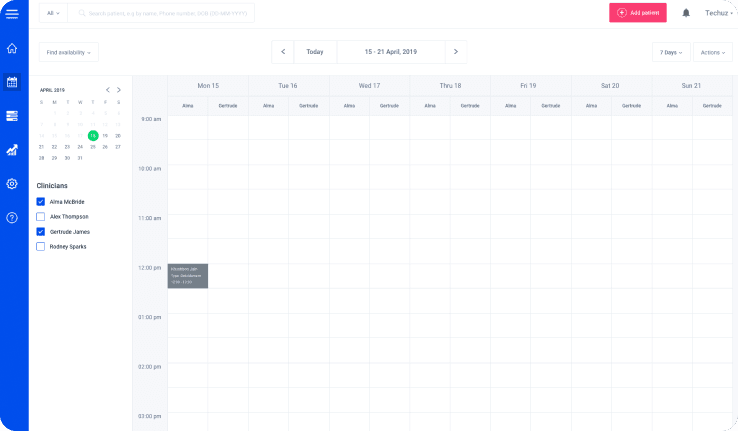
One web app for patient records, scheduling, billing with QuickBooks sync and built-in reporting, with HIPAA’s rules built into the code. Angular, Node.js and MySQL. Live, and the platform has passed a HIPAA audit.

A made-to-measure garment ordering ERP where orders take about 15 minutes, not over 24 hours. Dealers order with saved styling templates, and an admin checks every order before production (figures from the client’s Clutch review).
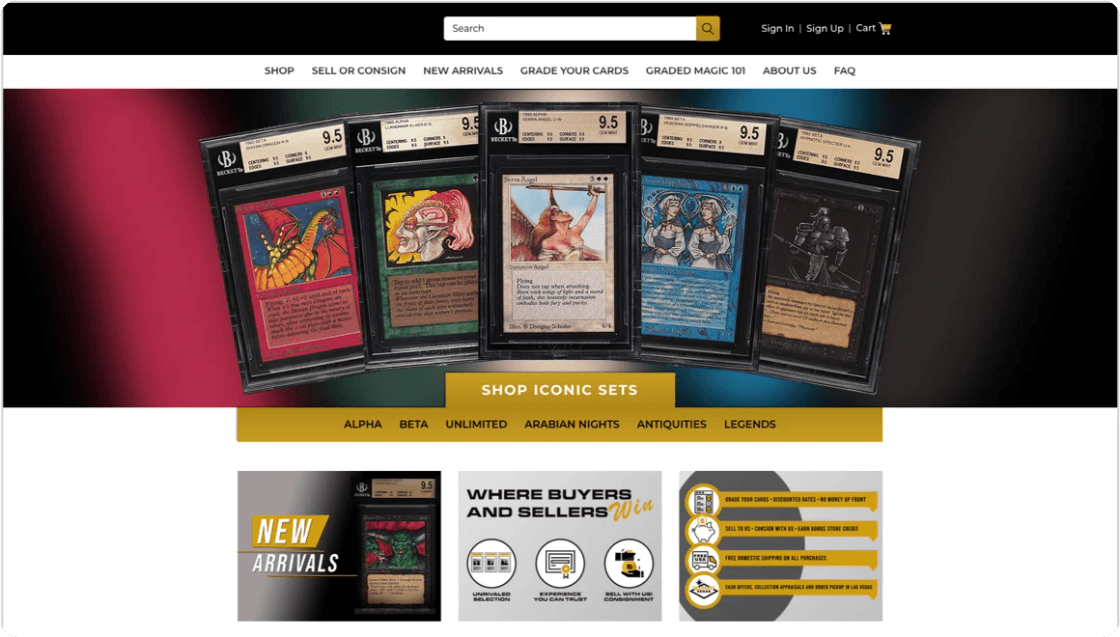

Buyer and seller accounts, listings, search and PayPal checkout, plus a portal where customers send cards for professional grading. Built custom rather than on Shopify or Magento, on Angular, Node.js and AWS. 1,200+ cards sold through the platform.
Reviews of the three builds above, from Clutch, where we hold a 4.9 average across 45 reviews. Quotes are the reviewers’ own words; the result lines are ours.
Techuz’s communication and speed of delivery are outstanding.
The result
Order processing went from over 24 hours to 15 minutes, and any bugs found are solved quickly.
Executive, Clothing Manufacturer
Apparel manufacturing
They’re a trustworthy team and always deliver what is assigned to them.
The result
Customers praise the app’s diverse features, and new ones are being added rapidly.
Owner, Software Company
EMR software
I’m very happy with the final product.
The result
A satisfactory final product, with bugs fixed and minor changes made after launch based on the client’s feedback.
Founder, Collectible Trading Cards Company
Collectible trading cards
A tech lead and a team of custom software developers run six phases, with weekly minutes you sign off. Development, including design and architecture, takes 8–12 weeks for a small build, 12–24 weeks for mid-size and 6–12 months for large. Discovery comes before it, and 2 weeks of UAT and release after. See how we work.
Small build
8–12 weeks
One workflow, 1–2 user roles, one platform, such as an internal approvals tool
Mid-size build
12–24 weeks
A web app and admin panel, 3–4 user roles, payments or 2–3 integrations
Large build
6–12 months
A multi-tenant platform on web and mobile, with AI features and compliance
A custom build with Techuz costs $10k–15k for a small project, $25k–50k for mid-size and $50k+ for large, built in phases. Rates are $20–25 an hour, depending on role and seniority.
$10k–15k
Small
8–12 weeks of development
$25k–50k
Mid-size
12–24 weeks of development
$50k+
Large
Built in phases · 6–12 months, then ongoing sprints
Small
8–12 weeks of development
$10k–15k
Mid-size
12–24 weeks of development
$25k–50k
Large
Built in phases · 6–12 months, then ongoing sprints
$50k+
Every price includes QA, project management and 30 days of free support, and the proposal lists hosting, third-party and AI costs per month. A one-week Discovery Sprint costs $1,500–2,000, fully credited if you sign within 60 days. Product Discovery takes 3–4 weeks for $4,000–6,000.
Add 1–2 weeks of discovery (3–4 weeks of Product Discovery for large builds) before development and 2 weeks of UAT and release after it.
With practices you can check, not badges. In Veracode’s July 2026 GenAI Code Security Report, about 44% of AI code-generation tasks introduced a security vulnerability in testing.
Building for a regulated market? We build to HIPAA and SOC 2 requirements and support you through the audit.
Each choice depends on your product and on who will maintain it after launch. The tech lead writes the reason into the architecture document.
Relational by default for money, permissions and audit trails
Flutter for cross-platform apps; native where performance is the product
Models, document search and agents; prompts and test sets versioned
Techuz is not the right fit for embedded or firmware work, ERP implementation, Salesforce customization or 24/7 on-call operations; hire a specialist for those. It also isn’t right if you can’t describe Phase 1 as one flow and have no budget for discovery. We don’t place full-time engineers on-site either.
Custom software development is designing and building software for one organization’s workflows, users and rules, instead of buying a product made for everyone. At Techuz, it runs from discovery and design through testing, release and support, for 250+ clients since 2013.
At Techuz, development takes 8–12 weeks for a small build, 12–24 weeks for mid-size and 6–12 months for a large platform, then ongoing sprints. Add 1–2 weeks of discovery before it and 2 weeks of UAT and release after. A first phase limited to one money-earning flow launches fastest.
Choose by how they work, not by hourly rate: ask who reviews the code, where it lives and what is signed before development starts. Then read verified reviews from clients with similar projects. Techuz holds 4.9 on Clutch from 45 reviews and 4.7 on GoodFirms from 11.
Yes, you own the code and IP when Techuz builds your software. The repository, cloud and third-party accounts are set up in your name from the start, and the IP transfers to you on payment. The handover documents and recorded sessions mean another team could take the system over.
Yes, Techuz takes over software another vendor built, starting with a 1–2 week code audit and gap analysis. We keep what passes and replace only what blocks you. You see the findings in writing before any rebuild starts, and each change comes with its own estimate for you to approve.
Every Techuz project has a dedicated tech lead who also codes, plus developers with 3–5 years’ experience, QA, a designer and a shared project manager. Large builds add an architect, a business analyst and part-time DevOps; an AI engineer joins for AI features. For a long-term team, see our dedicated development team.
Tell us what you're building. We reply within 24 hours and send a ballpark estimate within 48.


