4.9 on Clutch from 45 reviews · 500+ projects since 2013 · One product we built grew to about 1,160 API endpoints
Idea
First version
Traction
Scale
1–3 weeks·Scoping call free
your-app.com
Sign up
Book
Pay
Clickable prototype, before any production codeFirst payment received
Active users, first 30 days
TLTeam
Our software development services for startups
Our software development for startups turns your idea into a marketplace, SaaS platform or payment app that people pay for. Version one holds only the flow that earns money, so budget is left for what users ask for next.
Scope v1Signed
Fixed estimate$25k
Product discovery and scoping
Discovery turns an idea into user roles, key flows, wireframes and an estimate in one to two weeks. You own every document even if someone else builds it, so the first money you spend still has value.
A first version focuses on the one flow that proves your idea, built on the same stack, reviews and tests as any production product. When users arrive, you grow the product instead of paying for a rewrite. See MVP development.
Web appMobile appAdmin
Release 1.4 · shipped together
Web, mobile and SaaS products
Your web app and Flutter mobile apps are built around the user roles your business model needs, from buyers and sellers to admins. One team covers web, mobile and admin, so features ship together instead of across three vendors. See custom web application development and SaaS development.
Which contracts renew this month?
3 sources, your documents
AI features you can justify
AI features such as assistants, document search and voice go in only where they remove manual work or a reason customers hesitate to buy. We estimate the cost per use and payback of every AI feature in discovery, so your margins hold up under real usage. See AI software development.
Tech lead
DevDevQADesign
Runs day to day; you set priorities
Scaling teams after traction
Once the product has paying users, a dedicated team keeps shipping your roadmap with the tech lead who built version one. You add engineers when usage justifies the cost, and nobody has to relearn the codebase.
Code audit
Auth and rolesKeep
PaymentsKeep
File uploadsFixFixed
Takeovers of existing or AI-built code
Got code from a freelancer, a past agency or an AI app builder? An audit comes first: security, structure and what is worth keeping. You keep what works and pay to fix only what blocks launch, instead of starting again. See software consulting and code audits.
A startup’s software grows in four stages, and each should end with something real users can try. Spend only what the current stage needs, and write down every cut for the next backlog.
Idea and validation
Stage 11–3 weeks
Target users click a Lovable or Figma prototype before any production code exists. If one technical risk could sink the idea, a proof of concept tests it first, in two to six weeks.
One paid flow, one or two user roles and one platform, on a production stack that real users can sign up and pay on. One larger first version we built, a course and test-series app, went from idea to launch in 16 weeks this way.
A live product people can pay on
Traction
Stage 3First 30 days
Analytics events planned in discovery show what users actually do. At 30 days, that data and your feedback become a priced plan for the next release.
Monitoring, automated tests on critical flows and cloud cost reviews grow with usage. A dedicated team keeps shipping your roadmap; on one kids’ reading app, the same team stayed eight years.
You can join at any stage. For bigger questions about load, data or multi-tenancy, start with a technical architecture review.
How to hire software developers for a startup: in‑house, freelancers or a development company?
Before product-market fit, hire a development company or a small dedicated team, so you launch without months of recruiting. Bring developers in-house once the product and roadmap are stable. Here is how to hire developers for a startup at each stage.
How to hire software developers for a startup: in‑house, freelancers or a development company?
In-house hire
Freelancers
Development company (project)
Dedicated team
Time to start
Weeks or months of recruiting
Days, once you find someone
After 1–2 weeks of discovery
Shortlist in 2–4 working days, start in 1–2 weeks
How you pay
Salary, benefits and recruiting costs
Hourly or per task
Fixed price, paid by milestone
$20–25 an hour, from 160 hours a month per engineer
Five mistakes that sink startup software, and what to do instead
Most startup software fails on money decisions made before any code is written.
Building every role and feature in version one
Launch slips by months, and money runs out before the first paying user.
What to do instead
Phase 1 keeps only what earns money: one beauty-booking marketplace launched with admin-approved withdrawals, not automated payouts.
Starting with “like Uber, but for X” and no written spec
Everyone pictures a different product, so every estimate is a guess.
What to do instead
Discovery writes down each role’s workflow and what is excluded. For one Australian care provider, 4.5 hours of calls became a spec page per staff role.
Picking the lowest hourly quote
A low rate with no lead and no QA buys code nobody else can maintain.
What to do instead
Every Techuz project has a dedicated tech lead, written test cases and a repository you can open any day.
Spending the whole budget on the build
Cloud, SMS, payment and AI bills arrive after launch, along with the fixes users ask for.
What to do instead
Our startup proposals show one year-one figure: the build, monthly running costs and a reserve for three months of changes.
Adding AI because everyone else is
AI companies took 49% of all pre-seed dollars in H1 2026, in Carta’s August 2026 pre-seed report. That pressure adds AI features that bring cost and wrong answers, not value.
What to do instead
Ours ship only with a test set and a cost cap per use.
Products from our software development company for startups
Three founder-led products, each scoped to launch on a startup budget.
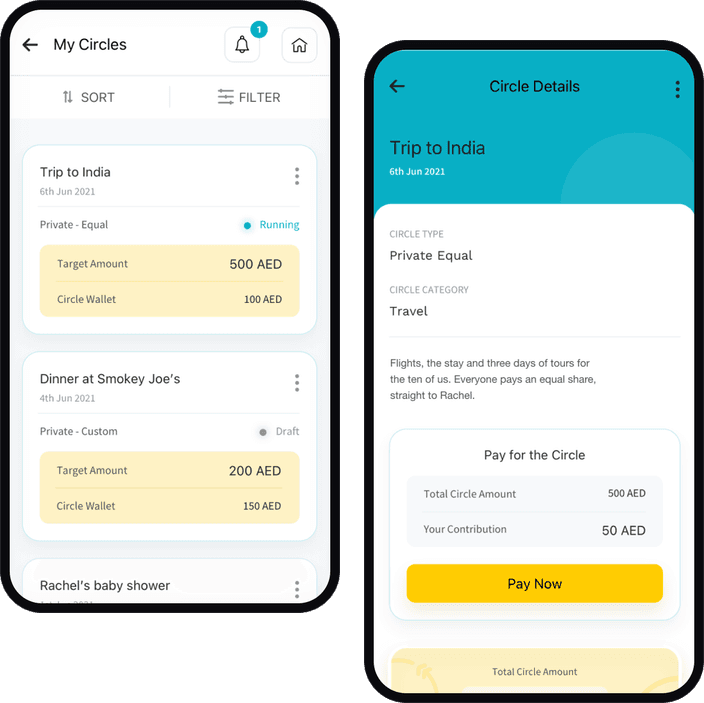
Group money collection app
Group payments, UAE
Web, Android and iOS apps that let one person collect money from a group for a shared cost. Friends join by invite, split the bill and pay in the app, and each share lands in the organizer’s bank account. Taken to working-product stage, on time and on budget, as the client’s Clutch review says.
Team
5 people
Timeline
About 9 months
Budget
$25k–50k
View case study
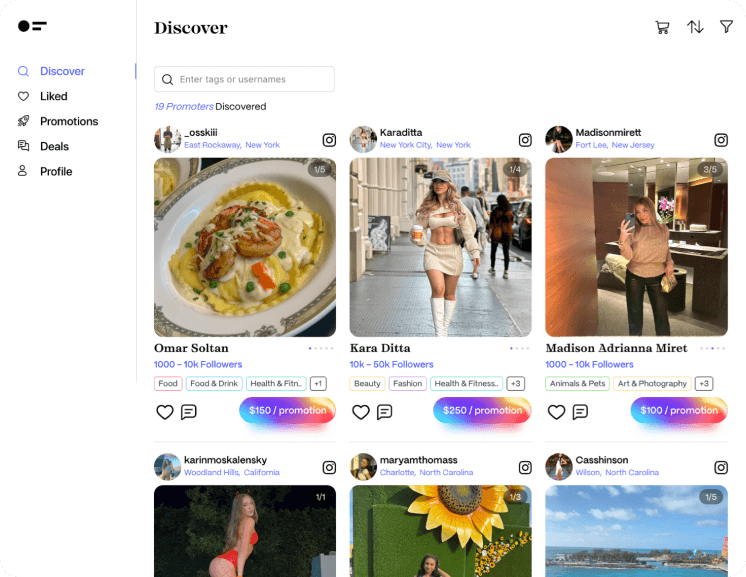
Creator content marketplace
Creator marketplace, USA
A marketplace where brands bought photos, videos and reviews from creators. A brand or moderator approved each piece, and Stripe Connect released payment only once the platform’s conditions were met. Web, iPad and Android tablet apps on Angular and Node.js; 500+ brands and creators joined while it was live.
Team
7 people
Timeline
6–9 months
View case study
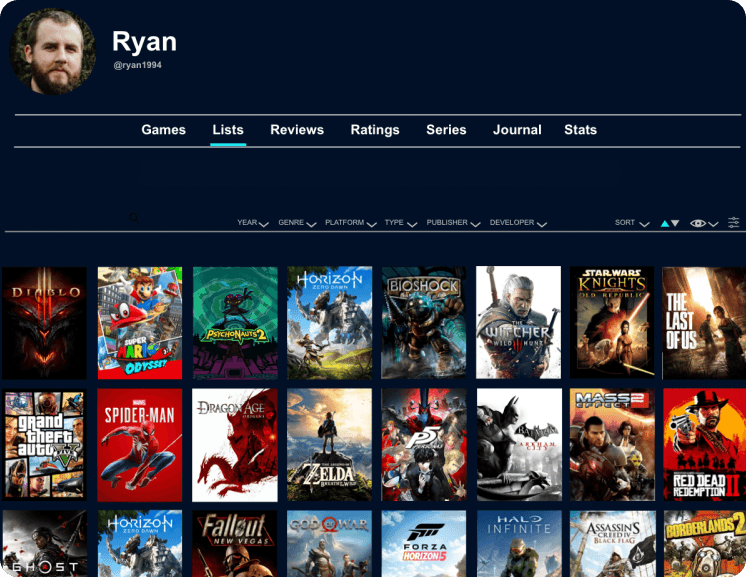
Video game collection tracker
Gaming, USA
A subscription web app where gamers catalogued the games they owned, rated them and followed friends. Its 5,000+ game catalogue stayed in sync with the IGDB database through webhooks. Angular, Node.js, MySQL and Razorpay; 1,200+ users while the app was live.
Reviews from the founders behind the products above, from Clutch, where we hold a 4.9 average across 45 reviews. Quotes are the reviewers’ own words; the result lines are ours.
5.0 out of 5on Clutch, Feb 2020
“They took the time to understand and stress test the product before development.”
The result
Platform delivered on time and on budget, because early stress-testing prevented overruns.
How our startup development services run, step by step
A small first version takes about 8–12 weeks: about 1 week of discovery, 6–9 weeks of design and build, and 1–2 weeks of UAT and launch.
A small first version, about 8–12 weeks
Discovery
About 1 week
Scope cut, wireframes and a fixed estimate
Design and build
6–9 weeks
Prototype and architecture first, then 2–3 week sprints
UAT and launch
1–2 weeks
Full regression, your testing, then release
The six steps
As a buyer, I want…
Spec v1 Signed off
Estimate
$10k$15k
Scoping call and ballpark
30 minutes, then 48 hours
A tech lead asks how the product makes money and flags what can wait. You get a written scope summary and a ballpark within 10–15%.
What you getA written scope summarya ballpark within 10–15%
Discovery and scope cut
About 1 week
We sort every feature with you into must, should, could and won’t yet, and write the exclusions down. You get a requirements document, wireframes, a milestone plan and a fixed estimate.
What you getA requirements documentwireframesa milestone plana fixed estimate
Web app · ReactAPI · Node.js
PostgreSQLRedisS3
AWS, auto-scaling
Prototype, design and architecture
First 1–2 weeks of the build
You and a few target users click a prototype before screens are frozen. The tech lead then signs off the data model, API contract and role permissions. You get approved designs and an architecture document.
What you getApproved designsan architecture documentSee UI/UX design.
Sprint 4Demo on Friday
To do
In progress
Done
Build sprints
5–7 weeks on a small build
Each 2–3 week sprint ends in a staging demo, and AI-assisted code gets full review (Sonar, January 2026: only 48% of developers always check it). Across the 8+ projects we built with Claude Code in the last year, delivery took up to 50% less time than comparable builds the year before. You get a tested build and a sprint report each time.
What you getA tested builda sprint report each time
✓ Build passed
✓ Database migrated
✓ Deployed to production
yourproduct.comLive
UAT and launch
1–2 weeks
QA runs a full regression, then you test with our test cases and a shared defect log. We check analytics events and release. You get a live product and a test report.
Defects against the signed scope are fixed free for 30 days, then we review usage with you. You get a priced next-release plan and a choice: dedicated team, a 40, 80 or 160-hour monthly plan, or handover to your own team.
What you getA priced next-release plana choice of how to continue
How much does software development cost for a startup?
At Techuz, a first version costs $10k–15k, a mid-size product $25k–50k and a larger platform $50k+, built in phases. A small first version starts with the free scoping call, and its week of discovery is part of the build price. Rates are $20–25 an hour, depending on role and seniority.
From 160 hours a month each, monthly for as long as you need
What moves the price
User roles and platforms
Payments and payouts
Integrations such as KYC, SMS and maps
AI features
Compliance
Design work
A compressed timeline
What’s included
User roles and platforms move the price most, then payments and payouts. Fast decisions on your side save the most.
Every price includes QA, project management and 30 days of free support. Monthly cloud, third-party and AI token costs are estimated and approved before the build starts. The Discovery Sprint is fully credited to the build if you sign within 60 days, and Product Discovery 50%.
How do we keep your code, data and accounts safe and in your name?
With practices you can check yourself, not badges. In an April 2026 Cloud Security Alliance note, monthly CVEs linked to AI-generated code rose from 6 in January to 35 in March.
Every account in your name from day one
Git, cloud, payment gateways and app store listings are opened in your name, not ours. When one beauty-booking marketplace launched, every vendor account was already the founder’s.
Every line reviewed before it merges
The tech lead reviews every pull request, including AI-assisted code, and CI must pass first. Client data goes to third-party AI models only with your written approval, with training turned off.
Security checks where money and data move
Every release checks login, payments and file uploads against the OWASP Top 10. Secrets never sit in the repository, and login attempts are rate limited. See application security.
Prototype code never ships as production code
Lovable prototypes test ideas; production code is written and reviewed separately. Built an app with an AI tool already? A one-week review checks it for exposed secrets and open database rules.
Choosing a tech stack for startups: what we pick and why
Pick tools with a large hiring pool, so your future team can take over. Architecture should fit the business, not fashion: one codebase first, split only when load or AI needs it.
Web
React or Angular, chosen per product; Angular for large, long-running platforms with many forms
Models picked per feature, with prompts and test sets versioned and cost limits set from day one
Claude
OpenAI
Pinecone
Software development for startups FAQ
Techuz is the wrong choice if a no-code tool already does most of the job. The same goes if you haven’t spoken to users yet: start with interviews and a prototype. We also don’t build hardware, firmware or foundation models, or place engineers on-site full time.
Software development for startups means building a new company’s product in stages sized to its runway. You validate, launch the flow customers pay for, then grow from usage. At Techuz, each stage builds on the last, so version one needs no rewrite.
With Techuz, a first version costs $10k–15k, a mid-size SaaS or marketplace $25k–50k, and a larger platform $50k+, built in phases. The scoping call is free, and a one-week Discovery Sprint costs $1,500–2,000. Product Discovery for a large platform costs $4,000–6,000.
At Techuz, a small first version takes about 8–12 weeks: 6–9 weeks of build, plus about 1 week of discovery and 1–2 weeks of UAT and launch. A mid-size product needs 12–24 weeks of build. Quick decisions keep you at the short end.
Outsource before product-market fit, then hire in-house once the product and roadmap are stable. A development company like Techuz can start within weeks and replaces any engineer who leaves within 2 weeks at no cost. Many founders move to a dedicated team before hiring their own.
Custom software makes sense for a startup when the product is the business and no existing tool fits its core flow. If a SaaS tool covers most of the need, Techuz will suggest buying it and building only the gap.
Ask who reviews the code, where your code and accounts live, and what happens after launch. Then talk to founders the company has built for. Techuz holds 4.9 on Clutch from 45 reviews and fixes a price only after discovery.
Get a Ballpark Estimate for Your Project
Tell us what you're building. We reply within 24 hours and send a ballpark estimate within 48.