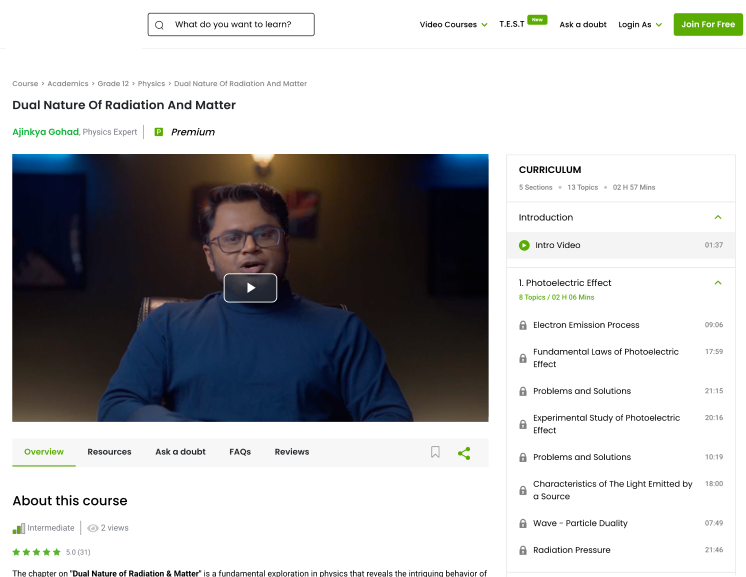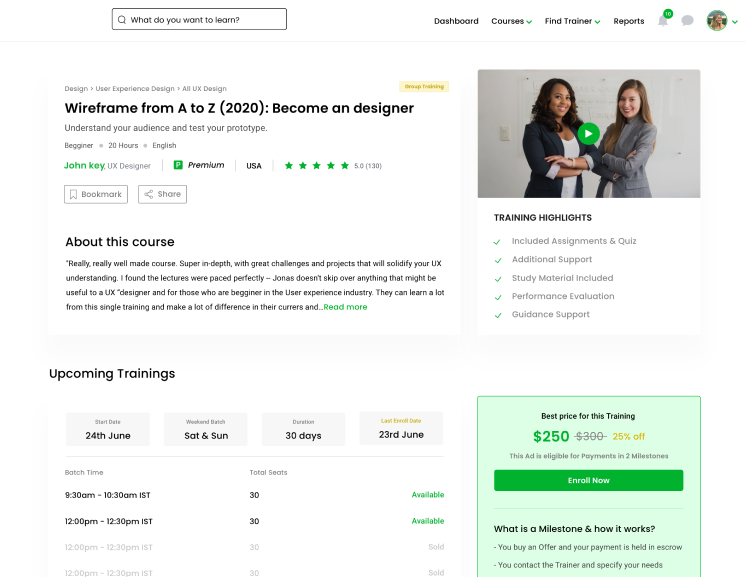
Take an online trading course
Courses on the web application

Built for people learning to trade with the client: they’ll buy courses, book one- or two-day workshops, join live Q&A on Zoom and watch protected recordings.
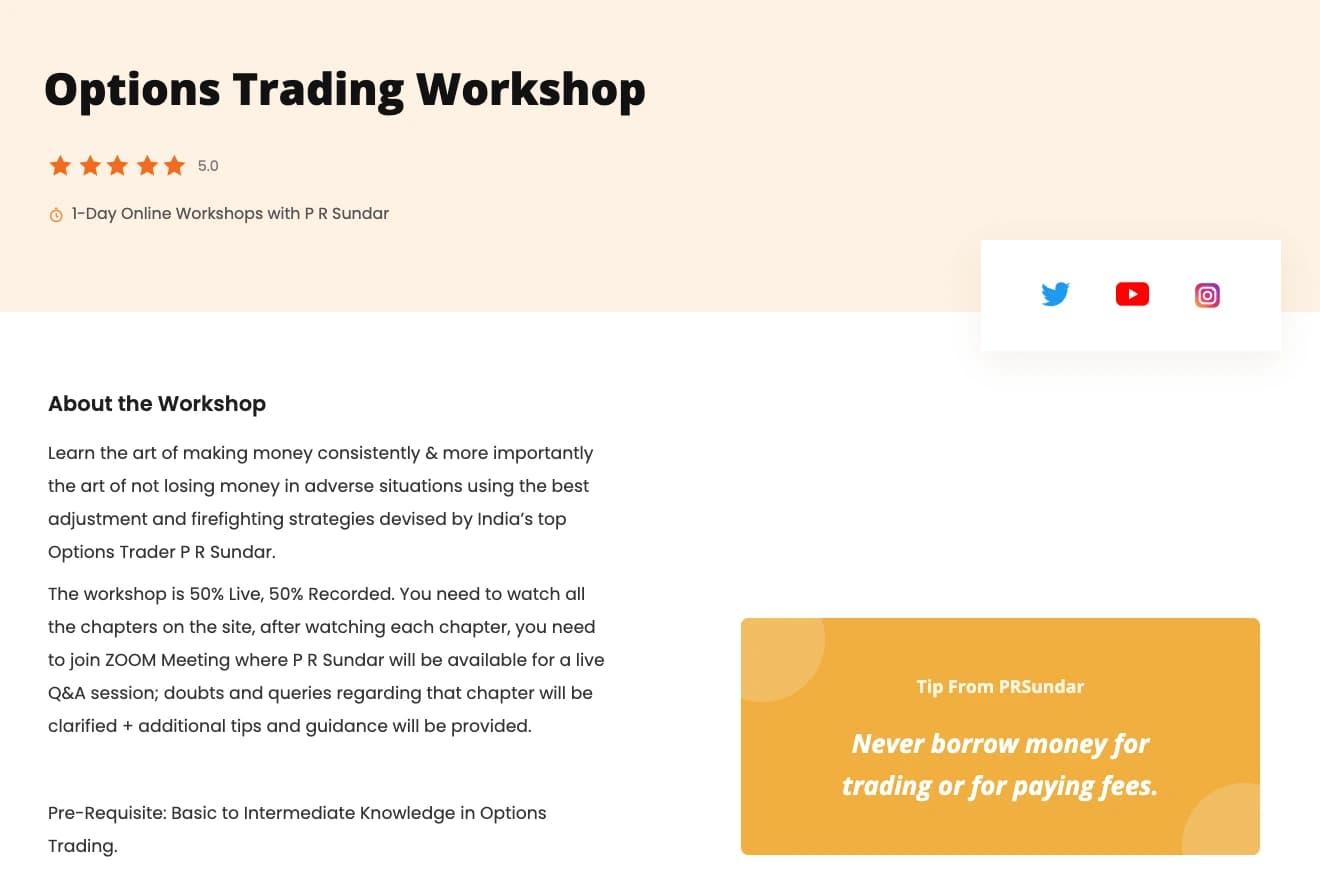
The client’s e-learning platform is built to sell online trading courses and one- or two-day workshops, recorded or live, with Q&A over Zoom. Every course video is encrypted and watermarked through VdoCipher, so learners can’t download it, and workshop prices change with the number of seats left. Techuz designed and built the web application in about eight months, from wireframes and UI/UX design for web and mobile to user guides.
The client teaches people how to trade. He sells online courses and short workshops that run for one or two days.
Some sessions are recorded and some run live. Learners can put their questions to him in a live Q&A on Zoom.
The videos are the client’s main product. If a learner could download and share them, his intellectual property would leave with every download.
Workshops added a second problem. Their price depends on how many seats are left, and more than one admin may be changing prices at the same time.
Two choices shaped this platform. We protected every course video through VdoCipher, and we built a price slab system that copes with admins editing at the same time.
We looked into how best to protect the videos first. After that research, we built on VdoCipher, a video service that encrypts each video and adds a watermark.
Here’s how it works. Course videos are delivered in encrypted form through VdoCipher’s API, the link our platform uses to fetch each video. Learners can watch them on the platform but can’t download them. The watermark marks each video as the client’s.
A slab is a price band tied to how many seats are still free. When a workshop moves from one band to the next, its price changes.
Here’s how it works. Admins set up the slabs in a slab manager built in Angular, the framework behind the web app. The Node.js backend applies the pricing rules, and concurrency control stops two admins’ edits from overwriting each other.
Learners use the web application to find, buy and follow courses and workshops. Admins manage the workshop price slabs, and a Node.js backend on AWS ties the two together.
Courses on the web application
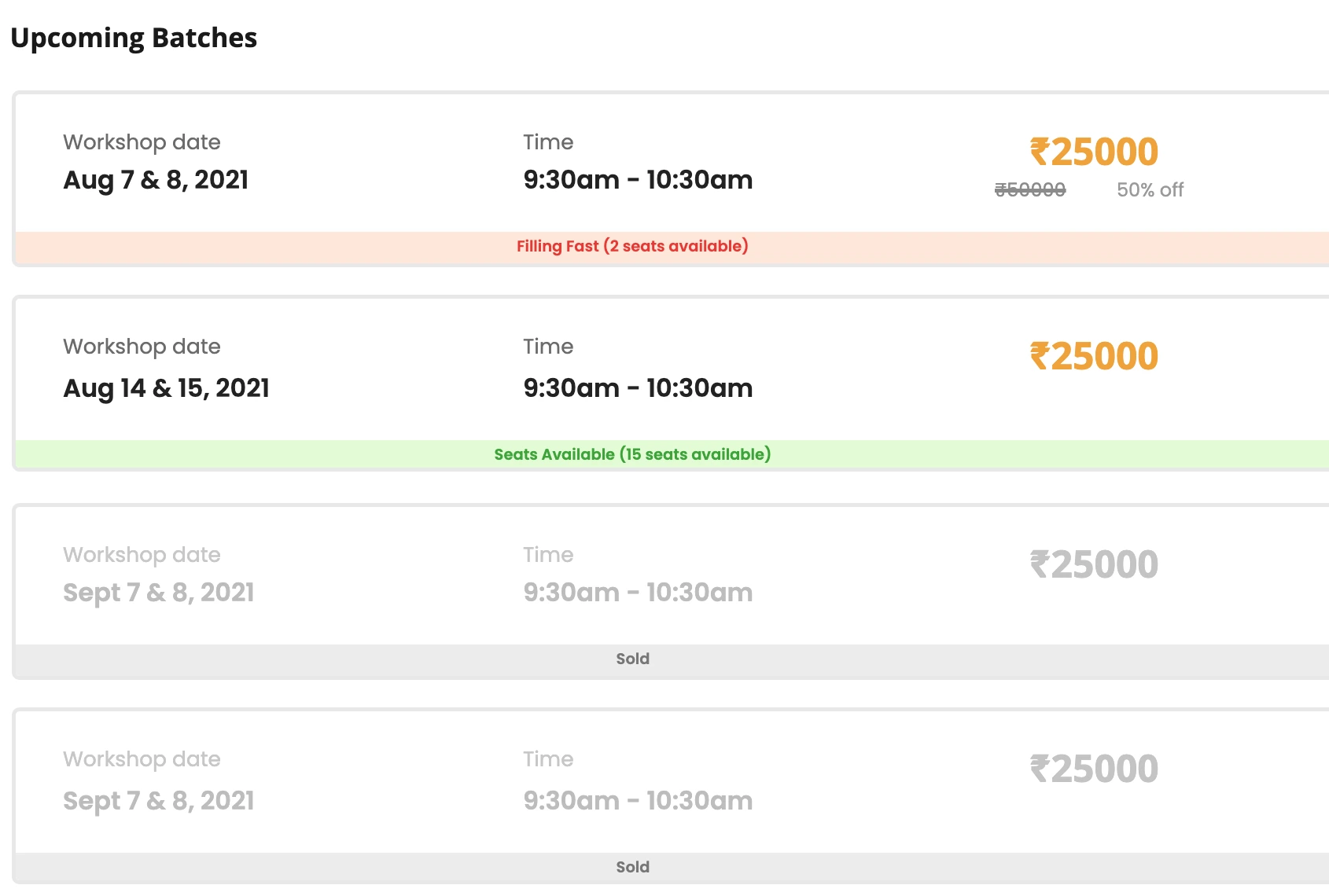
Workshops priced by the seats left
We worked through design first, then the build, then the user guides.
5people
The web application is built, though it isn’t live yet. Learners will buy a course or book a workshop and pay online in one place. They’ll be able to ask the client questions on Zoom and watch recordings afterwards, so a missed session isn’t lost. His most valuable content will stay on the platform, because no course video can be downloaded.
Deliver the videos through a service that encrypts them, so they play on your platform but can’t be saved. A watermark also marks each copy as yours. On the client’s platform, VdoCipher does both.
Set up price slabs, bands tied to how many seats are left, and let the backend apply them. If several admins edit prices, you need concurrency control so edits don’t clash. Here, admins manage slabs in Angular and Node.js applies the rules.
The time to build an online course and workshop platform depends on how many course types you sell, how you protect your videos and how prices work. This one took about eight months, from wireframes to user guides.
Tell us what you're building. We reply within 24 hours and send a ballpark estimate within 48.