Low detail
Wireframes and user flows
Low-detail gray boxes that map each user role’s path through the product. They answer “is anything missing?” and usually come out of discovery. See product discovery.

Get a clickable prototype of your web app, mobile app or SaaS product that users and investors can try within weeks. Then turn what works into your MVP.
4.9 on Clutch from 45 reviews · 500+ projects since 2013
Our prototype development services turn a founder’s app idea or a product team’s new feature into a clickable prototype in 1–2 weeks, or a working one in 3–6. You learn what to build and what to cut before paying for production code.
Software prototype development for web apps and SaaS turns your sign-up, core task and dashboard into a clickable Lovable or Figma flow. Users and buyers react to real screens, so your MVP starts from evidence instead of opinion. See SaaS development.
Our app prototype development covers iOS and Android ideas as clickable Figma screens that testers tap through on a phone. You spot confusing gestures and crowded screens before a mobile developer is hired. See mobile app development.
Demo prototypes give investors, a board or a budget holder a working product to click instead of slides. A link they can open on their own time makes the funding or sign-off conversation shorter.
User testing rounds put your prototype in front of 3–5 target users, where possible, while a designer watches where they hesitate and what they skip. Each round ends in a short written note, so changes to the flow rest on what users actually did.
Signed-off Figma screens and a design system come out of every prototype, covering colors, type, components and screen states. Developers start from finished designs, which keeps sprint time on features. See UI/UX design services.
Once the prototype has answered its question, the same team builds your MVP with the tested screens and findings as the spec. Nothing gets lost between a design studio and a separate development shop. See MVP development services.
Pick the simplest prototype that answers your open question. Every step up in detail costs more time, so we match the type to what you need to learn.
A prototype moves costly surprises, like a wrong flow, a missing role or unclear scope, into the project’s earliest weeks.
AI app builders let a designer produce a working front end in days instead of drawing every frame by hand. In UX Tools’ April 2026 State of Prototyping report, 43.8% of designers spend more than half their time vibe coding (building by prompting AI). We use that speed for the prototype and keep people on the decisions.
Working screens built from prompts, filled with sample data and shared as a link anyone can open.
Screens, the design system and developer handoff, with Figma AI speeding up layout variations.
A designer refines every AI-made screen, and the tech lead confirms the flow can be built as drawn.
Lovable is our tool for prototypes, never for the product you launch. The prototype becomes the spec, and the MVP is written on a production stack with code review, as in our web application development work.
Build a prototype first when the open question is whether users understand and want the flow. Go straight to an MVP when the flow is proven and you need real usage or revenue. Writing code is rarely the slow part now. Supabase said in October 2026 that agents or AI tools create 70% of its new databases, as Runtime Wire reported. Deciding what to build is where the time and money go.
Is your biggest risk technical rather than the flow?
Compare PoC, prototype and MVP on our software proof of concept page.
Five things are handed to you at the end. They stay yours whether you build the MVP with us or elsewhere.
Two startup products we built, each begun as the kind of small first release a prototype helps you plan.

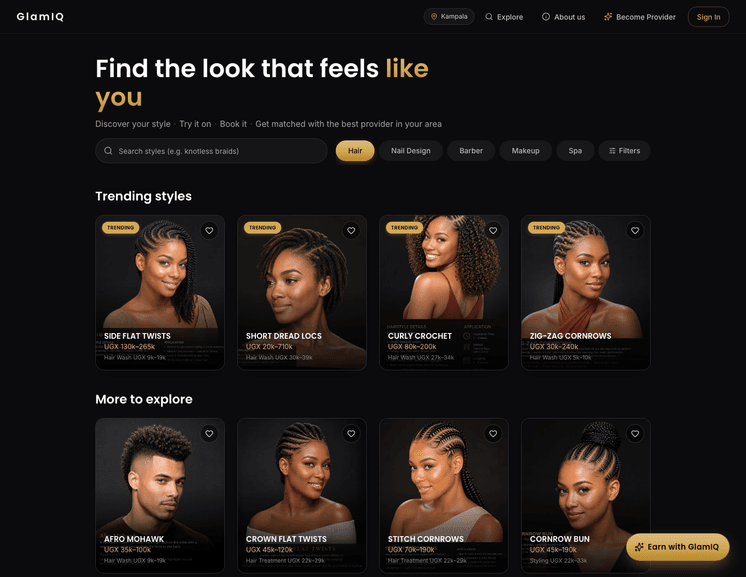
The first version held the core of the marketplace: matching customers with nearby providers, bookings tracked through 10 statuses, and escrow payments by card or Mobile Money. Node.js API and Redis · 900+ commits · 33 data models. Live in 2026 and still growing into a full product.
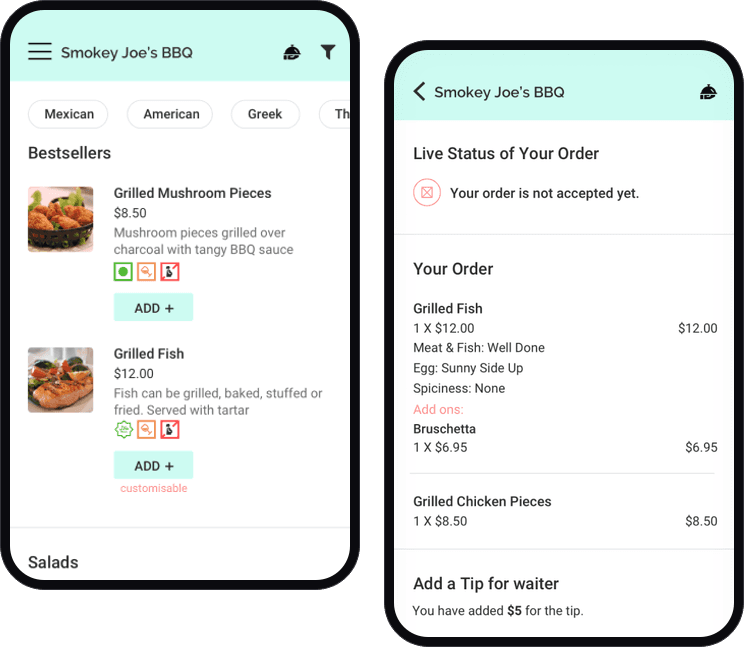

This app began with one flow: diners scan the table’s code, open the menu, order and get the bill. Order status updates live without polling, in English, French, Mandarin and Spanish, and staff run it from an admin panel. Angular, Node.js and MySQL, with mobile apps. The full ordering flow, from table scan to bill, built in about 6 months.
Reviews from clients we planned and built products with, from Clutch, where we hold a 4.9 average across 45 reviews. Quotes are the reviewers’ own words; the result lines are ours.
Their proactive communication fostered a sense of trust and collaboration throughout the project.
The result
A scalable, future-proof product that met performance metrics and raised user satisfaction, with clear timelines throughout.

Kalyan Gummadi, Engagement Manager, Product Strategy & Design Firm
Product strategy & design
They got the job done within the budget and timeline promised, a rarity among app developers.
The result
The apps streamline ordering for both customers and restaurant staff, and keep working incredibly well.
CEO, Software Company
Food-ordering software
Their team brought our idea to reality.
The result
Quality exceeded expectations and brought the client’s vision to life; the client is now in talks with investors in Saudi Arabia.
Adel Maklai, Business Dev Director & Board Member, Construction Company
Construction
A clickable prototype takes 1–2 weeks (about 6–10 working days), and a working prototype 3–6 weeks (15–30 days), depending on the use case. Inside a full MVP build, a design-only clickable prototype runs within phase 2, alongside design and architecture. See how we work.
Clickable prototype
1–2 weeks
About 6–10 working days
Working prototype
3–6 weeks
About 15–30 working days, by use case
When the MVP build follows, AI coding tools carry that speed into production code.
Across the 8+ projects we built with Claude Code in the last year, delivery took up to 50% less time than comparable builds the year before.
Prototype development is priced in hours. Wireframes and a clickable prototype, design and discovery only, take about 30–50 hours. A working prototype or a very simple MVP build takes 200–300 hours, or up to 500–600 for a larger one. The clickable tier takes 1–2 weeks, and a working prototype 3–6 weeks, depending on the use case.
About 30–50 hours
Wireframes and clickable prototype
1–2 weeks
Design and discovery only
200–300 hours
Working prototype or very simple MVP build
3–6 weeks, by use case
Up to 500–600 hours for a larger one
Wireframes and clickable prototype
1–2 weeks
Design and discovery only
About 30–50 hours
Working prototype or very simple MVP build
3–6 weeks, by use case
Up to 500–600 hours for a larger one
200–300 hours
Design, business analyst and project manager time, one test round and the handover pack. MVP builds add QA and 30 days of free support after go-live.
Moving from prototype to MVP means rebuilding the tested flow as production code for real users, money and data. A prototype has no real login, payments or security checks, so its code is not what you launch.
After launch, growing the MVP into a full product is covered by our software product development service.
Prototype tools give speed, and a production stack carries the MVP that follows. We explain each choice in writing.
Clickable screens in days, then dev-ready designs
One codebase for iOS and Android apps
Hosting and deployments in your own account
Models, document search and agents, with prompts and test sets versioned
Techuz builds software prototypes only, so physical, hardware and IoT prototypes need a product design firm. If a no-code tool or an existing SaaS can test your idea for a few hundred dollars a month, try that first. We also don’t ship a prototype as your launched product.
Prototype development is building a clickable model of a software product so people can try its main flow before production code exists. At Techuz, a prototype is made in Figma or Lovable with sample data. It shows whether users understand the product and what the first release should include.
At Techuz, wireframes and a clickable prototype for a web or mobile app take 1–2 weeks. A working prototype takes 3–6 weeks, depending on the use case. Several roles, web and mobile screens, or two test rounds push it toward six weeks.
Yes, as a spec rather than as code. At Techuz, the signed-off Figma screens and design system carry straight into the build, and the test findings shape the backlog. The code itself is written fresh on a production stack, because prototype tools skip real login, payments and security.
You own the prototype and the designs. At the end, Techuz hands over the prototype link, the Figma files, the user test findings note and the walkthrough recording. All of it stays yours whether you build the MVP with Techuz, with your own developers or with another team.
If you already have wireframes or an AI-built app, you often don’t need a full prototype. Techuz can start from your wireframes and go straight to clickable screens and a test round, which shortens the timeline. If you already built an app with an AI tool, we review it, keep what works and plan the production version.
Yes, a prototype can help you raise money. A Techuz prototype gives investors something to click and a short recorded walkthrough they can watch later, plus findings from real target users. We don’t write pitch decks, business plans or market sizing, so pair the prototype with your own deck.
Tell us what you're building. We reply within 24 hours and send a ballpark estimate within 48.