Web portal development services for customers, partners and teams

Customer, partner and employee portals connected to the systems you already run, so every user logs in once and finds their own orders, documents and tasks.

4.9 on Clutch from 45 reviews · 500+ projects since 2013 · Portals with up to 7 user roles and ~1,160 API endpoints

Our web portal development services

Our web portal development services give customers, partners and staff one secure login to get their work done. Your business rules, third-party tools and AI agents connect through APIs and MCP, so everything runs from one shared dashboard.

  • Customer and client portals

    Customer portal development for accounts, orders, bookings, payments, documents and support tickets, shaped around how your customers already buy from you. It works as a customer self-service portal from day one. Your customers get answers at any hour, and your team stops chasing status emails. See custom web application development.

  • B2B and partner portals

    B2B portal development for partners, agencies and brands, with listings, proposals, paid boosts, payouts and shared files scoped to each partner’s account. Partners sign up, sell and get paid without a sales rep in every step.

  • Vendor and supplier portals

    Supplier onboarding, KYC checks, tax-ready invoices and e-signed agreements move into one place your vendors log in to. Your finance and operations teams get clean, verified records instead of spreadsheets and email threads.

  • Employee and HR portals

    Our employee portal development covers hiring pipelines, timesheets, approvals, performance tracking and internal dashboards, with access set by role and department. Managers see the numbers without asking for a report.

  • AI assistants inside your portal

    Assistants that answer questions, fill forms and take actions on portal data, connected to your systems through MCP and limited to what each user may see. Users finish a task in one conversation instead of five screens. See AI development services.

  • Portal rebuilds and takeovers

    Taking over a portal another team built starts with a code audit and gap analysis: we keep what works and replace only what blocks you. You get a working portal without paying again for features that already run. Read the signs it’s time to modernize your web app.

Portals for healthcare and education

We’ve also built patient and clinic portals, quality-management portals for medical device companies and staff portals for schools.

What does custom web portal development do for your business?

It moves routine orders, questions and documents out of your inbox and into a login that works around the clock. In a Gartner survey published in March 2026, 67% of B2B buyers said they prefer to buy without a sales rep.

Fewer calls and emails for your team

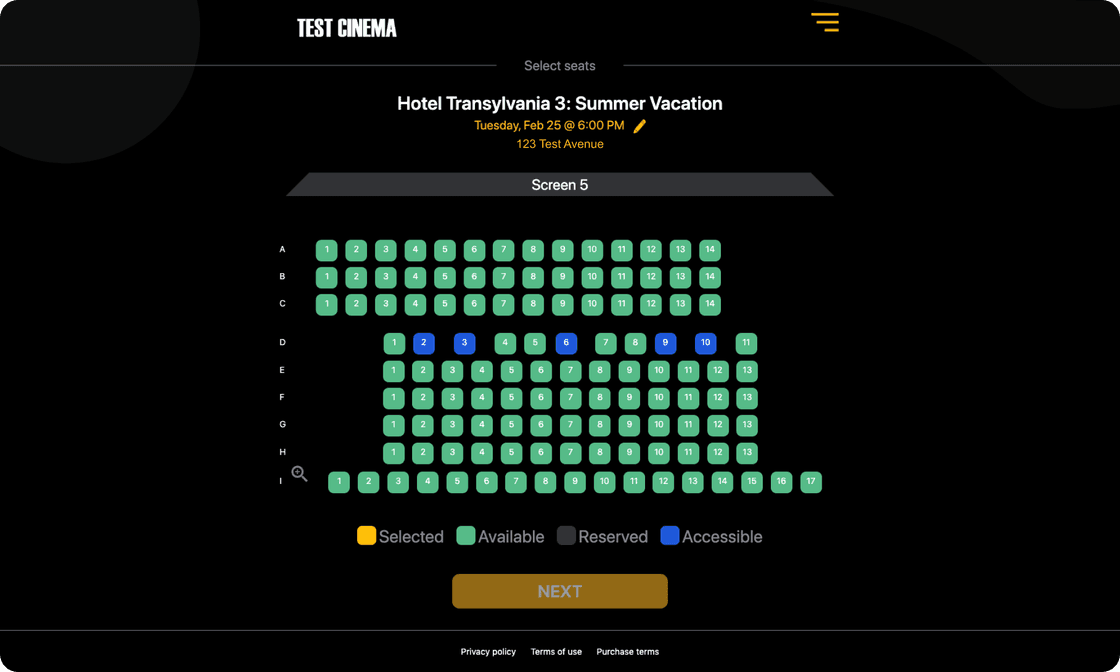
Customers check order status, download invoices, book, pay and raise disputes on their own, the way Tickets For The Show customers book seats without calling the theater. Your team handles the exceptions, not the routine.

Each user sees only their own data

You sign off who sees what before the build, and we test it role by role. Nobody sees a record they shouldn’t.

One source of truth with your systems

The portal reads and writes the same records your team uses in payments, accounting, CRM and e-signature tools. Nobody re-keys data.

Faster onboarding for partners and vendors

Sign-up, verification, agreements and first orders happen online in one flow. New partners and suppliers start working with you without weeks of emails and paperwork.

What your portal connects to

A portal only gets used when it shows the same live data your team sees. We connect it to your business rules, your existing tools and your AI agents. Each connection runs as its own service, so swapping a provider later doesn’t mean a rewrite.

Your portal

Sync log

  • Card payment verified by webhook
  • Payout posted to the books
  • Ticket raised in the helpdesk
  • Agreement signed, certificate saved
  • Agent answered inside the user’s permissions

All systems in sync

Payments

Card, wallet and subscription payments, with every webhook verified.

  • Stripe
  • Razorpay
  • PayPal
  • Cashfree

Accounting and banking

Invoices and payouts land in your books and bank without re-keying.

  • QuickBooks
  • Bank payout APIs

CRM, helpdesk and messaging

Leads, tickets and notifications reach your team the moment they happen.

  • Freshsales
  • Zendesk
  • Freshdesk
  • Twilio
  • SendGrid
  • WhatsApp

Sign-in and documents

Quick sign-in and e-signed agreements with completion certificates.

  • Google sign-in
  • OTP
  • Zoho Sign

AI agents and MCP

AI agents read and act on portal data, inside each user’s permissions.

  • MCP
  • Claude
  • OpenAI

No documented API? We map the data in discovery first, and ERP integrations start with a paid discovery so the estimate is real. Read how we keep AI features secure.

Which portal should you launch first?

Start with the users who cost your team the most time, launch their side first and add other roles in phases.

If your team is buried in…

Order, status and invoice emails from customers

Start with

Customer portal

Small
First role to launch: Customers
  • Orders
  • Invoices
  • Bookings
  • Support tickets
Typical budget
$10k–15k
Timeline
4–8 weeks

If your team is buried in…

Partner sign-ups, proposals and payouts handled by email

Start with

B2B and partner portal

Mid-size
First role to launch: Partners
  • Listings
  • Proposals
  • Payouts
  • Shared files
Typical budget
$25k–50k
Timeline
10–12 weeks

If your team is buried in…

Supplier paperwork, KYC and invoice chasing

Start with

Vendor portal

Small to mid-size
First role to launch: Suppliers
  • Supplier onboarding
  • KYC checks
  • Tax-ready invoices
  • E-signed agreements
Typical budget
$10k–50k
Timeline
4–12 weeks

If your team is buried in…

Spreadsheets for hiring, timesheets and approvals

Start with

Employee portal

Small
First role to launch: Managers
  • Hiring pipeline
  • Timesheets
  • Approvals
  • Dashboards
Typical budget
$10k–15k
Timeline
4–8 weeks

If your team is buried in…

All of the above, across several user types

Start with

Multi-role platform

Large, in phases
First role to launch: The role that earns money
  • Customers
  • Partners
  • Suppliers
  • Staff
Typical budget
$50k+
Timeline
4–6 months

Not sure which fits? Book a 30-minute call and a tech lead will map your roles with you.

Portals from our web portal development company

Three US portals, each serving several kinds of user, from inspection scheduling to multi-theater ticketing.

Client logo

Schedash

Inspection scheduling SaaS, USA

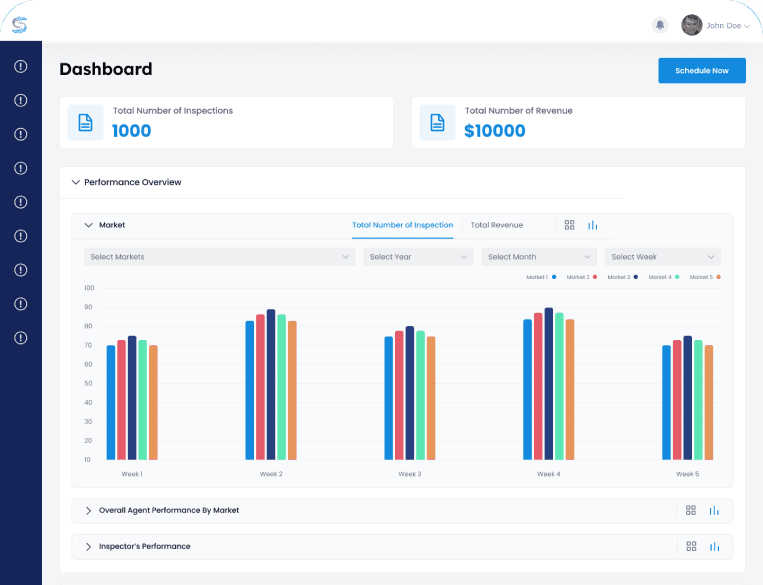
Scheduling, report generation and Stripe billing for home inspectors, realtors and their teams, built on Angular and Node.js. Mid-size build.

Team
8 people
Timeline
About 20 months
Budget
$25k–50k
Schedash — Inspection scheduling SaaS
Tickets For The Show — Movie ticketing SaaS
Client logo

Tickets For The Show

Movie ticketing SaaS, USA

Ticketing for multiple US theaters, linked to the RTS theater system, with seat layouts, gift cards and auto-scaling for weekend peaks.

Team
7 people
Timeline
12 months
Budget
$25k–50k
Trading card marketplace — Card marketplace
Client logo

Trading card marketplace

Card marketplace, USA

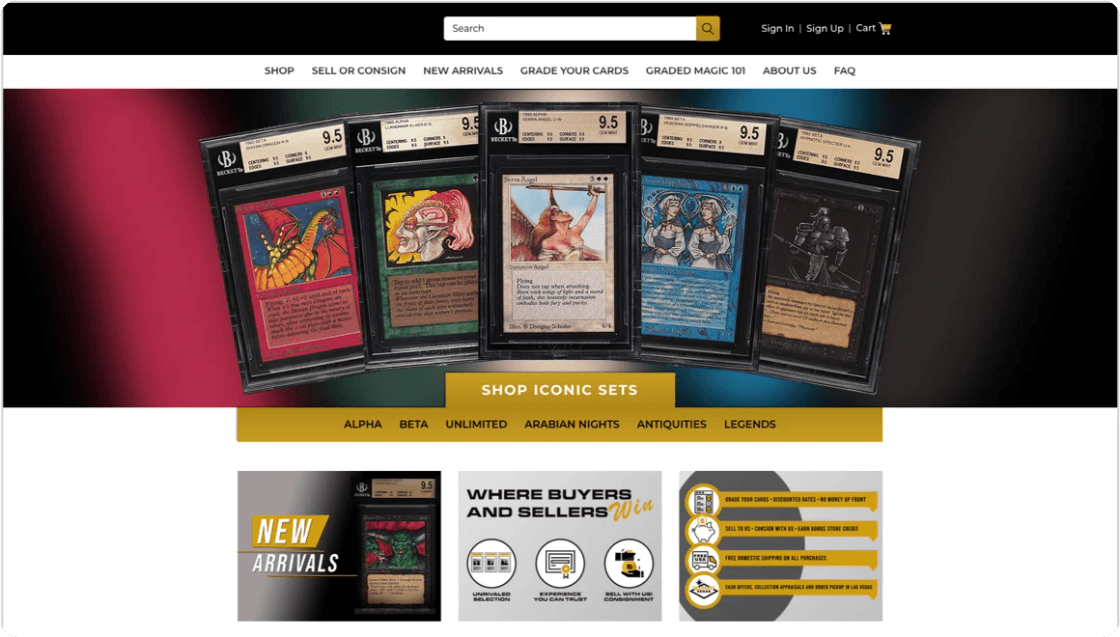
Collectible card marketplace with a grading submission service and PayPal payments; 1,200+ cards sold through the platform.

Team
7 people
Timeline
About 10 months
Budget
$10k–25k

What our clients say

Reviews of the three portals above, from Clutch, where we hold a 4.9 average across 45 reviews. Quotes are the reviewers’ own words; the result lines are ours.

5.0 out of 5on Clutch, Feb 2024
Most impressive was their ability to take my requirements, build a scope document and follow it.

The result

Weekly Zoom updates and a revised scope of work kept the project flexible as needs changed.

Client logo

Kevin Lewis, CEO, Schedash

Real estate SaaS

Project size
$50K–$199K
Length
Feb 2020 – Dec 2023
Team
6–10 people
4.5 out of 5on Clutch, May 2019
The platform is live, fully functioning and earning money.

The result

Positive initial feedback on the launched ticketing platform, with more features in progress and fast support.

Client logo

CEO, Consulting Firm

Online ticketing

Project size
$10K–$49K
Length
Mar 2018 – ongoing
Team
~5 people
5.0 out of 5on Clutch, May 2020
I’m very happy with the final product.

The result

A satisfactory final product, with bugs fixed and minor changes made after launch based on the client’s feedback.

Client logo

Founder, Collectible Trading Cards Company

Collectible trading cards

Project size
$10K–$49K
Length
Apr – Dec 2019
Team
3–5 people

How we build a web portal, step by step

A small portal takes 4–8 weeks, a mid-size portal 10–12 weeks and a large platform 4–6 months once the scope is clear. The most useful role goes live first, and the other roles follow in phases.

Typical timelines
  • Small portal

    4–8 weeks

    One portal type with one or two roles, such as a client portal for documents, invoices and requests

  • Mid-size portal

    10–12 weeks

    Customer and partner sides plus admin, payments and two or three integrations

  • Large platform

    4–6 months

    Enterprise portal development with several user types, released in phases

The six phases

Every portal runs through the same six phases, tested role by role.

How much does web portal development cost?

A web portal with Techuz costs $10k–15k for a small portal, $25k–50k for a mid-size portal and $50k+ for a large platform built in phases. Rates are $20–25 an hour, depending on role and seniority.

Typical cost by portal size (steps not to scale).
  1. Small

    4–8 weeks

    $10k–15k

  2. Mid-size

    10–12 weeks

    $25k–50k

  3. Large

    4–6 months

    $50k+

What moves the price

  • Roles and permission rules
  • Integrations
  • Sign-in options
  • Compliance needs
  • An AI assistant
  • Extra languages
  • Data moved from an old portal

What’s included

Every price includes QA, project management and 30 days of free support. Hosting, APIs and AI usage are listed with monthly costs in the proposal.

How do we keep your portal and its users’ data secure?

With practices you can check, not badges. In Verizon’s 2026 breach report, exploited software vulnerabilities started 31% of breaches, more than any other route. So we test the portal itself, not only the login.

Permissions signed off and tested role by role

QA tests each role against the permission matrix you signed, and every admin action is written to an audit log you can review.

Protected sign-in

Users sign in with Google or a one-time code, and admins add two-factor with recovery codes. Rate limits on login and codes stop a stolen or guessed password from getting far. Enterprise single sign-on (SSO) is scoped in discovery as a cost driver.

OWASP Top 10 checks before release

Login, payments and file uploads are tested against the OWASP Top 10 before every release, and dependencies are scanned on every pull request. Read our web application security checklist.

Your data in your cloud

Code, data and every vendor account live in your own accounts from day one. Credentials move through a vault, never through the code repository.

AI that only sees what the user can see

Portal assistants and MCP connections inherit each user’s permissions, so an AI answer never shows a record that user couldn’t open themselves.

Every portal is built to WCAG 2.1 AA. That is the level the European Accessibility Act points to for many EU consumer services, and the ADA Title II rule requires it of US state and local government sites from April 2027.

Technology we use for web portals

We pick the stack that fits your portal and the team that will run it after launch, and explain the choice in writing.

  1. Front-end

    Next.js for public pages and the portal in one codebase; React and Angular for dashboards

  2. Back-end

    Node.js with Express for APIs; Python for AI and data services; Laravel when your team works in PHP

  3. Data

    PostgreSQL or MySQL for business data, Redis for speed and background jobs

    • PostgreSQL
    • MySQL
    • Redis
    • MongoDB
  4. Cloud

    Your own AWS or Azure account, deployed through GitHub Actions

  5. AI

    Models, document search and MCP connections; prompts and test sets versioned

    • Claude
    • OpenAI
    • Pinecone
    • MCP

Web portal development FAQ

  • If customer portal software already covers about 90% of your roles, configure it first and come back when the workarounds cost more than a build. We don’t build Drupal or Sitecore portals, and a multi-role portal on a budget under about $10k is better cut to one role first.

  • A web portal is a secure, login-based site where each user, such as a customer, partner or employee, sees their own data and tasks in one place. Role-based access control (RBAC) decides what each user can see. The common types of web portals are customer and client portals, B2B and partner portals, vendor portals and employee portals.

  • A website shows the same public content to every visitor. A portal asks users to log in, then shows each one their own records, actions and dashboards, connected to your business systems. Many businesses run both. Read web application vs website.

  • A small portal costs $10k–15k, a mid-size portal $25k–50k and a large platform $50k+, built in phases. The price depends mostly on the number of roles, integrations and compliance needs. After a free 30-minute call, we send a ballpark within 48 hours once the requirements are clear.

  • A small portal takes 4–8 weeks, a mid-size portal 10–12 weeks and a large platform 4–6 months once the scope is clear. We launch the most useful role first, so part of the portal is working for you before the rest is finished.

  • Yes, we can rebuild or take over your existing portal. We start with a code audit and gap analysis, keep what works and replace only what blocks you, so you don’t pay to rebuild features that already run. The code and hosting move into your own accounts as part of the handover.

  • Ask to see a permission matrix from a past project, how they test each role, and which systems they have actually integrated. Check that code and data sit in your accounts from day one, and read verified reviews. Techuz holds 4.9 on Clutch from 45 reviews.

Get a Ballpark Estimate for Your Project

Tell us what you're building. We reply within 24 hours and send a ballpark estimate within 48.

Tell us about your project

A few lines are enough. We reply within 24 hours.

By sending this form I confirm that I have read and accept the Privacy Policy