
Posted on
July 14, 2026
Read time
 9 mins read
Quick Answer: Almost every AI company today claims to have an “AI agent.” Most don’t. A real AI agent doesn’t just answer questions: it perceives what’s happening, makes decisions under uncertainty, and executes multi-step tasks without waiting for human instructions at every turn. That’s a much higher bar than a chatbot wrapped in a polished interface. In fact, Gartner estimates only about 130 vendors out of the thousands marketing “agentic AI” actually meet that standard, describing the rest as examples of “agent washing.”
So how do you separate the real thing from clever marketing? Ask two simple questions: Is the system reducing human escalations over time? And if every human operator disappeared for a week, would the workflow still keep running? The answers reveal more than any product demo ever will.
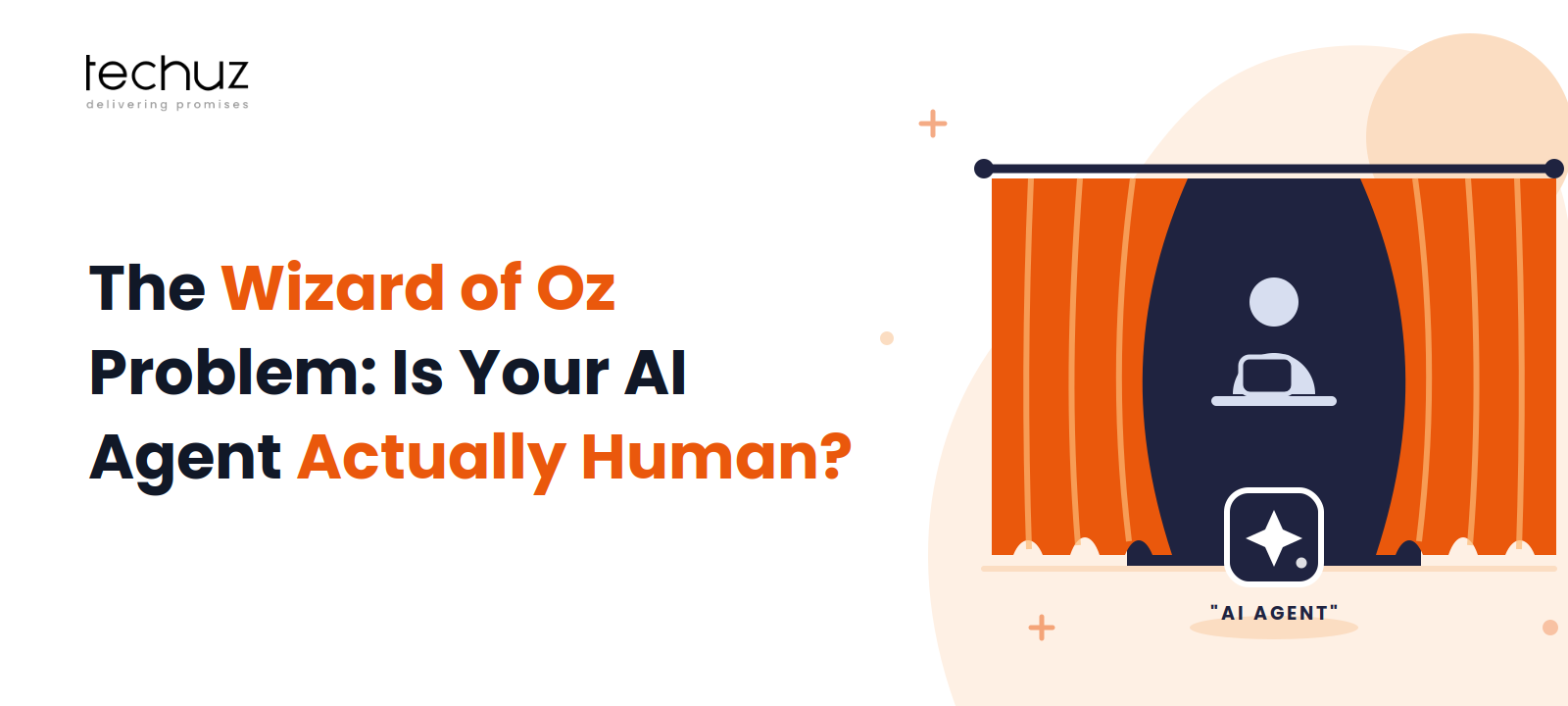
If you’ve watched an AI “agent” handle a task end-to-end and thought, this feels almost too good to be true, you might have been right. One of the industry’s most talked-about startups, Builder.ai, was once valued at $1.5 billion and backed by Microsoft while promoting an AI assistant named Natasha that appeared to build software autonomously. Reports later alleged that much of the work was actually being carried out by hundreds of human engineers behind the scenes: a modern-day Wizard of Oz illusion. The company filed for bankruptcy in May 2025.
While that’s an extreme example, it raises a far more important question for every business evaluating agentic AI today: is your AI agent truly making decisions, or is it simply hiding human effort behind a convincing interface?
What an Agent Actually Is (And What a Script Pretending to Be One Looks Like)
Here’s the uncomfortable truth: most AI “agents” aren’t actually agents. They’re chatbots, workflow automations, or rule-based scripts wrapped in a conversational interface that looks intelligent. A true AI agent does far more. It understands its environment, makes decisions under uncertainty, and carries out multi-step tasks without waiting for a human to approve every move. That’s a much higher standard than most products meet.
Gartner has a name for this growing marketing trend: “agent washing.” In other words, many vendors are selling the promise of autonomous AI while delivering little more than automation with a chat window. Knowing the difference could save your business months of wasted effort, and millions in the wrong AI investment.
The Human Fallback Anti-Pattern: When “Escalate to a Human” Becomes the Actual Product
The easiest way to tell whether an AI agent is real isn’t by watching the demo. It’s by watching what happens when things go wrong. Every AI system should occasionally escalate truly unfamiliar situations to a human. But if human intervention becomes the default instead of the exception, you’re not looking at an autonomous agent. You’re looking at a smart routing system disguised as one.
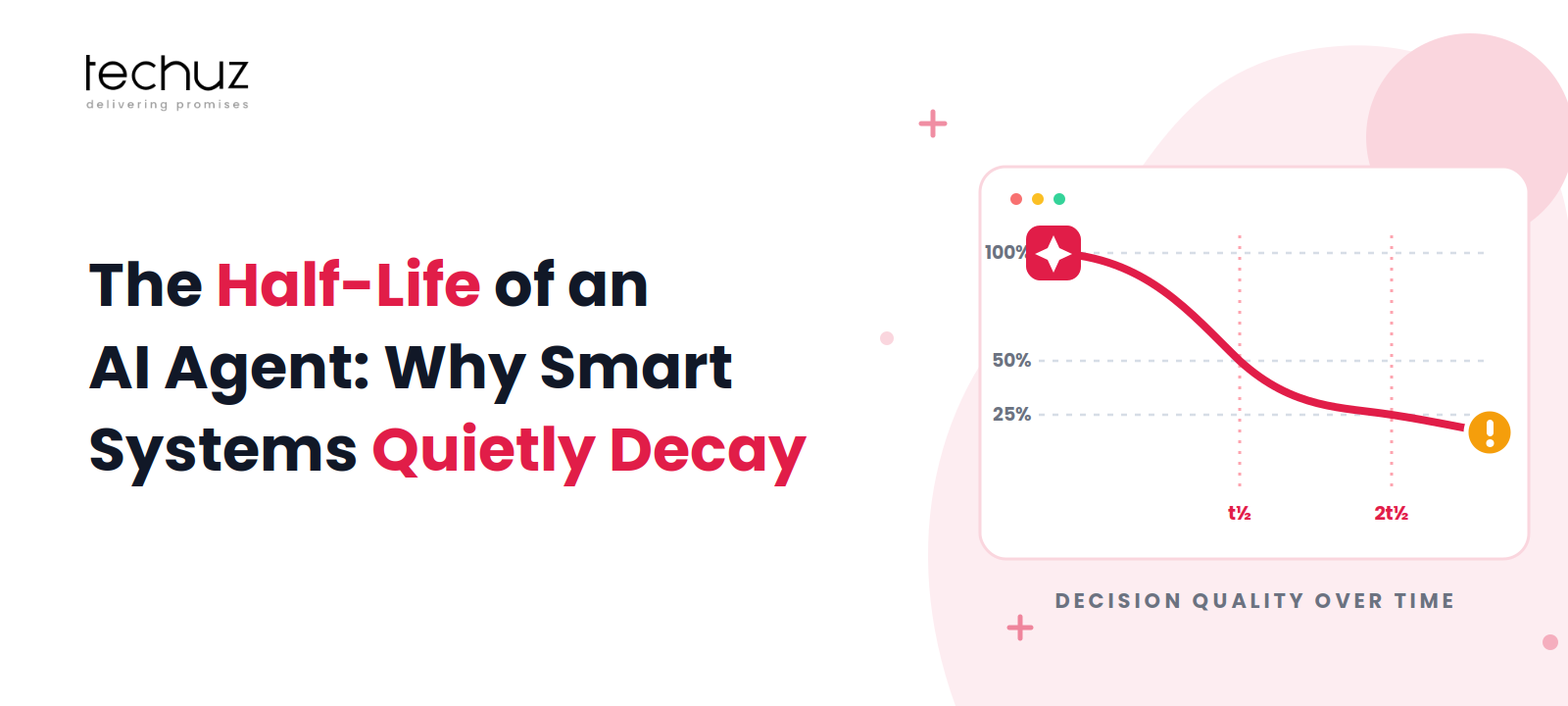
The real signal is the trend over time. As a genuine AI agent learns, human escalations should steadily decline. If they stay the same, or worse, increase as adoption grows, the AI isn’t becoming more capable. It’s simply getting better at handing work back to people while claiming the credit for automation.
The Approval Bottleneck: Why “Human-in-the-Loop” Sometimes Means “Human-Doing-the-Loop”
Here’s a simple test that exposes the difference between AI assistance and AI theater. In a healthy AI system, humans step in only to review exceptional or high-risk decisions. In a fake one, almost every action pauses for someone to approve it before the workflow can continue. That means the AI isn’t driving the process; the humans are.
The giveaway is surprisingly easy to spot: does the number of approvals grow as AI usage grows? If every increase in workload requires a matching increase in human approvals, the AI hasn’t automated your business. It’s merely wrapped manual work in a more impressive-looking interface. This is the same verification trap we cover in where generative AI actually improves efficiency: if review effort scales with usage, the human is the throughput limit.
Real Autonomy Signals: What a Genuine Agent Looks Like in Production
A genuine agent handles ambiguity without a human at the decision’s center, recovers from its own errors without a ticket being filed, and completes multi-step tasks unsupervised. Gartner predicts at least 15% of day-to-day work decisions will be made autonomously through agentic AI by 2028, up from 0% in 2024, which underscores how early and rare true autonomy still is. The concrete markers to look for: a declining escalation rate over time, and the system correctly handling inputs nobody explicitly configured it for.
Why Founders Fake Autonomy (Even to Themselves)
The pressure to ship “AI-powered” arrives long before the hard engineering (error recovery, edge-case handling, confidence thresholds) is actually finished. The quiet, common habit is staffing the gaps with a person and relabeling it “human-in-the-loop,” which sounds like a design choice instead of what it usually is: an admission the agent isn’t ready, dressed up as intentional. Gartner estimates that of the thousands of vendors claiming agentic capabilities today, only about 130 are building something that deserves the label.
The Cost of Fake Automation: Paying for Software and a Human Team Anyway
Gartner predicts more than 40% of agentic AI projects will be canceled by the end of 2027, citing escalating costs, unclear business value, and inadequate risk controls, not model failure. Deloitte’s research found only 14% of organizations have agentic solutions actually ready to deploy, and just 11% are running one in production.
Founders outside that small group are frequently paying twice: once for the software licensed as automation, and again for the human team quietly staffed behind it to make the software actually work.
The Trust Collapse: What Happens When Customers or Investors Find the Curtain
Builder.ai’s collapse is the clearest recent case: its “AI assistant” was widely reported to route requests to roughly 700 engineers who wrote the code by hand, and when that became public alongside inflated revenue claims, the company filed for bankruptcy within months, wiping out its $1.5 billion valuation and its backers’ stakes.
Separately, Amazon faced reports that its “Just Walk Out” checkout technology relied on over 1,000 workers in India reviewing footage, a characterization Amazon disputed, describing the work as routine model-training annotation rather than live oversight. Either way, the reputational cost of a discovered curtain is severe and swift. Trust, once lost this way, is exactly what we argue must be engineered in from the start in our guide to building AI people can trust.
Building Toward Real Autonomy: The Engineering Work Founders Skip
Here’s what almost every AI demo hides: the hardest part of building an AI agent isn’t making it work. It’s making it recover when things go wrong. Real autonomy isn’t built with flashy prompts or polished interfaces. It’s built through thousands of edge cases, carefully defined confidence thresholds, and recovery logic that lets the system fix its own mistakes instead of immediately calling a human.
None of this looks impressive in a product demo, which is exactly why it’s often overlooked. But this invisible engineering is what separates a genuine AI agent from an expensive prototype, the same gap that leaves so many working GenAI PoCs unable to move the efficiency needle. Real autonomy isn’t announced at launch. It is earned, one successfully handled exception at a time.
The Agent Readiness Checklist: Agent or Script?
Forget the marketing claims for a moment. If you want to know whether you’re looking at a real AI agent or just an impressive demo, ask four brutally honest questions. Is the number of human escalations falling over time? Does the AI make decisions on its own, or is a person quietly making them through the interface? Can it recover from mistakes without opening a support ticket? And does your own team agree on what stage of autonomy the system has actually reached?
Then ask one final question that cuts through every sales pitch: if every human involved disappeared for a week, would the system keep working, or would it stop on day one? The answer tells you almost everything you need to know.
Want an agent, not a curtain?
Techuz builds agentic AI systems with the unglamorous parts done properly: confidence thresholds, error recovery, escalation logic that shrinks over time, and honest reporting on what the system can and can’t yet do.
FAQs
What’s the difference between an AI agent and an AI-powered script?
An agent perceives, decides under uncertainty, and acts across multiple steps without a person choosing each one. A script executes fixed branching logic, however sophisticated the interface looks.
How do I know if my “human-in-the-loop” design is healthy oversight or disguised manual labor?
Check whether approval volume scales with team size or with usage. If it grows linearly with usage, the human is the system’s real throughput limit, not an overseer.
What’s “agent washing” and how common is it?
It’s Gartner’s term for rebranding chatbots, RPA, or rules engines as “agents” without real autonomous decision-making. Gartner estimates only about 130 of thousands of vendors claiming agentic capability actually qualify.
What’s a realistic timeline for building genuine agent autonomy?
It’s incremental, not a launch-day event: built through an expanding library of handled edge cases, confidence thresholds, and recovery logic, often over many months of production use, not weeks. An experienced AI development partner can help sequence that roadmap honestly.
What happens when a company’s “AI agent” is revealed to be mostly human labor?
Reputational and financial fallout can be severe and fast. Builder.ai’s exposure preceded its bankruptcy within months, wiping out a $1.5 billion valuation.
Sources
- Gartner, Over 40% of Agentic AI Projects Will Be Canceled by End of 2027 (June 2025)
- Deloitte Insights, Agentic AI Strategy, Tech Trends 2026 (Dec 2025)
- Rest of World, What Was Builder.ai and Why Did It Shut Down?
- Wikipedia, Builder.ai
- Business Standard, Amazon’s Just Walk Out Checkout Tech Was Powered by 1,000 Indian Workers
- Telecoms.com, Amazon Denies Just Walk Out Tech Relies on Humans Watching on CCTV
Looking for timeline and cost estimates for your app?
Contact us

Nilesh K.

Nilesh Kadivar leads Marketing & GTM at Techuz, where he helps startups and enterprises turn software, AI, and automation ideas into shipped products. He's spent 10+ years in business development and enjoys writing about tech trends, growth strategy, and the realities of building for the web and mobile.